
The 2006 Pinnacle of Aeromodeling
By Michael Ramsey
Overview
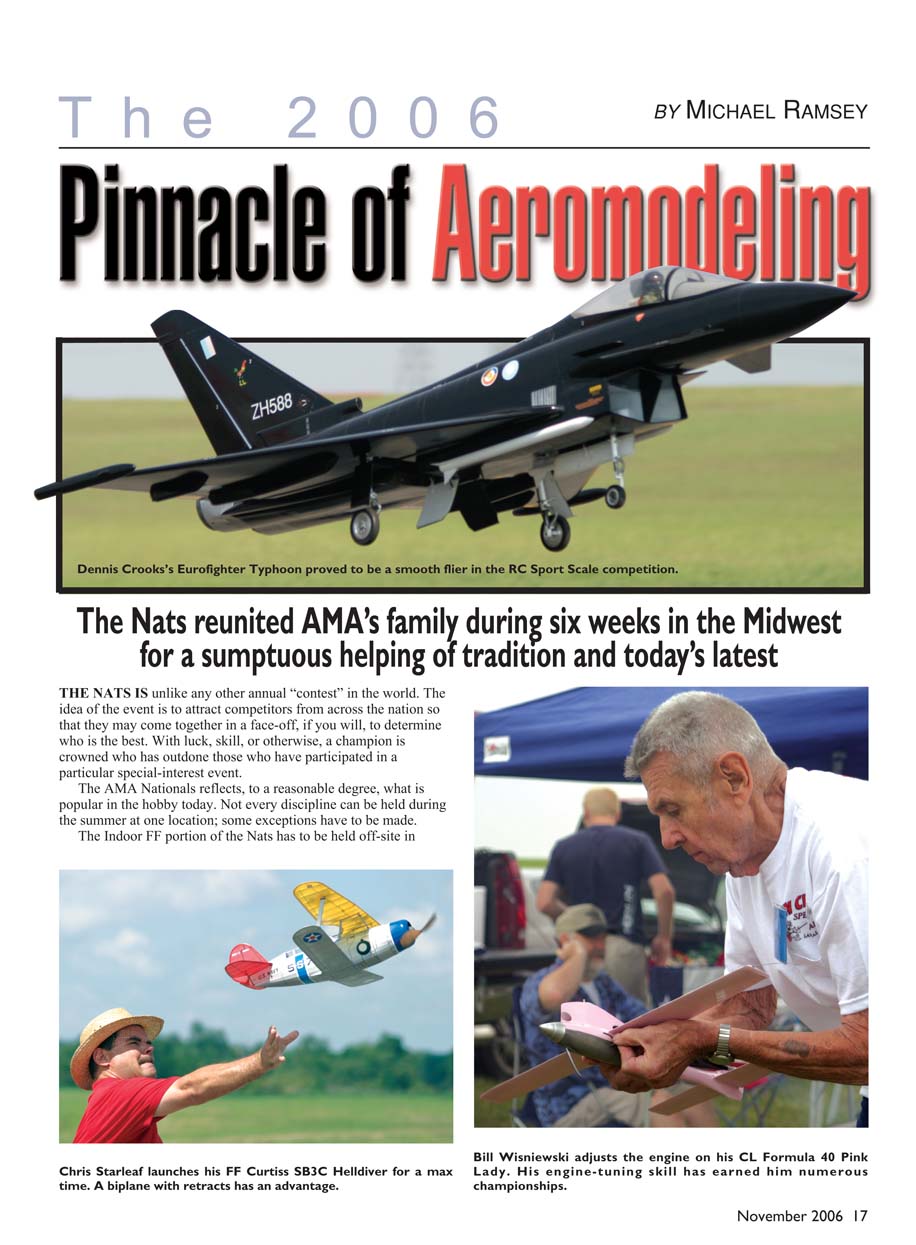
The Nats is unlike any other annual contest in the world. Its purpose is to attract competitors from across the nation so they may come together to determine who is the best in a particular special-interest event. With skill, luck, or otherwise, a champion is crowned who has outdone those who have participated.
The AMA Nationals reflects, to a reasonable degree, what is popular in the hobby today. Not every discipline can be held during the summer at one location, so exceptions are made when necessary. The goal is to promote excellence in the hobby; new events are added to the Nats schedule when enough interest and support are generated.
Opportunity is a side effect of vying for a national title. Many participants see the Nats as a chance to be recognized and to make their mark on a number of levels. Peer recognition is a great reward, and sometimes a person can catch a lucky break and be "discovered" as a new talent.
The most gratifying aspect of the Nats is the opportunity to have a lot of fun while learning more about this treasured pastime. Modelers put their best foot forward at the Nats for many reasons—some of which are more humble than others. The event creates an aura that breeds excitement; what happens at a Nats competition is the stuff legends are made of.
Many pilots make good on promises to their sponsors, while others use the Nats to maintain friendships and to continue improving as modelers. Often these aims overlap, which strongly illustrates the personality and character of those attracted to the hobby.
Events and Exceptions
Some events must be held off-site or at alternate venues:
- The Indoor Free Flight (FF) portion of the Nats is held in Johnson City, Tennessee, at the East Tennessee State University Mini‑Dome.
- RC Slope Soaring isn't practical on the open plains of Indiana, so alternatives are arranged as needed.
Each SIG (Special Interest Group) is responsible for running its contests at the 1,000-plus-acre AMA National Flying Site in Muncie, Indiana. The AMA facility is basically at the disposal of the individual SIGs so they can run contests that best emulate the current status of that part of the hobby.
Opportunity, Sportsmanship, and Tradition
Winning at the Nats means having bested top modelers and pilots from across the U.S. The Nats is an open event—anyone can compete. Great stories emerge about newcomers making a name for themselves. Sportsmanship flows freely; traditions are honored, and mentors regularly help neophytes close the gap on seasoned masters.
Bringing the Nats together takes enormous effort. Planning begins in October of the prior year. Volunteers led by Ron Morgan, Wayne Yeager, and Bob Brown meet with SIG volunteer representatives to plan events—more than 15 RC, CL, or FF contests are hosted each year.
NatsNews and Coverage
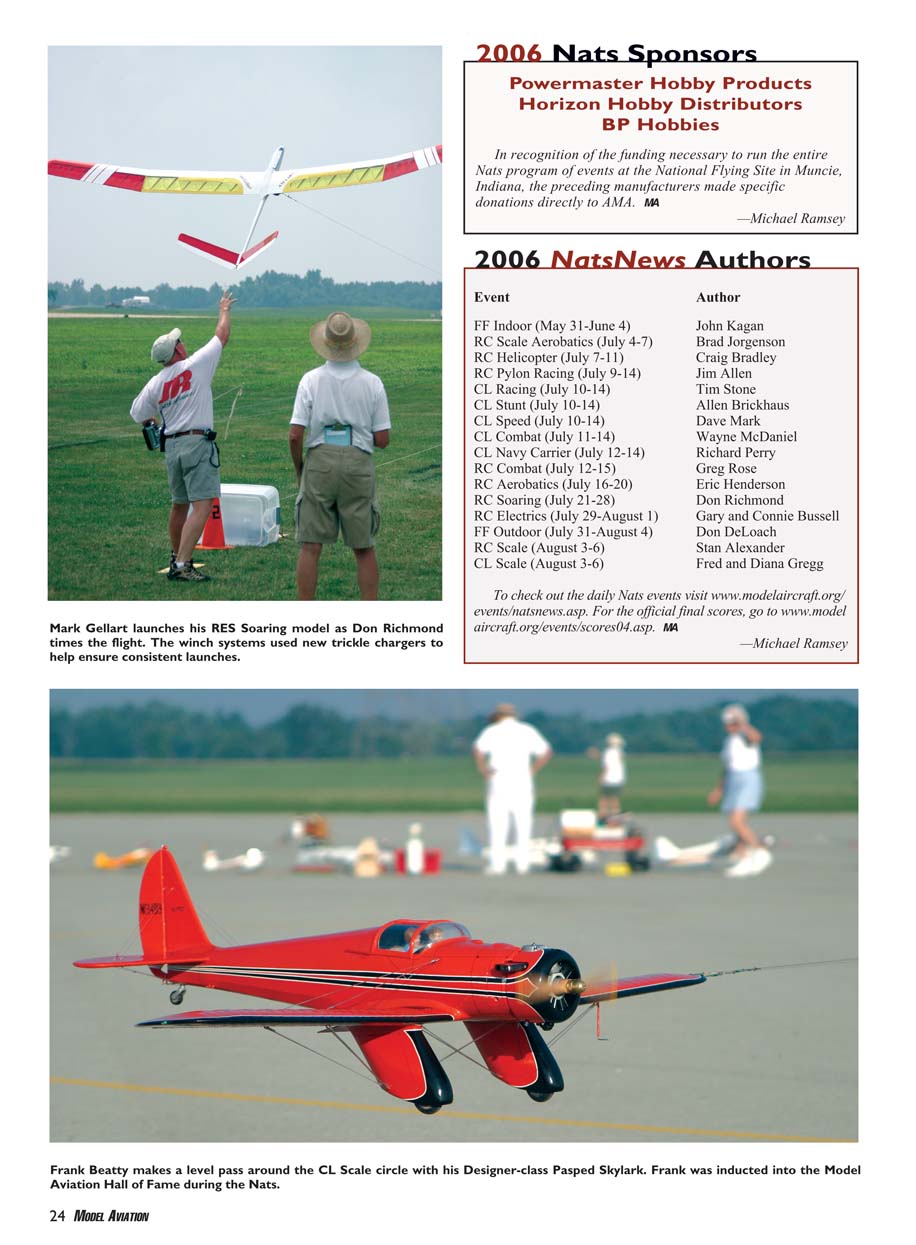
The AMA Publications Department produced daily coverage called NatsNews. Chief Editor Liz Helms and I led a team of reporters to bring event news to attendees and the wider community. Posted online at www.modelaircraft.org/events/natsnews.asp and printed for on-site distribution, NatsNews totaled nearly 300 pages and more than 800 photos, giving readers depth on equipment, winners, and contest happenings.
If you missed the event, catch up with those newsletters to see what equipment the winners used and what it might take to be a contender next year.
Stories from the Nats
#### Loudenslager Shark (Baron Johnson)
Much of what is inspirational about modeling comes from full-scale aviation history. Leo Loudenslager pushed full-scale aerobatics to new limits with the Laser 200 and inspired radical designs. He died before one of his commissioned aircraft—the Shark—could be flown.
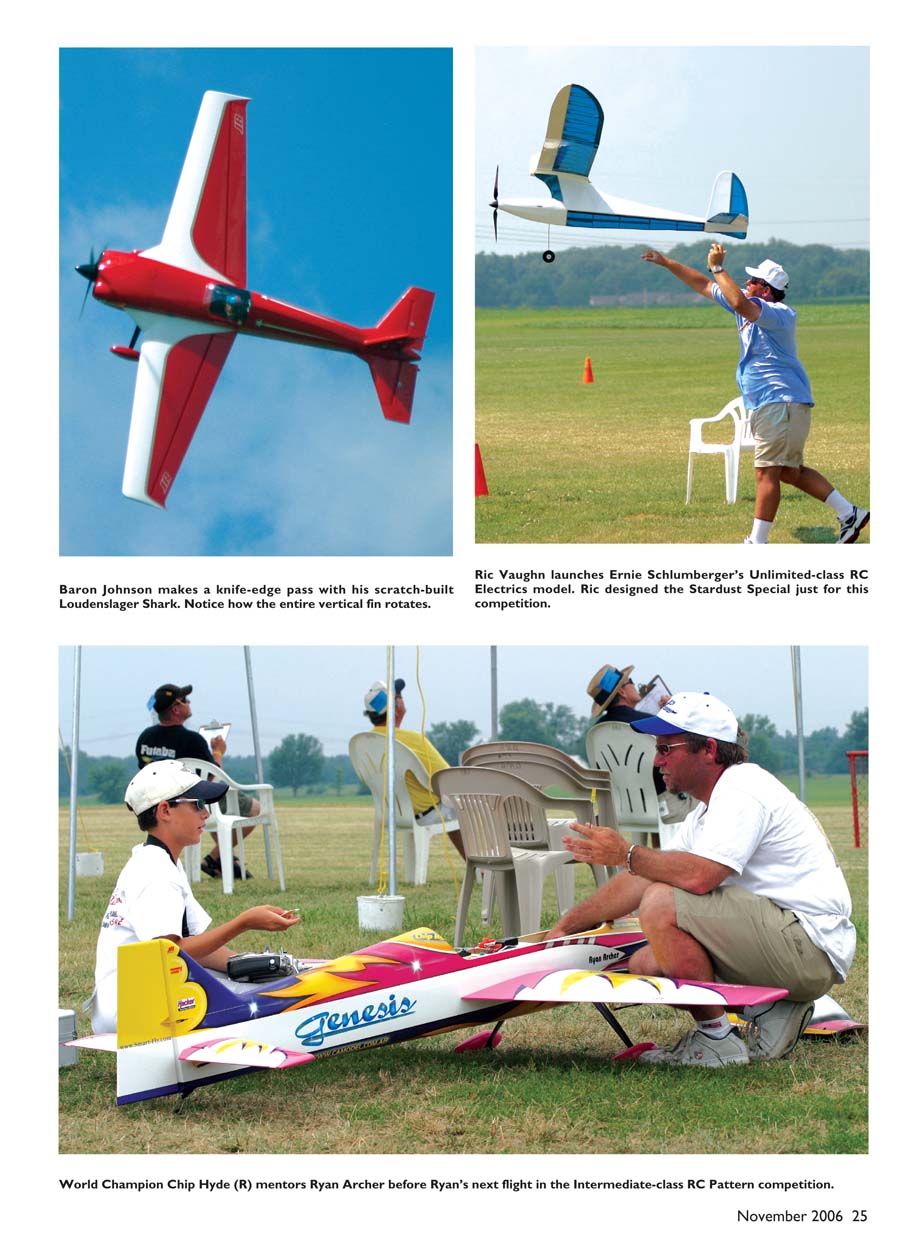
Baron Johnson, an aspiring aeronautical engineer, researched the Shark and built an RC model with the help of his father, Fred Johnson. Key features include an upper and lower fin that pivot together at a root point and a retractable lower fin for ground clearance (JR/Horizon Hobby made a special servo). Baron carefully calculated airfoils, fuselage side area, and wing placement, and scaled the model at 38.8% to use a DA-150 engine.
The model's first flight occurred about a month before the Nats. At the Nats Baron flew cautiously—sequence flying for IMAC competition was the primary focus. He qualified for the finals, but Fred fell ill the evening before final rounds, so Baron withdrew to care for his father. Fred is recovering well. Baron finished eighth out of 12 finalists based on preliminary scores.
#### Brazilian Invasion (Bene Rodriguez and Team)
Bene Rodriguez of Brazil has regularly attended the CL Precision Aerobatics (Stunt) competition and favors Mustangs, modifying Al Rabe's P-51 design for his use. Bene's friend Thomas Case funded travel for Bene and 28 friends to attend the Nats—a group dubbed the "Brazilian Invasion." All pilots flew Rodriguez-modified Mustangs, for which Bene supplied kits.
The effort was not a stunt to dominate scoreboards but a celebration and a showcase of sportsmanship. The team included pilots from beginner to expert; Thomas Case Jr. placed second in Junior CL Stunt. After the Nats, the group traveled to Spain to support the CL World Championships.
#### Concours d'Elegance (NSRCA)
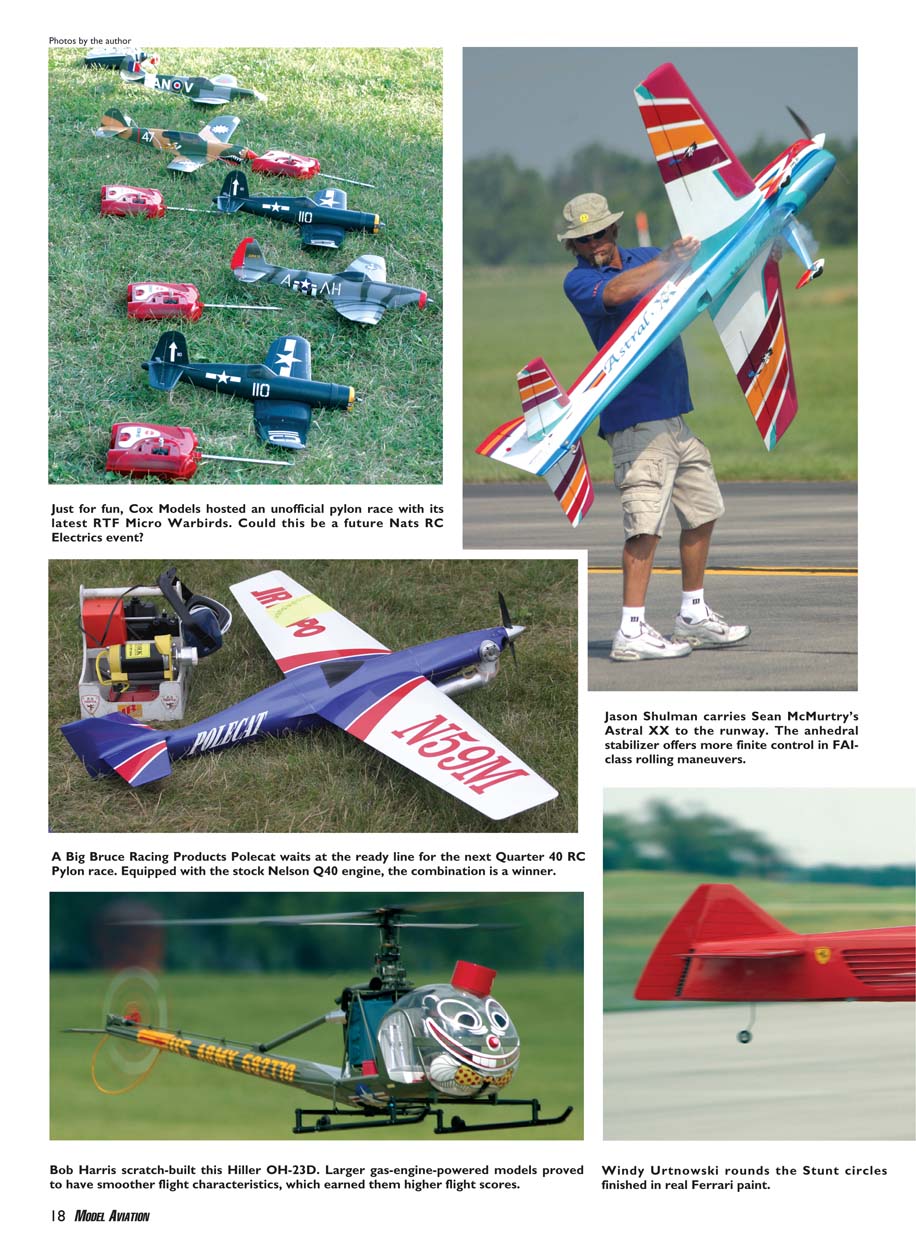
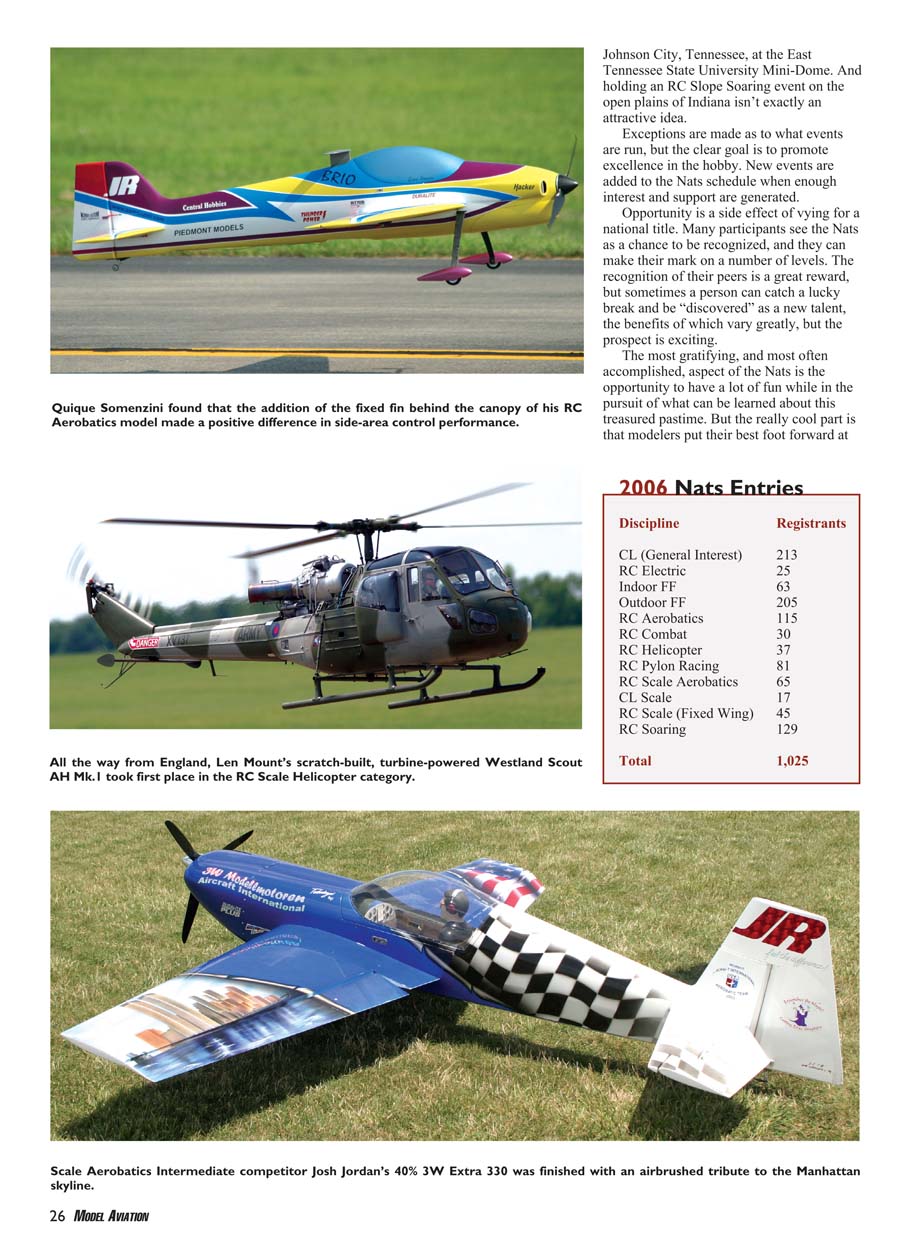
NSRCA Treasurer Rusty Dose organized a Concours d'Elegance to recognize craftsmanship in RC Aerobatics (Pattern). Competitors judged models on construction, paint application, hardware choice, and overall quality. Winners were Sean McMurtry (Astral XX) and Mike Hester (Black Magic). The event highlighted that craftsmanship remains a central part of the hobby and may inspire others to emphasize static points in competition.
Free Flight (FF) and Innovation
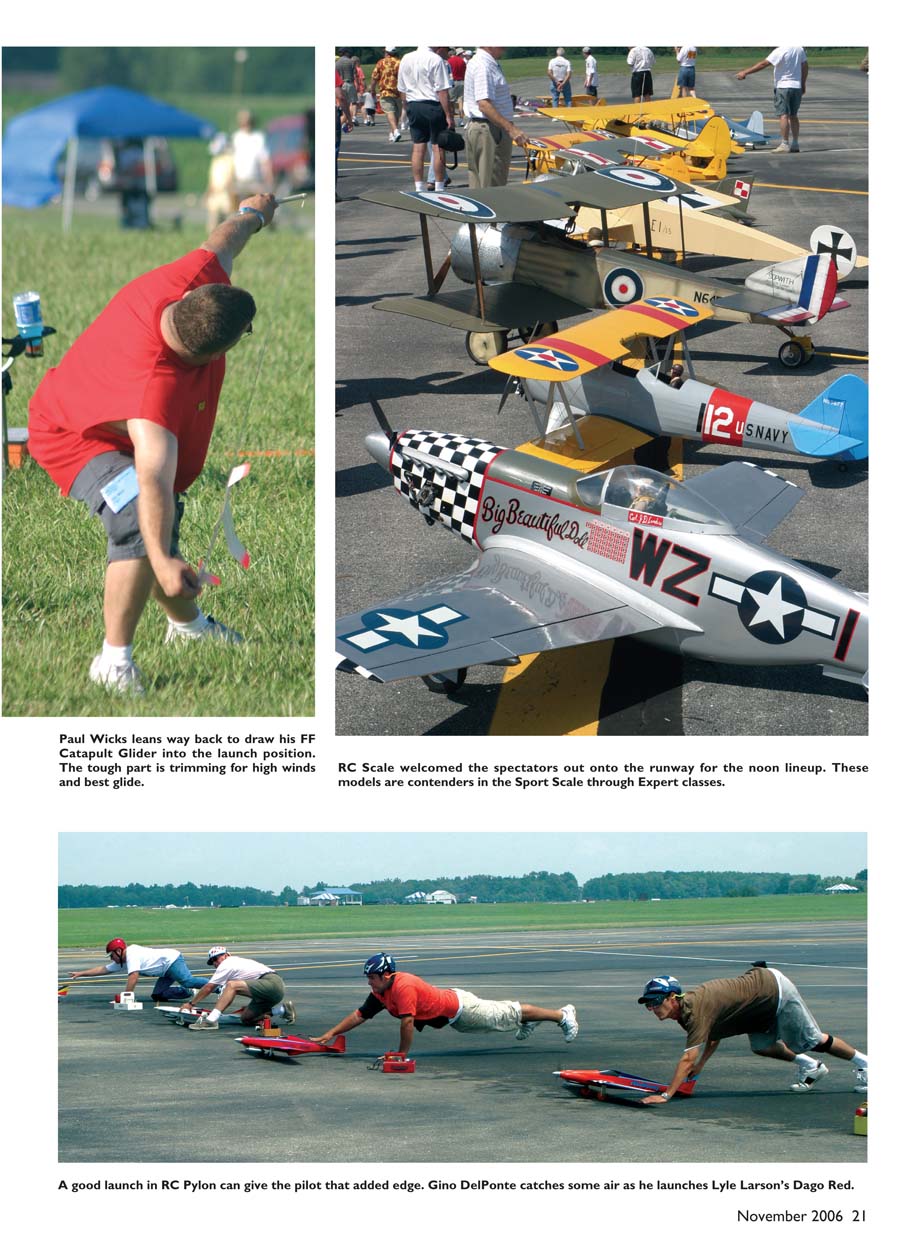
The FF portion is the largest segment of the Nats. The outdoor competition alone had more than 200 pilots and roughly 1,000 aircraft flown during the five-day competition. FF attracts a wide age range, with experienced veterans mentoring newcomers.
Innovation still appears within this tradition. In Hand-Launched Glider, Bruce Kimball introduced the discus-launch method—already used in RC soaring—which dramatically increased launch performance and flight times. Model design changes were made to accommodate the stresses of discus launching, but the technique put Bruce's times well ahead of others and may change the future of the event.
Conclusion
The 2006 Nats produced many memorable moments and helped spark renewed enthusiasm for the hobby. The AMA Nats is for everyone who shares a passion for aviation—sportsmen and professionals alike—who come to excel and reap rewards that extend beyond trophies.
I encourage anyone with a new program or idea about the hobby to use the Nats as a launch point into the mainstream of aeromodeling. With CL, FF, and RC contests happening simultaneously, it's hard to choose where to hang out—but that's part of the appeal. I feel fortunate to have experienced the Nats for a second year and eagerly await the third.
MA
Michael Ramsey [email protected]
Transcribed from original scans by AI. Minor OCR errors may remain.

