
2007 Futaba Extreme Flight
An AMA co-sponsored theatrical RC experience features the best international piloting talent
BY MARK FADELY
The Futaba International Extreme Flight Championships (XFC), held June 15–17 this year, was an awesome experience. This was its inaugural invitational at the AMA site in Muncie, Indiana. You couldn't ask for a better venue at which to fly such a contest; after all, it is the crown-jewel aeroplex of our hobby. I am so lucky to live only 45 minutes away from this wonderful place. If you fly model aircraft of any kind, you should make a point to visit this modeling haven at least once.
I was unsure of what to expect at XFC '07. I had competed in the three previous XFC competitions in Troy, Ohio; changing to a new site was going to take some getting used to. The older you get, the harder it is to change. I entered this contest fully expecting to be the oldest pilot competing, at 47. I was pleasantly surprised to learn that one pilot was even older than me. Mark Trent, the oldest flier entered, was 48. Way to go, Mark!
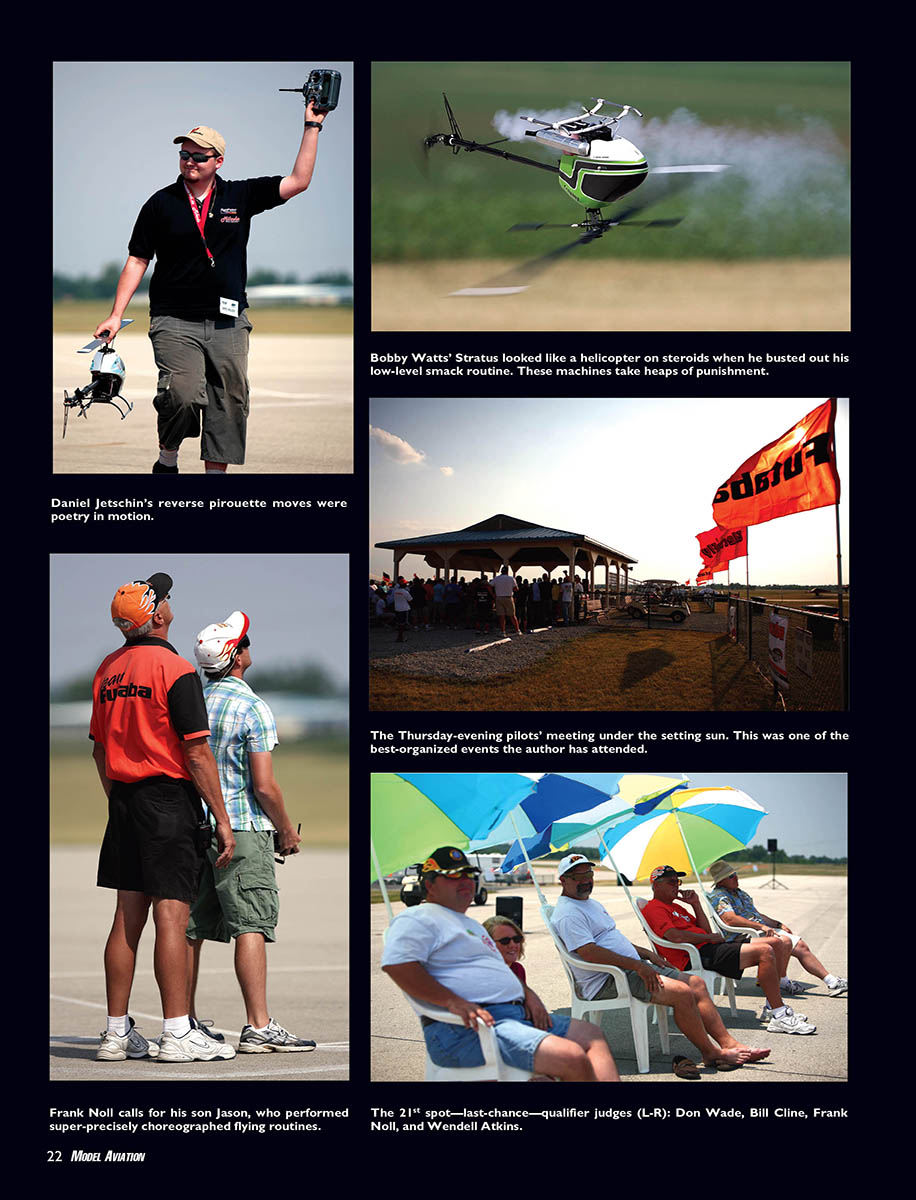
I have been to the AMA facility many times, and I go there every year in August for the IRCHA Helicopter Jamboree. This place is big—more than 1,000 acres big! Roughly 95% of the property is covered with a manicured blanket of short, green grass. There are several designated flying sites on the property, and we were invited to fly from the best flightline. It included a nice permanent shelter that would prove to be handy, as you will learn later.
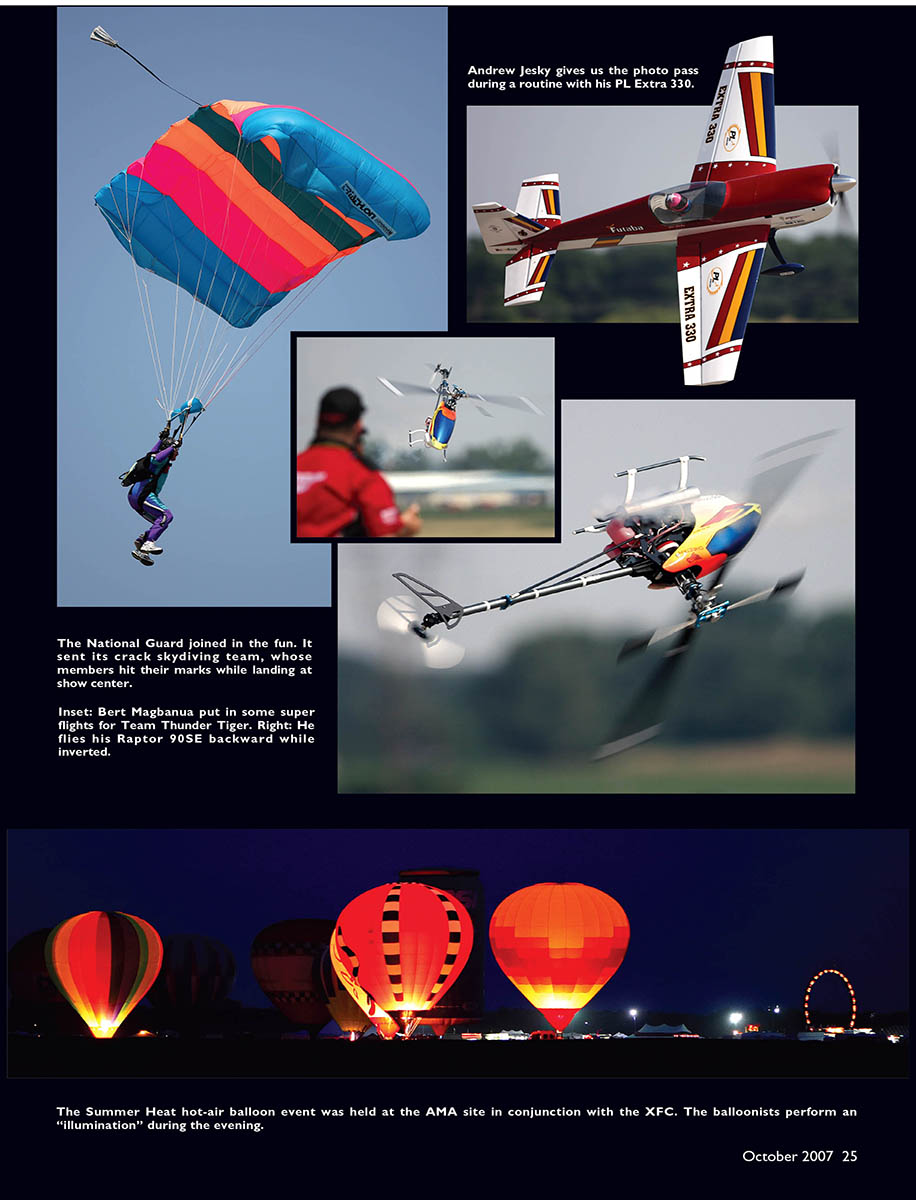
Event organizers Frank Noll, Bill Cline, and Wendell Atkins stepped things up this year. The Muncie Summer Heat Festival, which includes a carnival with amusement rides and hot-air balloons, was happening at the same time as the XFC. It was just south of the contest location on the AMA property. If that were not enough excitement, there was also a full-scale air show and a skydiving exhibition as daily noontime entertainment at the XFC.
The event officially kicked off Friday and finished Sunday afternoon. When I drove through the AMA entrance early Thursday morning, the weather was hot and humid, and thick fog covered the area. I followed the XFC signs along a winding blacktop road that led me back and around to Site 1, which features a large asphalt pad and plenty of parking. The pilot pit area was fenced off to the public. It was nice this year because the helicopter and airplane pilots pitted together; we got to know each other better. The airplane and helicopter competitions each had 21 contestants, and 18 airplane pilots were confirmed by the day of the event. The helicopter category was run slightly differently. Wendell Atkins, who headed up that portion of the event, decided to have a flyoff Thursday to fill all 21 spots.
At midday Thursday only 18 invited helicopter pilots were on-site. A small group showed up in the hopes of filling spots 19–21. The committee judged their flights, and three lucky fliers earned spots in their first XFC: Jared Granzow, Brian Regular, and Ben Parrott.
Thursday evening each pilot drew his flying order from a hat. I picked the seventh spot, so I would fly last in the first helicopter heat. The helicopter competitors were divided into three heats of seven, and then a heat of helicopters alternated with a heat of airplanes throughout the day.
First up was the Known flight, which must include the three mandatory maneuvers designated by the XFC staff. Check out http://futabarc.com/xfc-rc to see the required skills. The second-round flight is the Unknown. Judges have no idea what maneuvers will be flown in it; the pilot makes up a routine.
A big part of a contestant’s score is earned through good choreography with music. The pilots have to show strong technical flying in time with their music to do well. Try it the next time you are at the flying field. Turn on some music and try to keep your aircraft dancing to the beat; you will quickly see how difficult it is.
The idea behind the XFC is to be an entertaining show for spectators. Those include RC fliers and those who may never have been exposed to the hobby. Frank, Bill, and Wendell have put in a great deal of work to take our hobby to the next level. Holding the XFC at the AMA site this year went a long way toward reaching their goals.
There is an open invitation for any pilot who wants to try for a spot in the XFC. Make a video of your flying and send it in for consideration. Make sure it has music and is well choreographed, and you might get to participate next year.
If you think you have seen some remarkable flying at an event, imagine watching the top 40 helicopter and airplane pilots perform choreographed routines consisting of the latest, lowest, and most extreme maneuvers they can think of! You really have to be there; the videos on the Internet do not convey the contest’s “wow factor.”
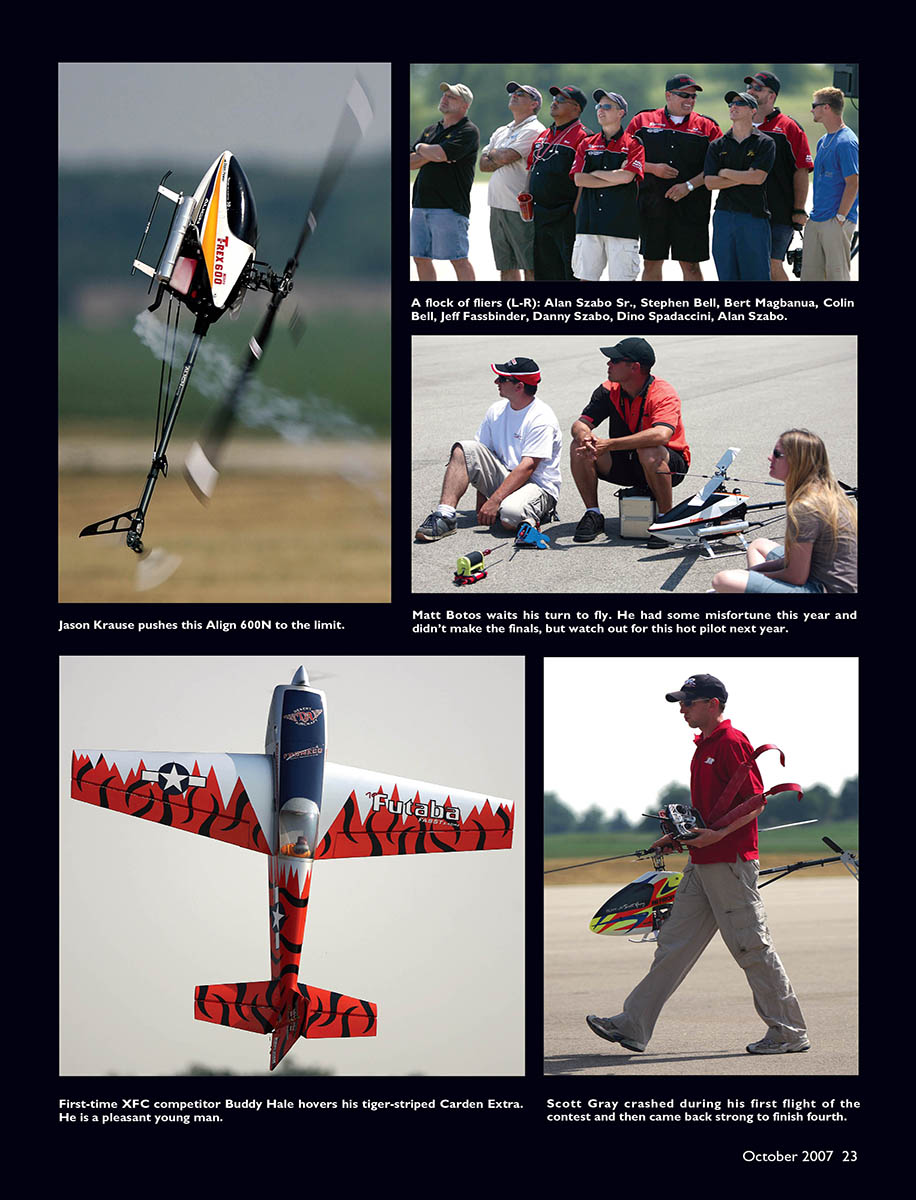
The helicopter pilots flew first Friday, and Jared Granzow was the first pilot up. He had to be nervous because Thursday morning he didn’t even know he was flying in the event. Yikes! Jared is cool, though. He flew his Raptor 90 through a solid flight, and Dino Spadaccini (Raptor team manager) gave him a big high five afterward.
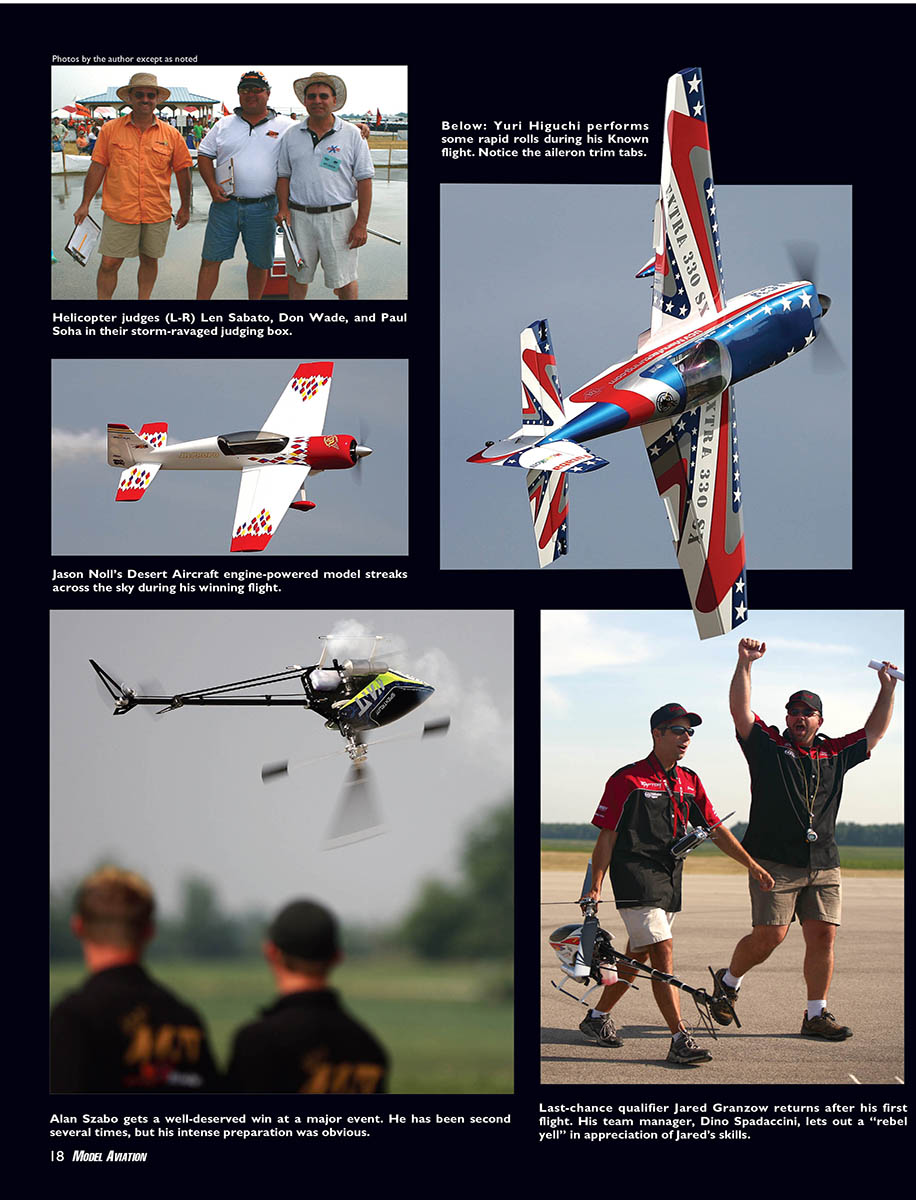
When the helicopter pilots were finished, it was time to bring on the airplane fliers. And they brought it on! Even though it was only the first day of the contest, they laid down some terrific 3-D. Mark Leseberg’s Blender that morphed into a Harrier Rolling Circle right on the deck really struck me. It was sweet. His model’s smoke system rocked too! Mark’s Dalton Extra looked fantastic against the deep-blue skies over Muncie.
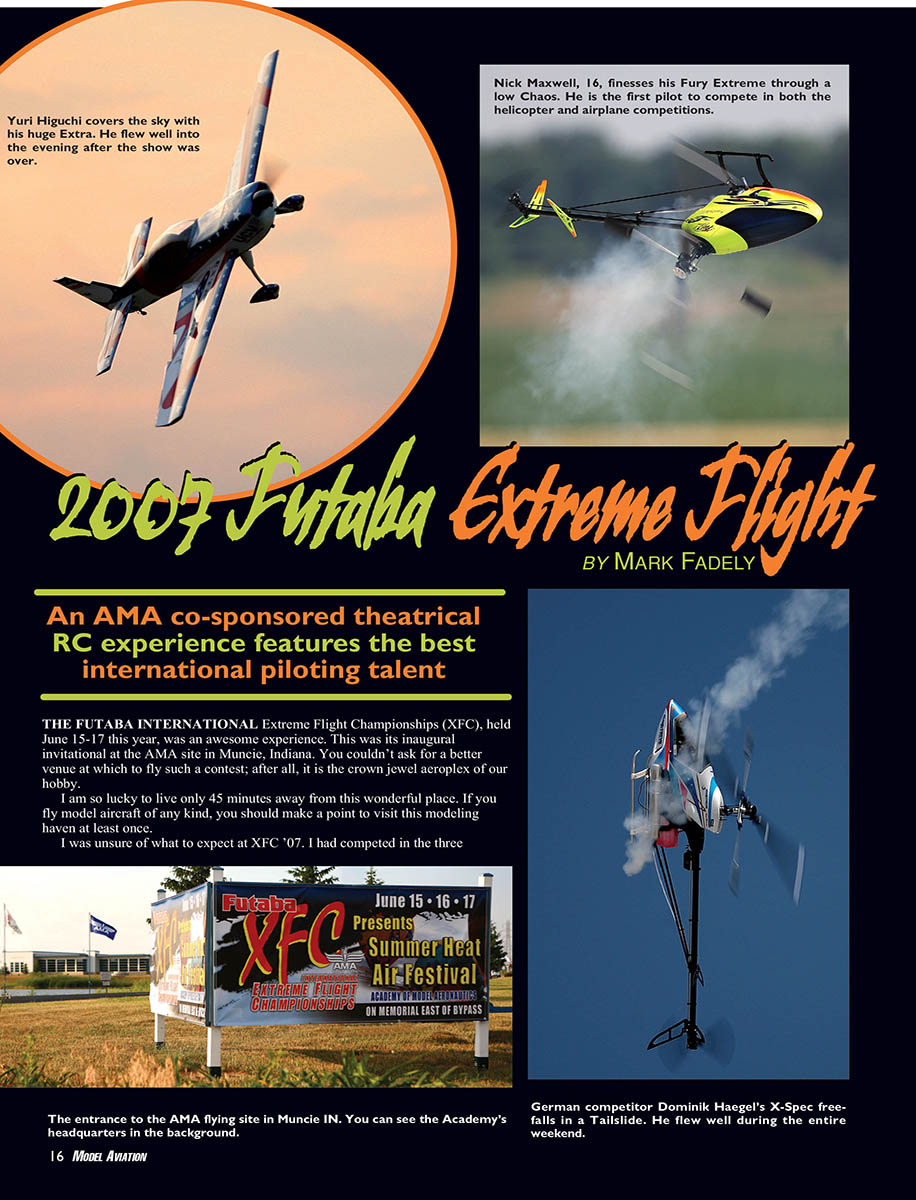
Most of the airplane pilots pushed it to the limit, and low flying was the rule. Jason Noll flew supremely. His precision and coordination with the custom-mixed music were spectacular.
However, all the low and aggressive flying came with a price. Several pilots, including Jason, who was the eventual winner, ran out of air and their models met terra firma in an unpleasant way.
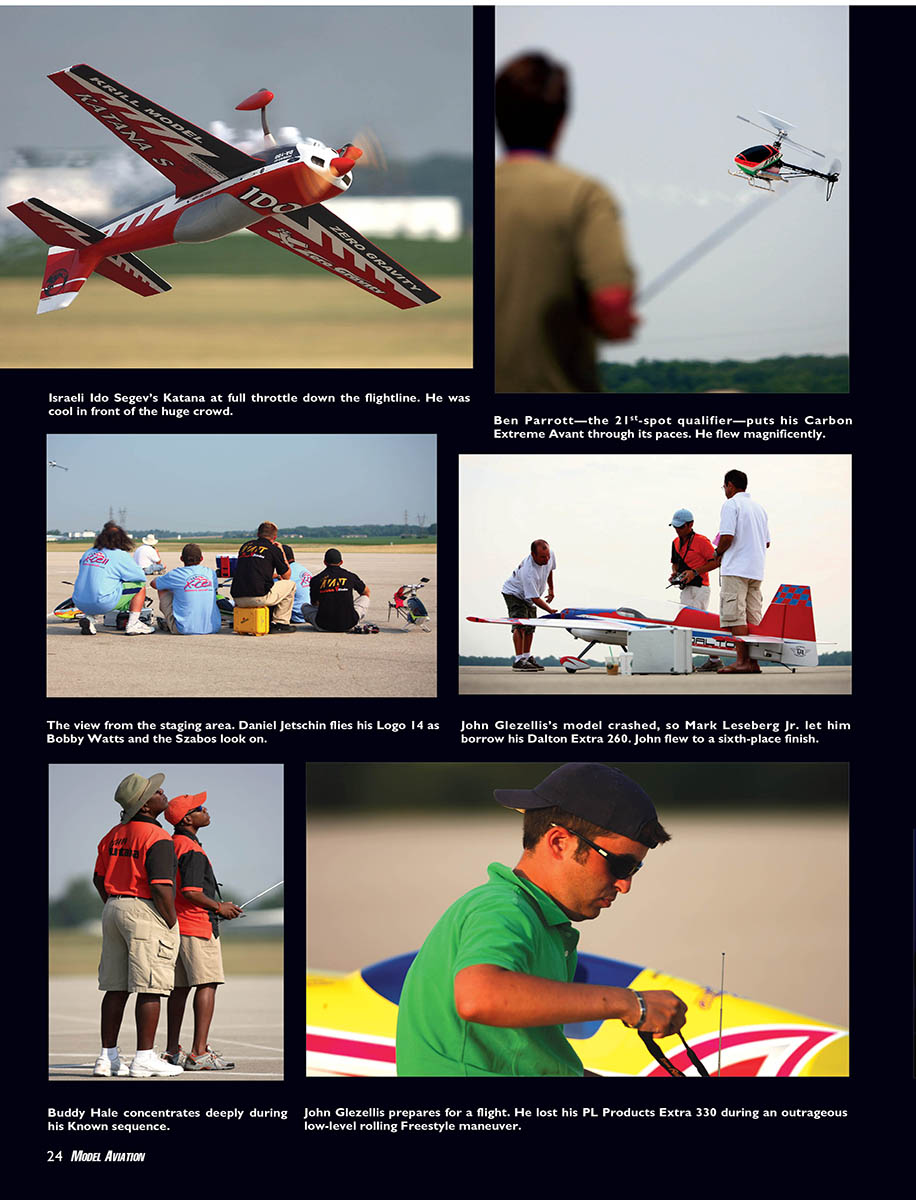
Jason was lucky because his aircraft just touched the ground while pulling out of a high-alpha loop. The airplane’s airspeed was slow enough and the impact was slight enough that it essentially just broke the propeller. There was a bit of cosmetic damage to the cowling, but that was about it. Jason was able to use the same model for the rest of the contest.
The flying and the temperatures were super-hot Saturday. Everyone was fighting for a top-10 finish to advance to Sunday's finals. More airplanes and helicopters bit the dust in the intense action.
Saturday evening there was a great dinner sponsored by the organizers and an awards ceremony for the pilots who did not make it into the finals. Some were disappointed, but to fly in the XFC is a great honor regardless of your final ranking.
Each day at approximately noon all contest flying would stop. The tandem full-scale aerobatic air show by Matt Chapman and Michael Mancuso entertained the crowds, and they were amazing! Justin Chi—who was 4—flew his 3-D helicopter routine for us. Yes, 4 years old! He was simply incredible.
Jerry L. Smith was on hand to do his unreal delta-wing RC exhibition. The National Guard performed skydiving demos, and there was a hot-air balloon launch every day. What a show! It was fantastic in every way.
There was an interesting atmospheric phenomenon at Muncie this year. It was the first time I had experienced it. I mentioned that the weather was hot and humid, and the blacktop surface we were flying from added even more heat to the already boiling air around Stage Center. This significantly raised the density altitude of the air surrounding the pilots.
That means there were fewer air molecules for a given space, which was bad for propellers, wings, and rotors. Anything trying to fly through that air would be doing so with much less efficiency.
The layer of air from the asphalt to approximately 10 feet high was some of the worst in which I had ever flown. That is why my flying was so bad! Just kidding, but that layer of air did take out a few pilots this year.
Everyone wanted to fly low, and that dirty air close to the ground was a challenge for fixed- or rotary-wing aircraft to bite into. Things were okay if you flew out away from the blacktop pad, but coming in close for the low center-stage stuff was challenging to say the least.
Whether it was an airplane or a helicopter, it would want to sink into the ground in that area. You just did not have the extra pull to get your aircraft back up if you went too low. The flying conditions were difficult and, just to put some icing on the cake, the wind was in our faces during most of the event.
Manuel Santos's model's wingtip touched the ground on knife-edge just after passing stage center. Matt Botos had an inverted blade scrape on the runway after pulling out of a low tailslide. Neither aircraft was flyable after the incident.
I bounced my helicopter off the tarmac in an inverted pogo. It hit hard enough to break gears in the throttle servo, but, amazingly, the rest of it was fine.
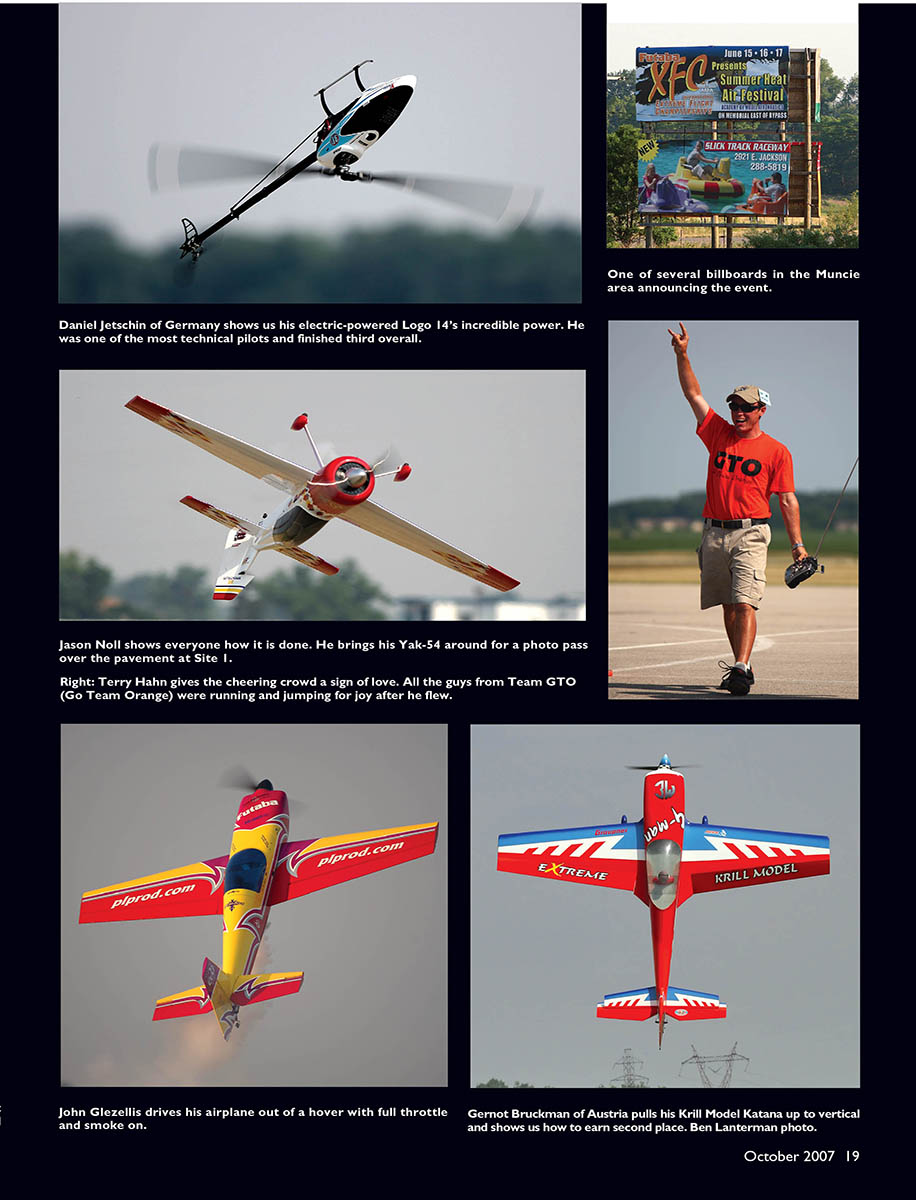
Meanwhile, airplane pilots such as Gernot Bruckman and Ido Segev of Team Krill were seemingly unaffected by anything. They put in some fantastic flights with their 39% Katanas.
Gernot did have a hard landing that damaged his airplane. In an act of true sportsmanship, several other pilots came to his rescue with parts and labor to fix his model. The same help was given to Jason Noll and a couple others after mishaps.
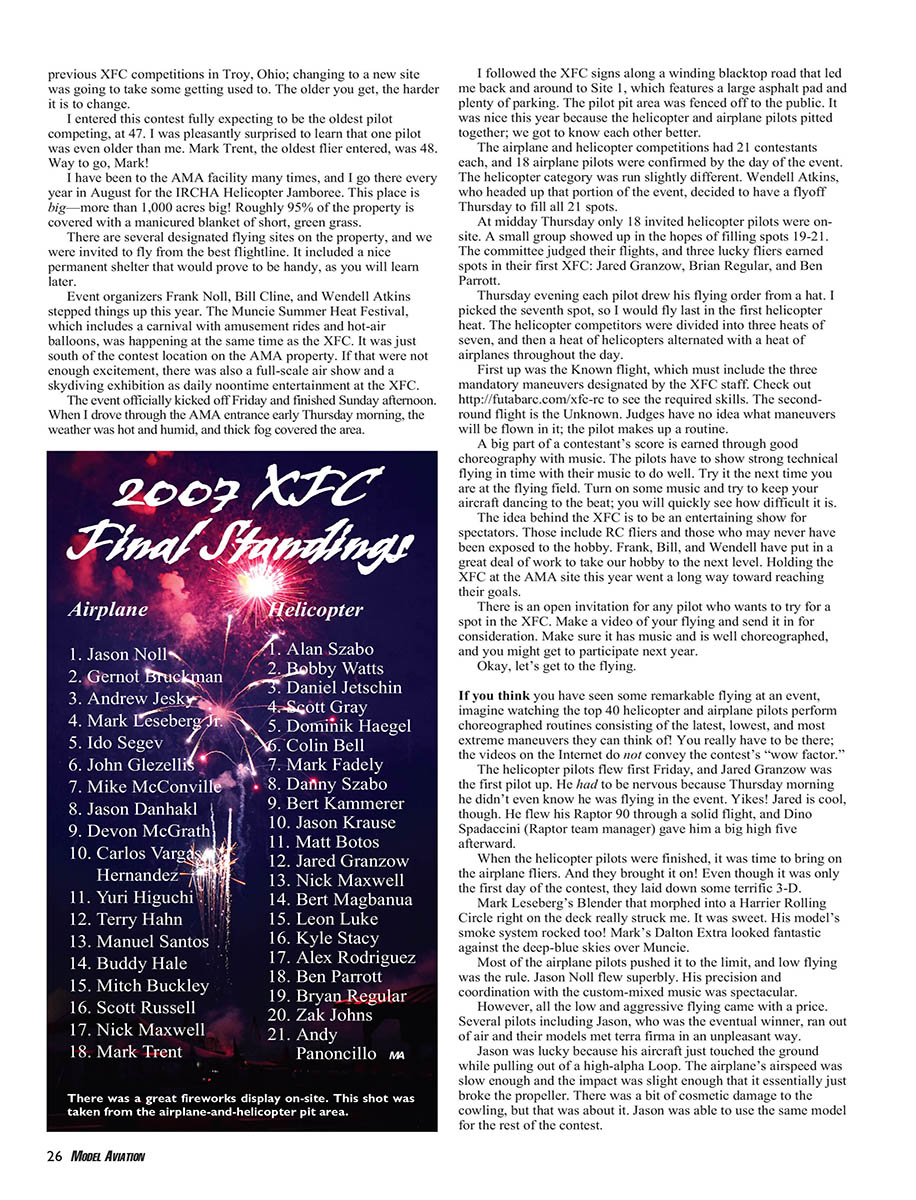
Gernot flew to a well-deserved second place.
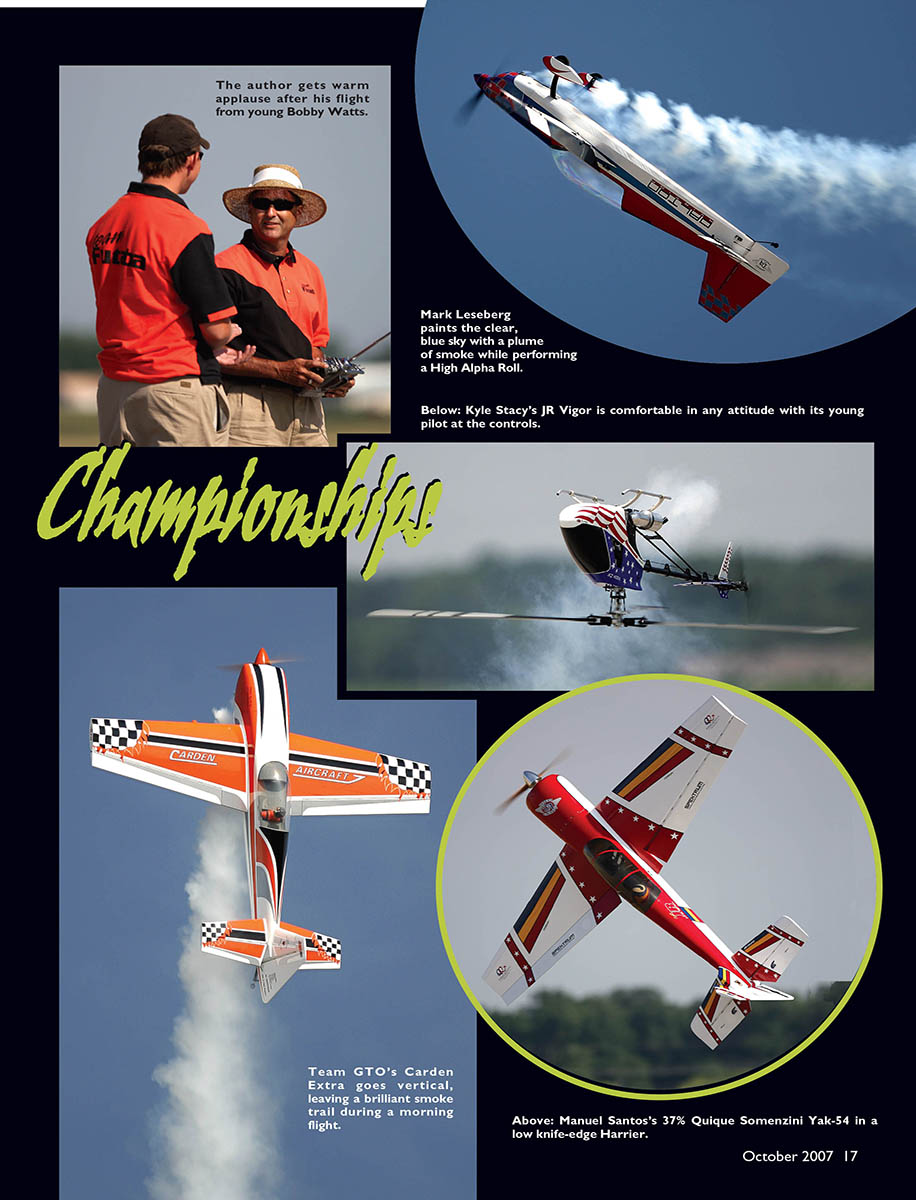
There were some exciting things to watch in the helicopter competition this year. Alan Szabo flew at a level I had never seen. He has always been thrilling to watch, but this year his precision and perfection in the Known maneuvers were astounding.
Bobby Watts, who claimed second place, was so much fun to watch! His low-smack routine at Stage Center with nothing higher than 10 feet was sensational. Way to go, Bobby!
Daniel Jetschin, the third-place pilot, was also extraordinarily impressive. His piro-reversing stuff is setting a new flying standard for the rest of us.
No Indiana event would be complete without thunderstorm activity. We had to wait until Sunday afternoon for it, but when it came it did more than just put a damper on things.
There was 20 minutes of 70 mph winds and rain that destroyed any pop-up tent canopies that were left up. Everyone was under the permanent shelter or in cars.
Afterward the flightline looked like a war zone. The judges' chairs were strewn all around, and speakers as well as portable toilets were knocked down. But it cleared up beautifully, and the contest was finished under sunny skies with light winds.
I was extremely impressed by how this XFC was orchestrated, and from a pilot's point of view it was a pleasure to attend. It was a great move to bring the event to Muncie, where you have the space for expansion and availability for years to come.
I recommend this contest to spectators and pilots alike. Make plans to be there next year.
Mark Fadely [email protected]
Transcribed from original scans by AI. Minor OCR errors may remain.

