
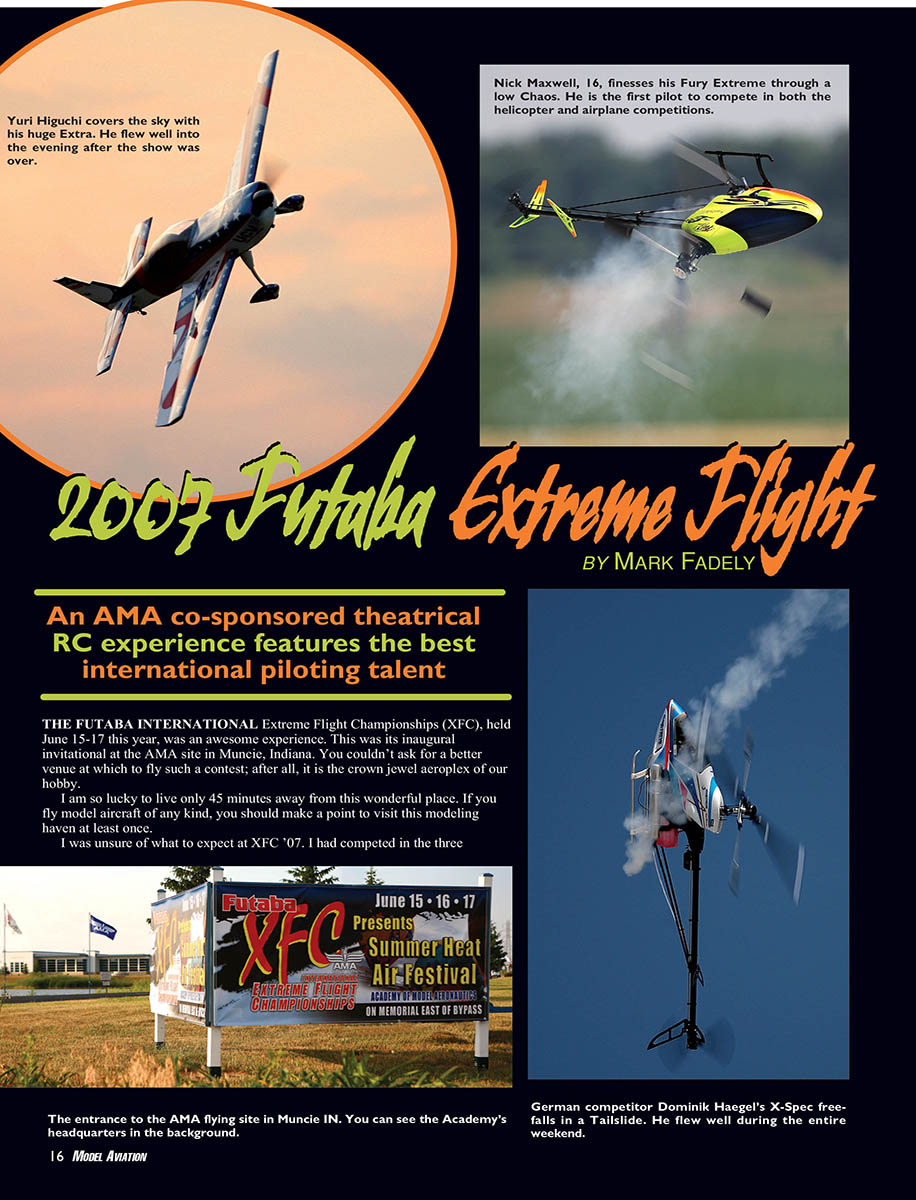
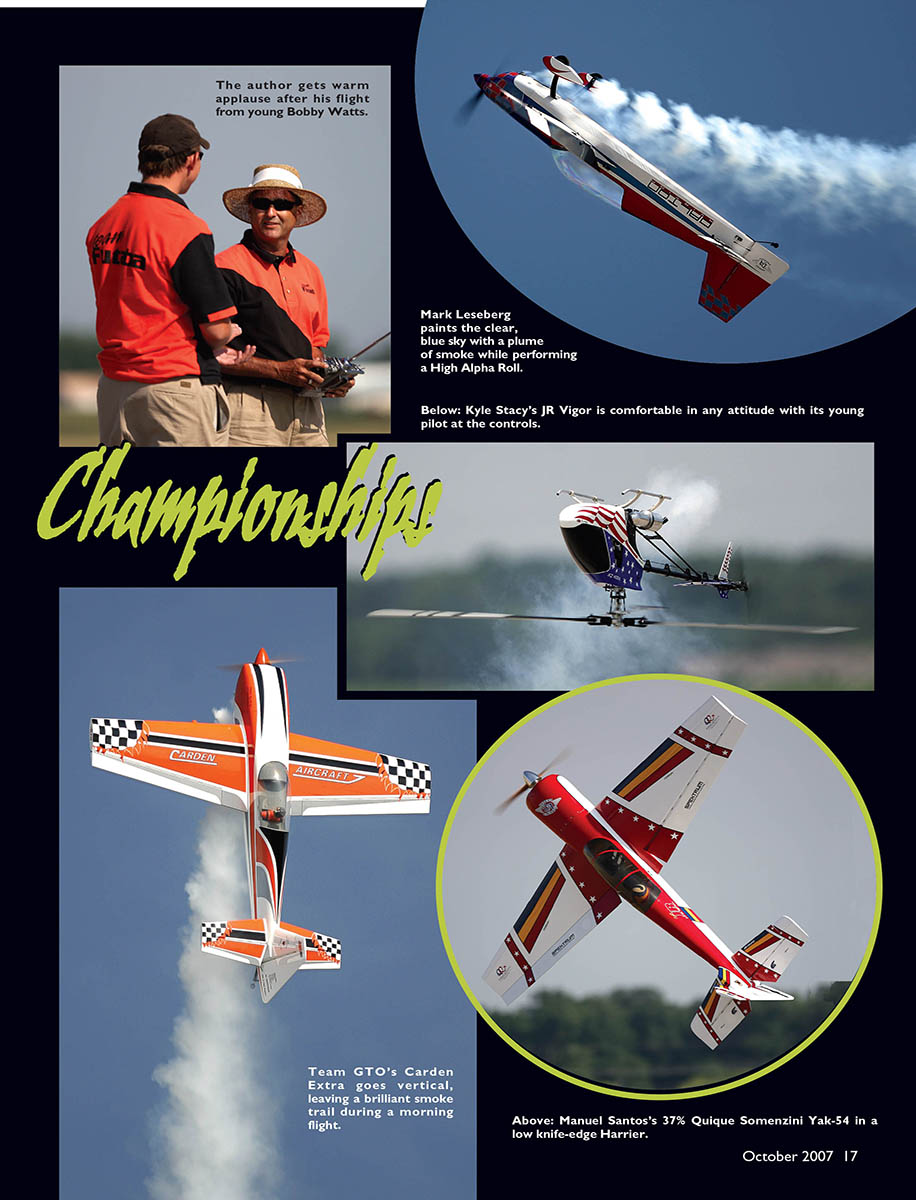
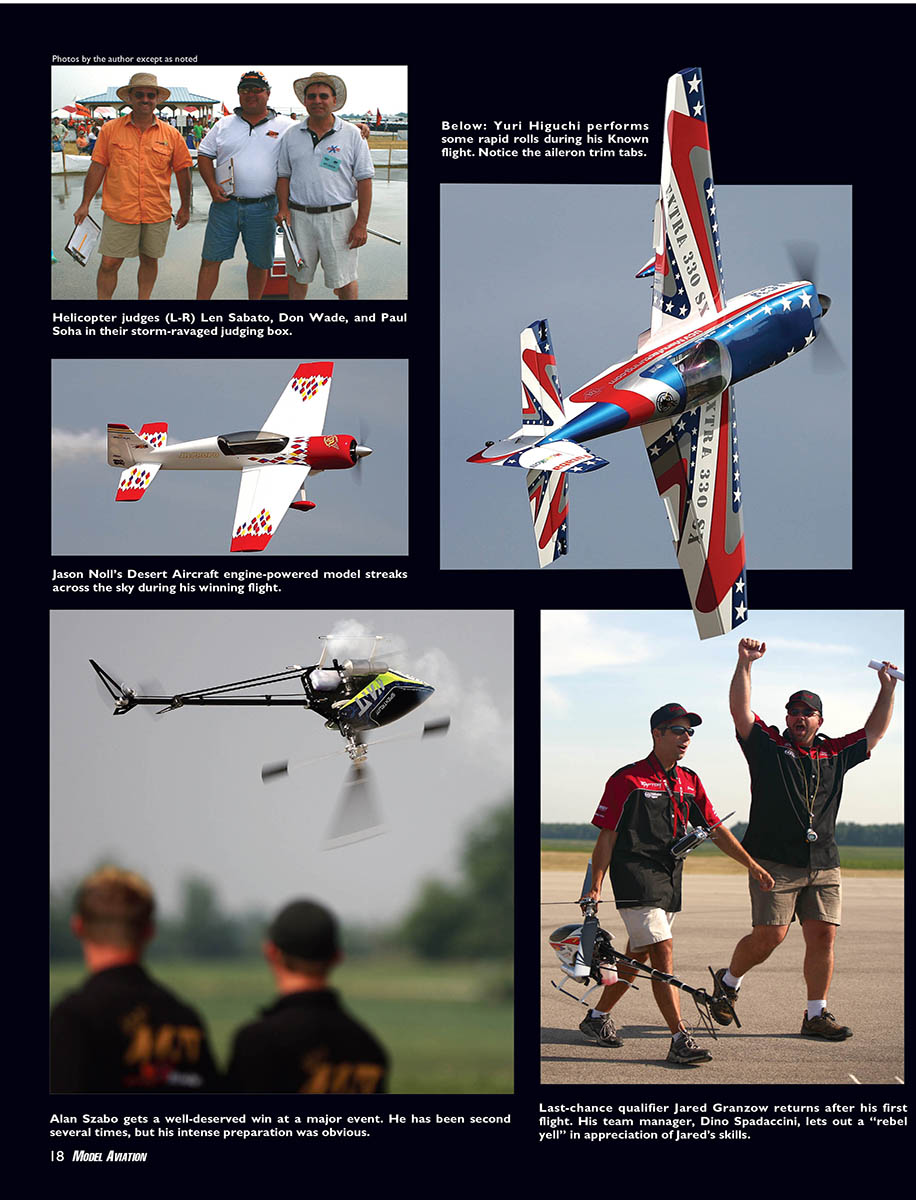
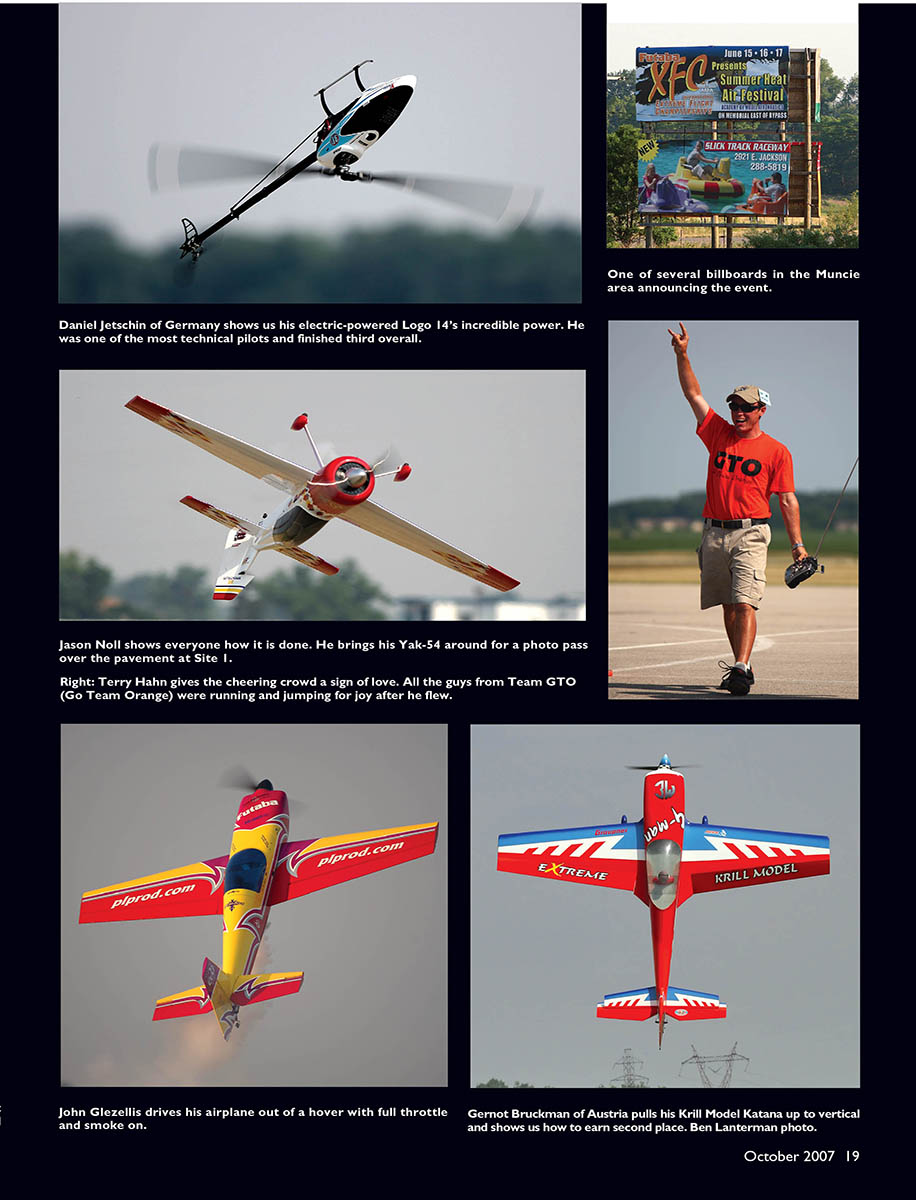
2007 Futaba Extreme Flight
BY MARK FADELY
An AMA co‑sponsored theatrical RC experience features the best international piloting talent
Event overview
The Futaba International Extreme Flight Championships (XFC), held June 15–17, 2007, was an awesome inaugural invitational at the AMA site in Muncie, Indiana. You couldn’t ask for a better venue for this kind of contest; after all, it is the crown‑jewel aeroplex of our hobby. I’m lucky to live only 45 minutes away from this wonderful place. If you fly model aircraft of any kind, you should make a point to visit this modeling haven at least once.
I entered this contest fully expecting to be the oldest pilot competing at 47. I was pleasantly surprised to learn one pilot was even older: Mark Trent, the oldest flier entered, was 48.
Venue and atmosphere
I have been to the AMA facility many times and go there every year in August for the IRCHA Helicopter Jamboree. The site is more than 1,000 acres, and roughly 95% of the property is covered with a manicured blanket of short, green grass. There are several designated flying sites on the property; we were invited to fly from the best flightline, which included a nice permanent shelter that proved handy later.
The XFC coincided with the Muncie Summer Heat Festival, which featured:
- a carnival with amusement rides and hot‑air balloons,
- a full‑scale air show,
- daily skydiving exhibitions at noon.
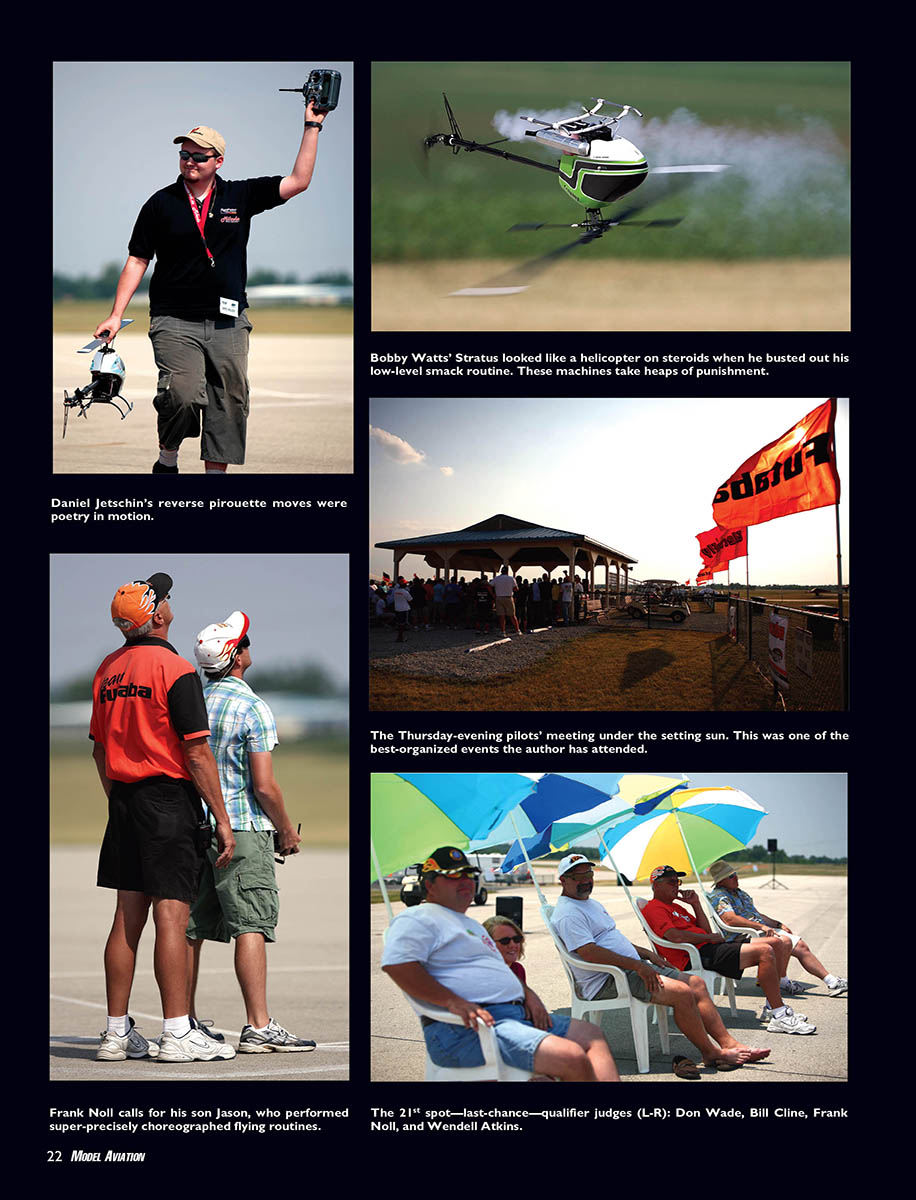
Event organizers Frank Noll, Bill Cline, and Wendell Atkins stepped things up this year to make it a true spectator event.
Pilots and entries
- The airplane and helicopter competitions were each slated for 21 contestants.
- Eighteen airplane pilots were confirmed by the event.
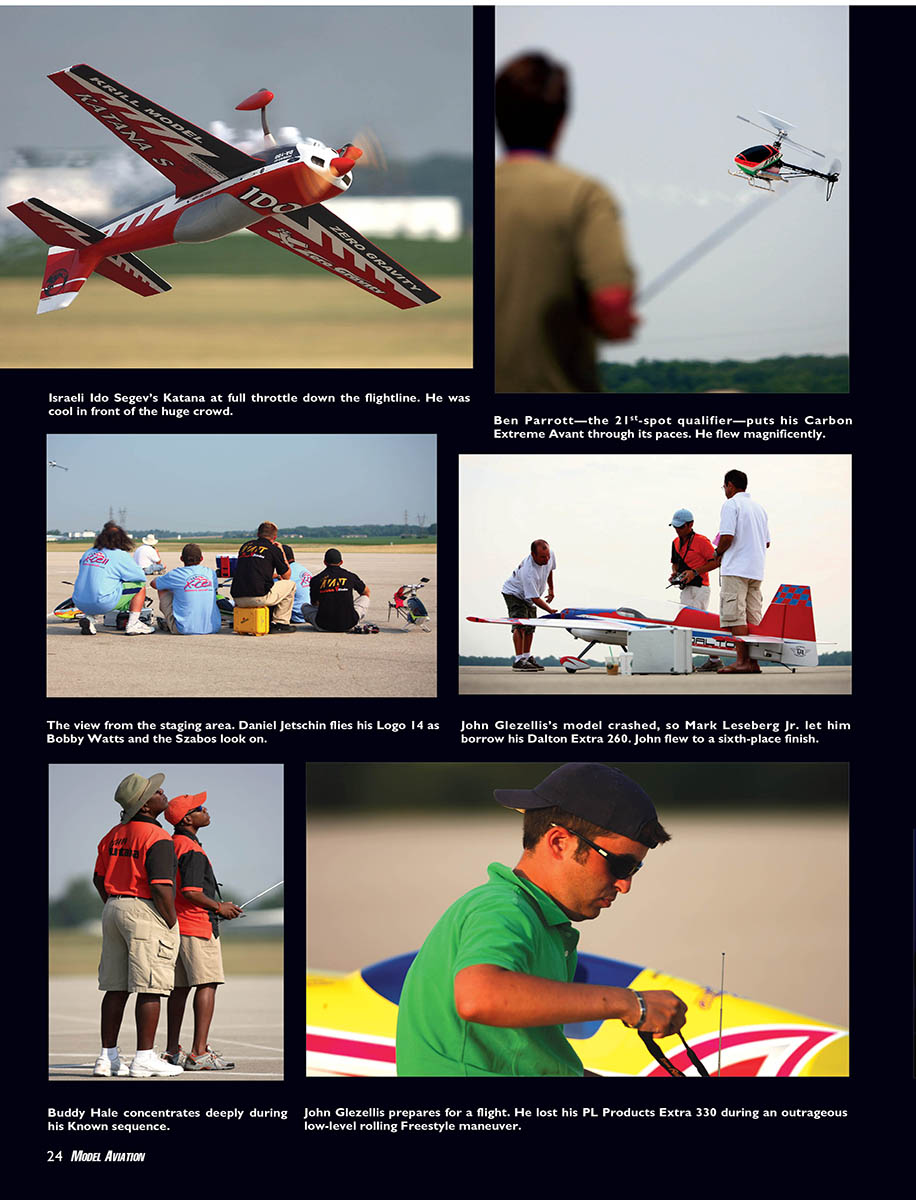
- The helicopter category ran slightly differently: Wendell Atkins held a flyoff Thursday to fill spots 19–21. Jared Granzow, Brian Regula, and Ben Parrott earned those spots.
Pilots drew flying order Thursday evening. I picked the seventh spot, putting me last in the first helicopter heat. The helicopter competitors were divided into three heats of seven, alternating with airplane heats throughout the day.
Competition format
Each heat consisted of:
- The Known flight — must include the three mandatory maneuvers designated by XFC staff (check http://futabarc.com/xfc-re to see the required skills).
- The Unknown flight — a routine the pilot creates; judges don’t know the maneuvers in advance.
A big part of a contestant’s score comes from choreography with music. Pilots must show strong technical flying in time with their music to score well. The idea behind XFC is to be an entertaining show for spectators, both RC fliers and the general public.
There is an open invitation for any pilot who wants a spot in the XFC: make a video of your flying with music and good choreography and submit it for consideration.
Flying highlights
If you think you’ve seen remarkable flying at an event, imagine watching the top 40 helicopter and airplane pilots perform choreographed routines of the latest, lowest, most extreme maneuvers. The Internet videos don’t convey the contest’s “wow factor.”
Friday started with the helicopter pilots. Jared Granzow—who only learned Thursday morning he’d be flying—opened the flying, putting in a solid flight with his Raptor 90.
When airplanes took over, the action was intense. Highlights included:
- Mark Leseberg’s Blender that morphed into a Harrier Rolling Circle right on the deck; his model’s smoke system drew lots of attention.
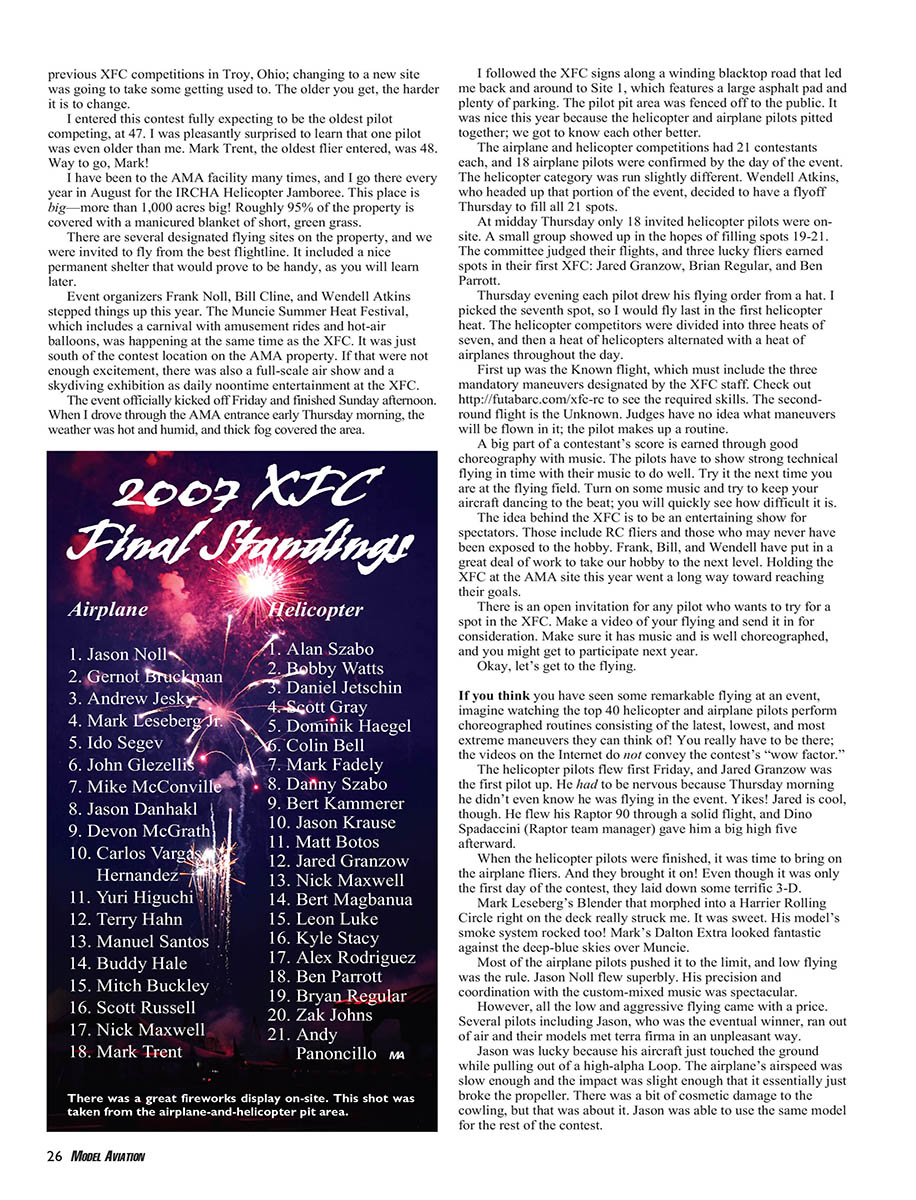
- Jason Noll’s precision flying and custom‑mixed music coordination, which ultimately helped him win the contest.
Many pilots pushed to the limit and suffered mishaps. Jason was fortunate: his aircraft lightly touched the ground while pulling out of a high‑alpha loop, breaking mainly the prop and some cosmetic pieces; he flew the same model the rest of the contest.
Saturday was intensely hot and competitive as pilots fought for a top‑10 finish to advance to Sunday’s finals. Several more models were damaged or destroyed in the aggressive flying.
Airshow and entertainment
Each day at approximately noon, contest flying paused for full‑scale entertainment:
- Tandem aerobatics by Matt Chapman and Michael Mancuso.
- Delta‑wing RC exhibition by Jerry L. Smith.
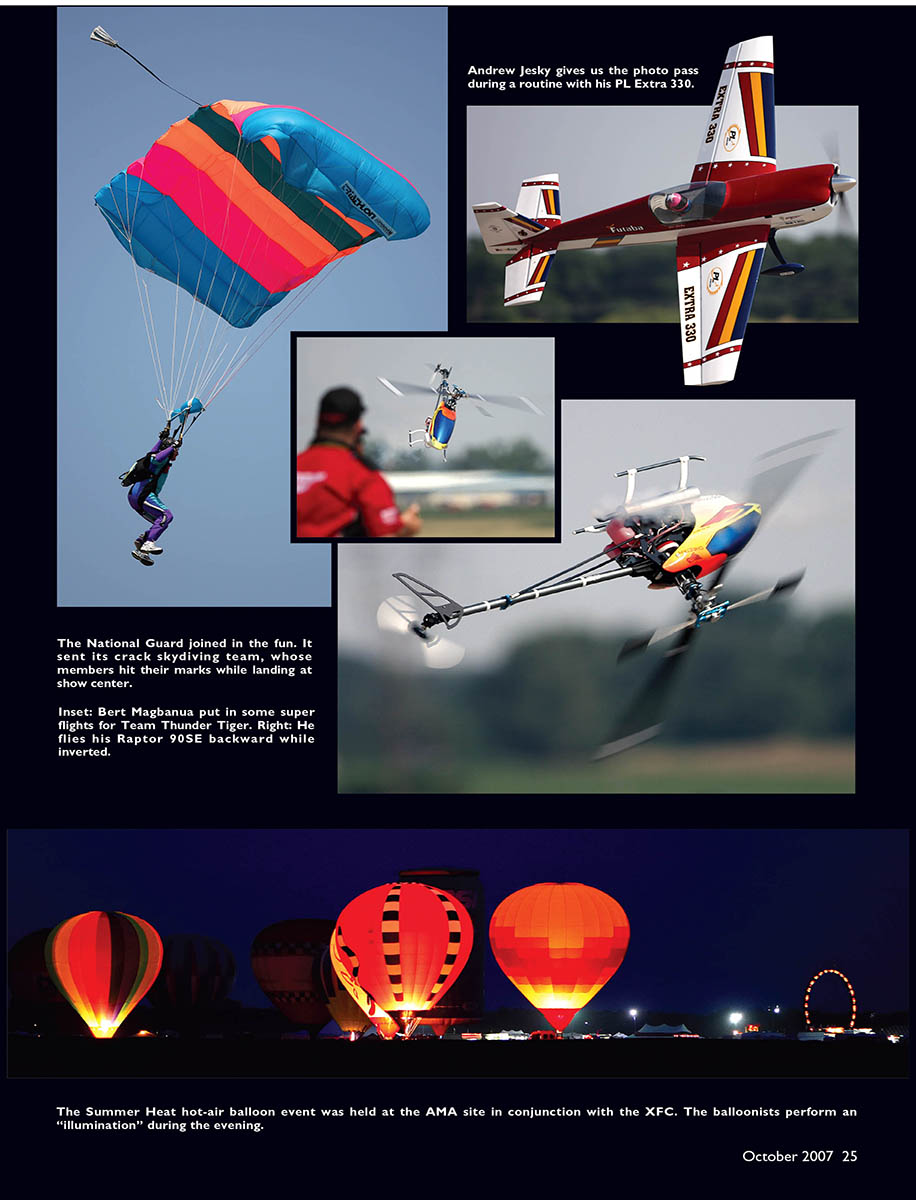
- National Guard skydiving demos.
- Daily hot‑air balloon launches.
A memorable moment was four‑year‑old Justin Chi flying his 3‑D helicopter routine—he was simply incredible.
Conditions and challenges
There was an interesting atmospheric phenomenon at Muncie this year. Hot, humid weather combined with the blacktop surface raised the density altitude around Stage Center. The layer of air from the asphalt to roughly 10 feet high was unusually thin and turbulent, reducing propeller, wing, and rotor efficiency. This “dirty air” made low flying especially treacherous.
Examples of mishaps caused or worsened by the conditions:
- Manuel Santos’s wingtip touched the ground on knife‑edge just after passing show center.
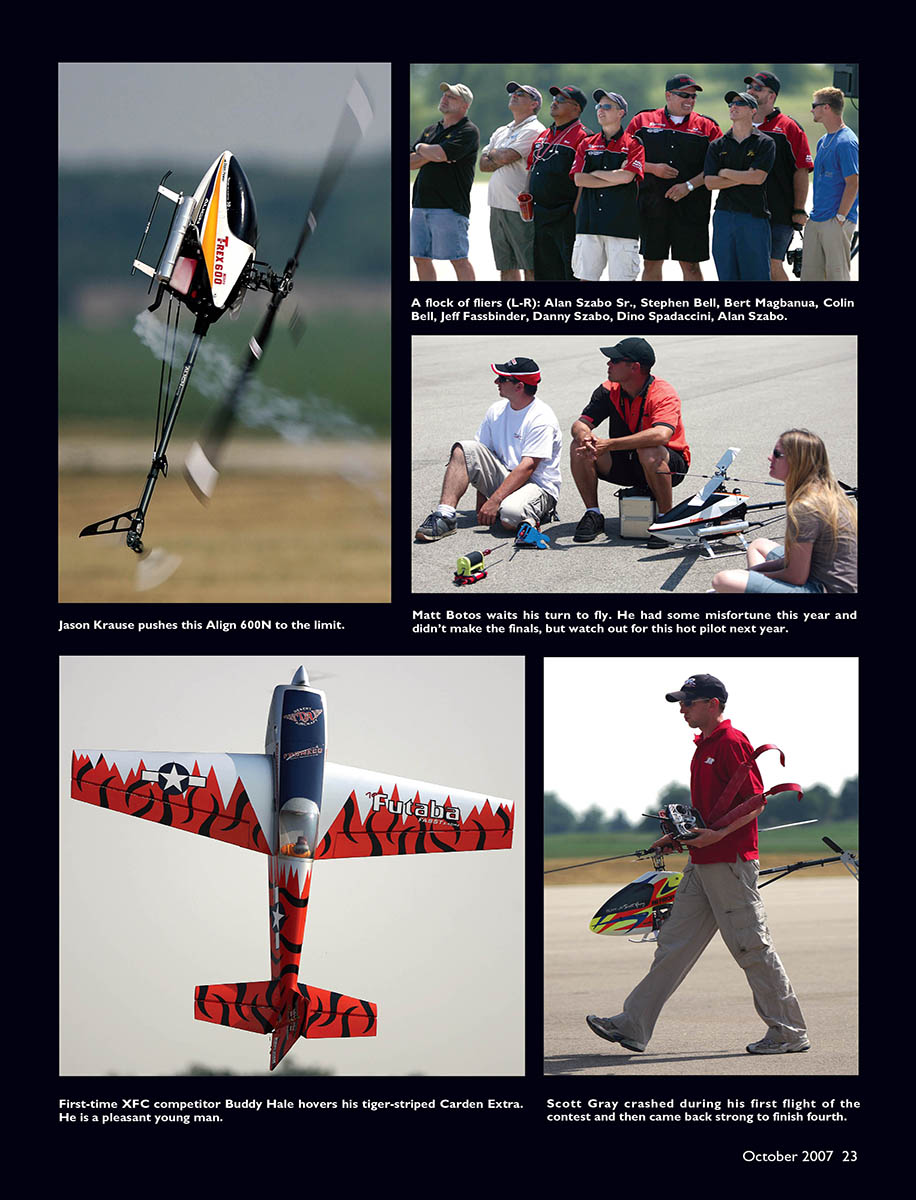
- Matt Botos had an inverted blade scrape on the runway after pulling out of a low tailslide.
- I bounced my helicopter off the tarmac in an inverted pogo; it broke gears in the throttle servo but was otherwise intact.
Still, pilots like Gernot Bruckman and Ido Segev (Team Krill) delivered fantastic flights with their 39% Katanas. Gernot finished a well‑deserved second place despite a hard landing that damaged his airplane; several pilots pitched in with parts and labor to help him and others, including Jason Noll, after mishaps.
Helicopter competition notes
The helicopter round produced some extraordinary flying:
- Alan Szabo flew at a new level of precision in the Known maneuvers.
- Bobby Watts (second place) delivered a sensational low smack routine at Stage Center with nothing higher than 10 feet.
- Daniel Jetschin (third place) impressed with piro‑reversal maneuvers that are setting new standards.
Weather interruption and finish
No Indiana event would be complete without thunderstorms. Sunday afternoon brought 20 minutes of 70 mph winds and rain that destroyed any pop‑up tents left standing. Everyone sheltered under the permanent structure or in vehicles. Afterwards the flightline looked like a war zone—chairs, speakers, and portable toilets were knocked down—but it cleared up beautifully and the contest finished under sunny skies with light winds.
Final thoughts
I was extremely impressed by how this XFC was orchestrated. From a pilot’s perspective it was a pleasure to attend. Bringing the event to Muncie was a great move—there’s space for expansion and availability for years to come. I recommend this contest to spectators and pilots alike. Make plans to be there next year.
Mark Fadely [email protected]
Transcribed from original scans by AI. Minor OCR errors may remain.

