
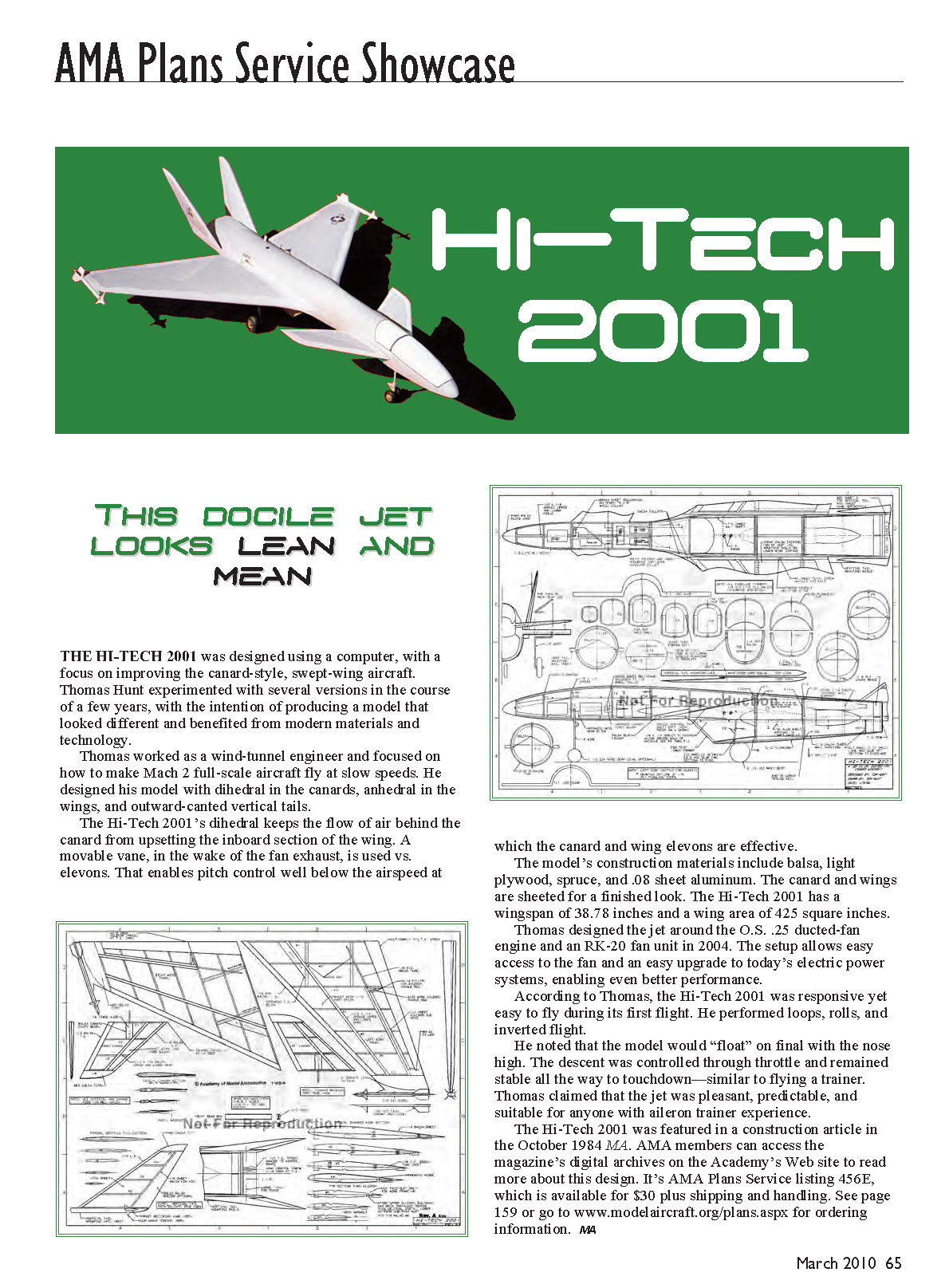
HI-TECH 2001
This docile jet looks lean and mean
The Hi-Tech 2001 was designed using a computer, with a focus on improving the canard-style, swept-wing configuration. Thomas Hunt experimented with several versions over a few years with the intention of producing a model that looked different and benefited from modern materials and technology.
Thomas worked as a wind-tunnel engineer and focused on how to make Mach‑2 full-scale aircraft fly at slow speeds. He designed his model with dihedral in the canards, anhedral in the wings, and outward‑canted vertical tails.
A movable vane in the wake of the fan exhaust is used instead of elevons. That enables pitch control at airspeeds below those at which the canard and wing elevons are effective. The Hi-Tech 2001’s dihedral keeps the flow of air behind the canard from upsetting the inboard section of the wing.
Construction materials include balsa, light plywood, spruce, and .08‑inch sheet aluminum. The canard and wings are sheeted for a finished look.
Key specifications and power:
- Wingspan: 38.78 inches
- Wing area: 425 square inches
- Originally built around an O.S. .25 ducted‑fan engine and later fitted with an RK‑20 fan unit (added in 2004)
- Designed for easy access to the fan and straightforward upgrades to modern electric power systems
On its first flight, Thomas reported the Hi-Tech 2001 was responsive yet easy to fly. He performed loops, rolls, and inverted flight. He noted the model would “float” on final with the nose high; descent was controlled with throttle and remained stable all the way to touchdown—similar to flying a trainer. Thomas described the jet as pleasant, predictable, and suitable for anyone with aileron trainer experience.
The Hi-Tech 2001 was featured in a construction article in the October 1984 issue of Model Aviation. It is AMA Plans Service listing 456E, available for $30 plus shipping and handling. See page 159 of that issue or visit www.modelaircraft.org/plans.aspx for ordering information.
Transcribed from original scans by AI. Minor OCR errors may remain.

