
AMA Plans Service Showcase
P-51 Mustang
Fly the famous fighter!
The P-51 Mustang was North American Aviation’s answer for a long-range, single-seat fighter. Arguably the most famous fighter of World War II, it was designed, built, and flown in just 117 days. The P-51’s ability to escort bombers all the way to and from their targets was a huge success for the Allies.
“When I saw Mustangs over Berlin, I knew the jig was up,” said Hermann Göring, commander of the German Luftwaffe.
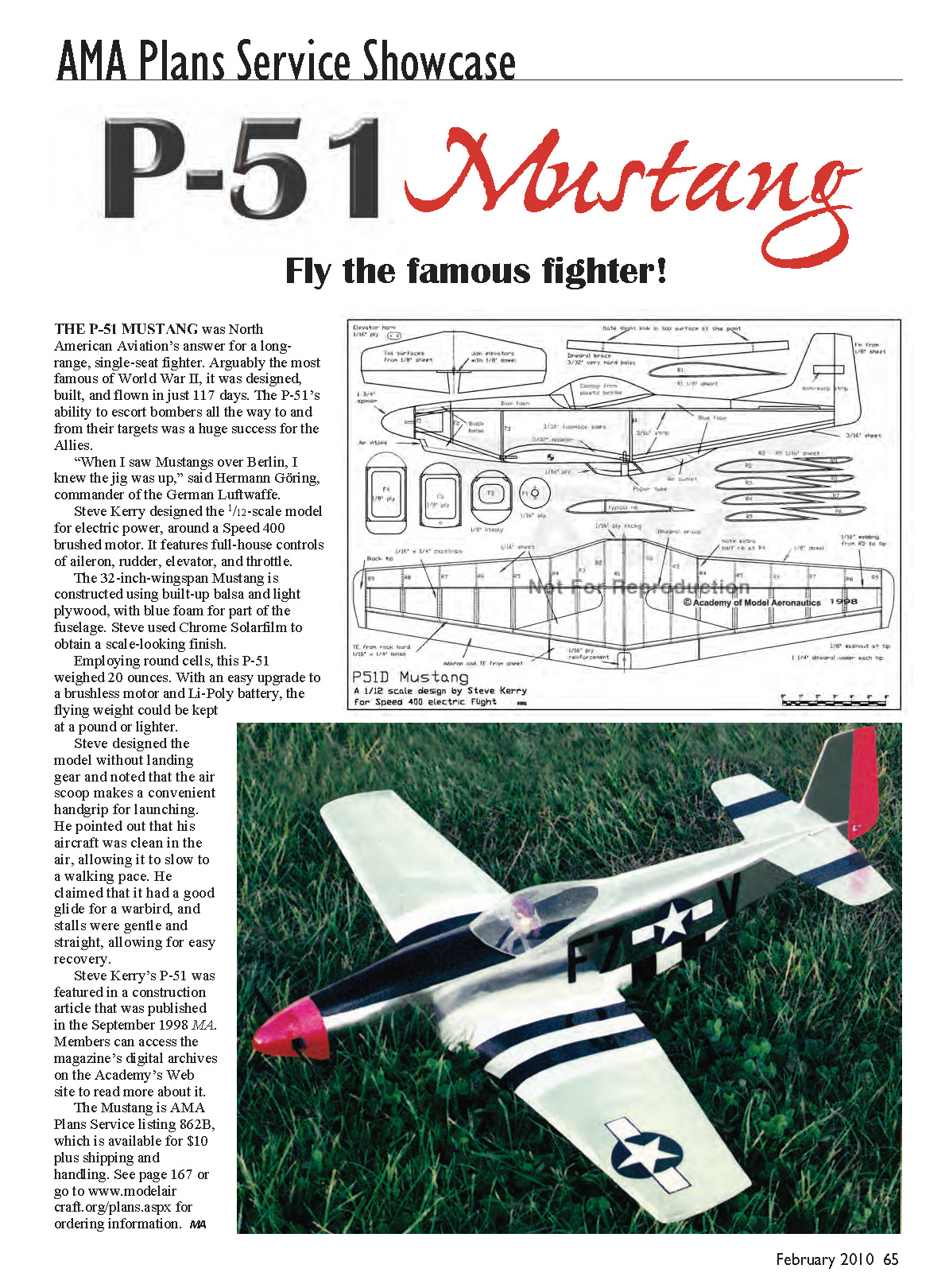
Steve Kerry designed the 1/12-scale model for electric power around a Speed 400 brushed motor. It features full-house controls: aileron, rudder, elevator, and throttle.
The 32-inch wingspan Mustang is constructed using built-up balsa and light plywood, with blue foam for part of the fuselage. Steve used Chrome Solarfilm to obtain a scale-looking finish.
- Power: Speed 400 brushed motor (designed for round cells)
- Controls: Aileron, rudder, elevator, throttle (full-house)
- Construction: Built-up balsa and light plywood; blue foam fuselage sections
- Finish: Chrome Solarfilm for a scale appearance
Using round cells, this P-51 weighed 20 ounces. With an easy upgrade to a brushless motor and a Li-Poly battery, flying weight could be kept at a pound or lighter.
Steve designed the model without landing gear and noted that the air scoop makes a convenient handgrip for launching. He reported that the model is clean in the air, allowing it to slow to a walking pace; it has a good glide for a warbird, and stalls are gentle and straight, allowing for easy recovery.
Steve Kerry’s P-51 was featured in a construction article published in the September 1998 issue of Model Aviation. Members can access the magazine’s digital archives on the Academy’s website to read more about it.
The Mustang is AMA Plans Service listing 862B, available for $10 plus shipping and handling. See page 167 or go to www.modelaircraft.org/plans.aspx for ordering information.
Transcribed from original scans by AI. Minor OCR errors may remain.

