
Dynamic Foamy
by Jay Smith
Background
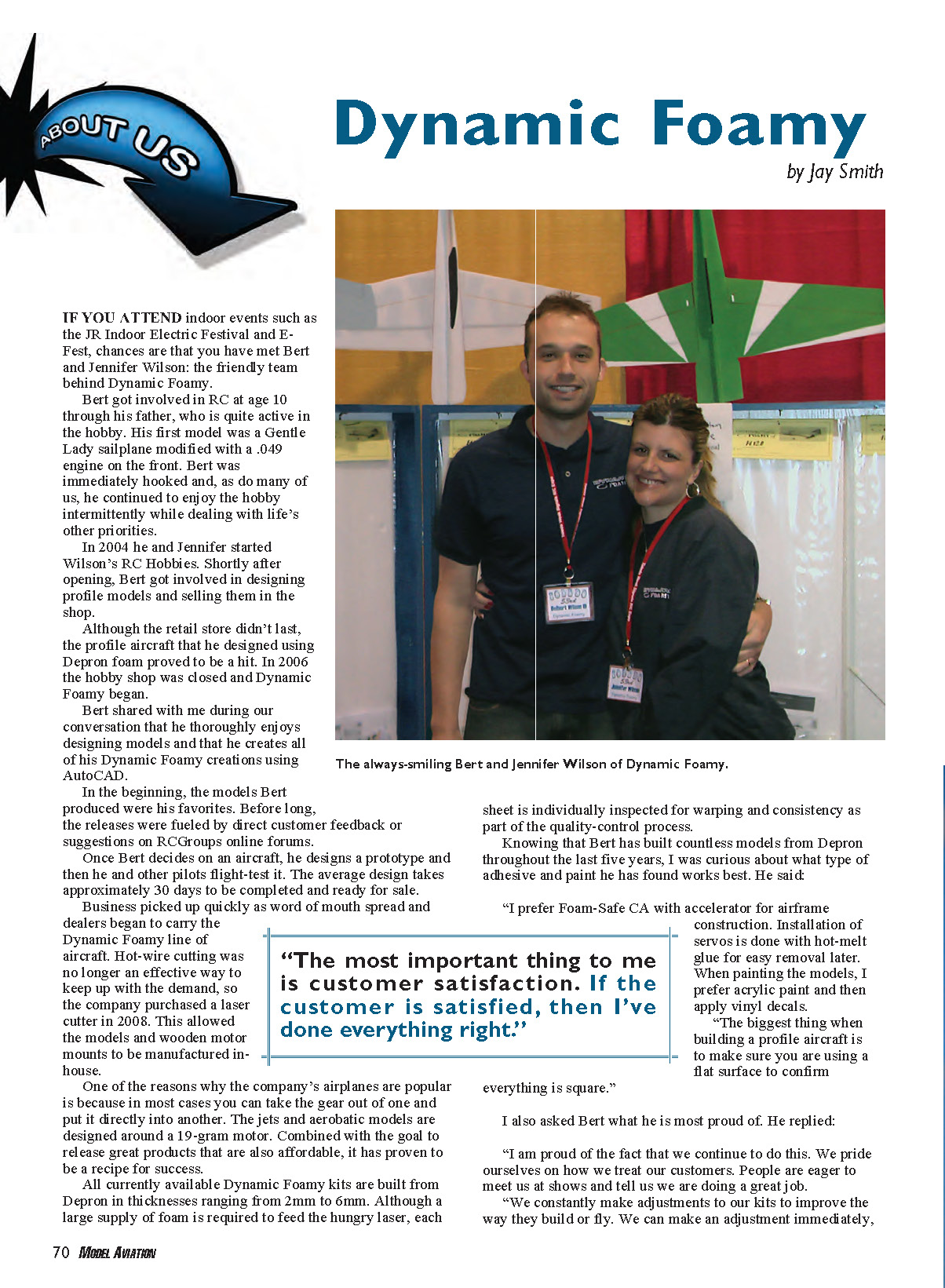
If you attend indoor events such as the JR Indoor Electric Festival and E-Fest, chances are you have met Bert and Jennifer Wilson: the friendly team behind Dynamic Foamy.
Bert got involved in RC at age 10 through his father, who is quite active in the hobby. His first model was a Gentle Lady sailplane modified with a .049 engine on the front. Bert was immediately hooked and, as do many of us, he continued to enjoy the hobby intermittently while dealing with life's other priorities.
In 2004 he and Jennifer started Wilson's RC Hobbies. Shortly after opening, Bert got involved in designing profile models and selling them in the shop. Although the retail store didn't last, the profile aircraft he designed using Depron foam proved to be a hit. In 2006 the hobby shop was closed and Dynamic Foamy began.
Design process
Bert shared that he thoroughly enjoys designing models and that he creates all of his Dynamic Foamy designs using AutoCAD.
In the beginning, the models Bert produced were his personal favorites. Before long, releases were driven by direct customer feedback or suggestions on RCGroups online forums.
Once Bert decides on an aircraft, he designs a prototype and then he and other pilots flight-test it. The average design takes approximately 30 days to be completed and ready for sale.
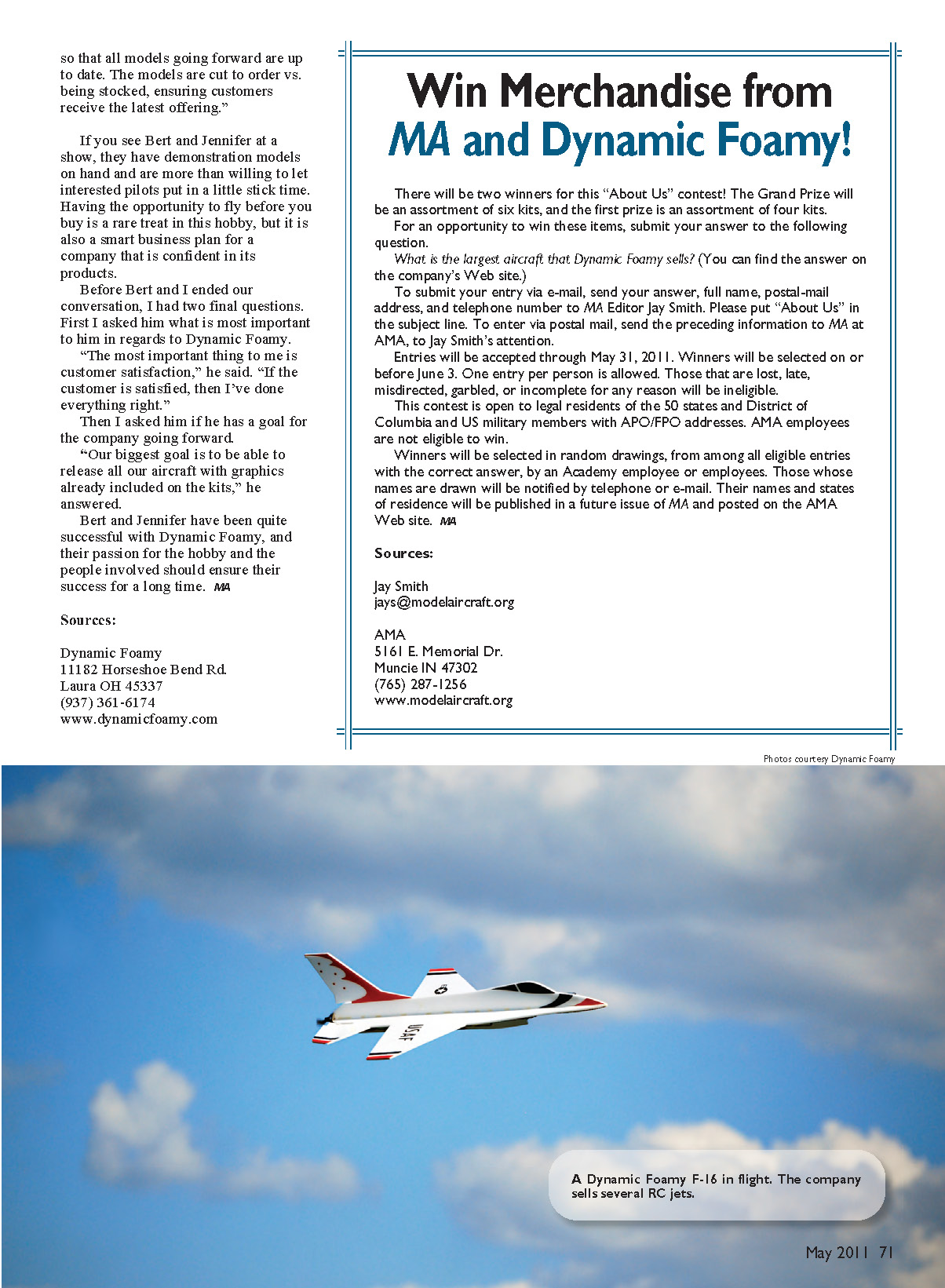
Business picked up quickly as word of mouth spread and dealers began to carry the Dynamic Foamy line. Hot-wire cutting was no longer an effective way to keep up with demand, so the company purchased a laser cutter in 2008. This allowed the models and wooden motor mounts to be manufactured in-house.
One reason the company's airplanes are popular is that, in most cases, you can take the gear out of one and put it directly into another. The jets and aerobatic models are designed around a 19-gram motor. Combined with the goal to release great products that are also affordable, this has proven to be a recipe for success.
Materials and construction
All currently available Dynamic Foamy kits are built from Depron in thicknesses ranging from 2 mm to 6 mm. Although a large supply of foam is required to feed the laser, each sheet is individually inspected for warping and consistency as part of the quality-control process.
When I asked what type of adhesive and paint he has found works best, Bert said: "I prefer foam-safe CA with accelerator for airframe construction. Installation of servos is done with hot-melt glue for easy removal later. When painting the models, I prefer acrylic paint and then apply vinyl decals.
"The biggest thing when building a profile aircraft is to make sure you are using a flat surface to confirm everything is square."
At shows
If you see Bert and Jennifer at a show, they have demonstration models on hand and are more than willing to let interested pilots put in a little stick time. Having the opportunity to fly before you buy is a rare treat in this hobby, and it is also a smart business plan for a company confident in its products.
Goals and philosophy
Before we ended our conversation, I asked Bert two final questions. First, what is most important to him: "The most important thing to me is customer satisfaction. If the customer is satisfied, then I've done everything right."
Then I asked if he has a goal for the company going forward: "Our biggest goal is to be able to release all our aircraft with graphics already included on the kits," he answered.
Bert and Jennifer have been quite successful with Dynamic Foamy, and their passion for the hobby and the people involved should ensure their success for a long time.
Contact
- Dynamic Foamy
- 11182 Horseshoe Bend Rd.
- Laura, OH 45337
- (937) 361-6174
- www.dynamicfoamy.com
Transcribed from original scans by AI. Minor OCR errors may remain.

