
Building for electric safety
Greg Gimlick [email protected]
Because this is the building issue, I thought I'd offer a few tips to help answer some questions I have received regarding safety issues when building electrics.
Arming Switches
When I showed some arming switches in the June 2013 issue, I received many emails from modelers interested in knowing more. This caught me slightly by surprise, but there was a clear interest in learning more about how to employ them.
There were also some home-brewed "solutions" to making a system safer with the LiPo pack plugged into the ESC. Some were interesting and some were scary! I'll put this as simply as I can: there is only one way to ensure a motor/propeller is safe—disconnect the battery from the ESC!
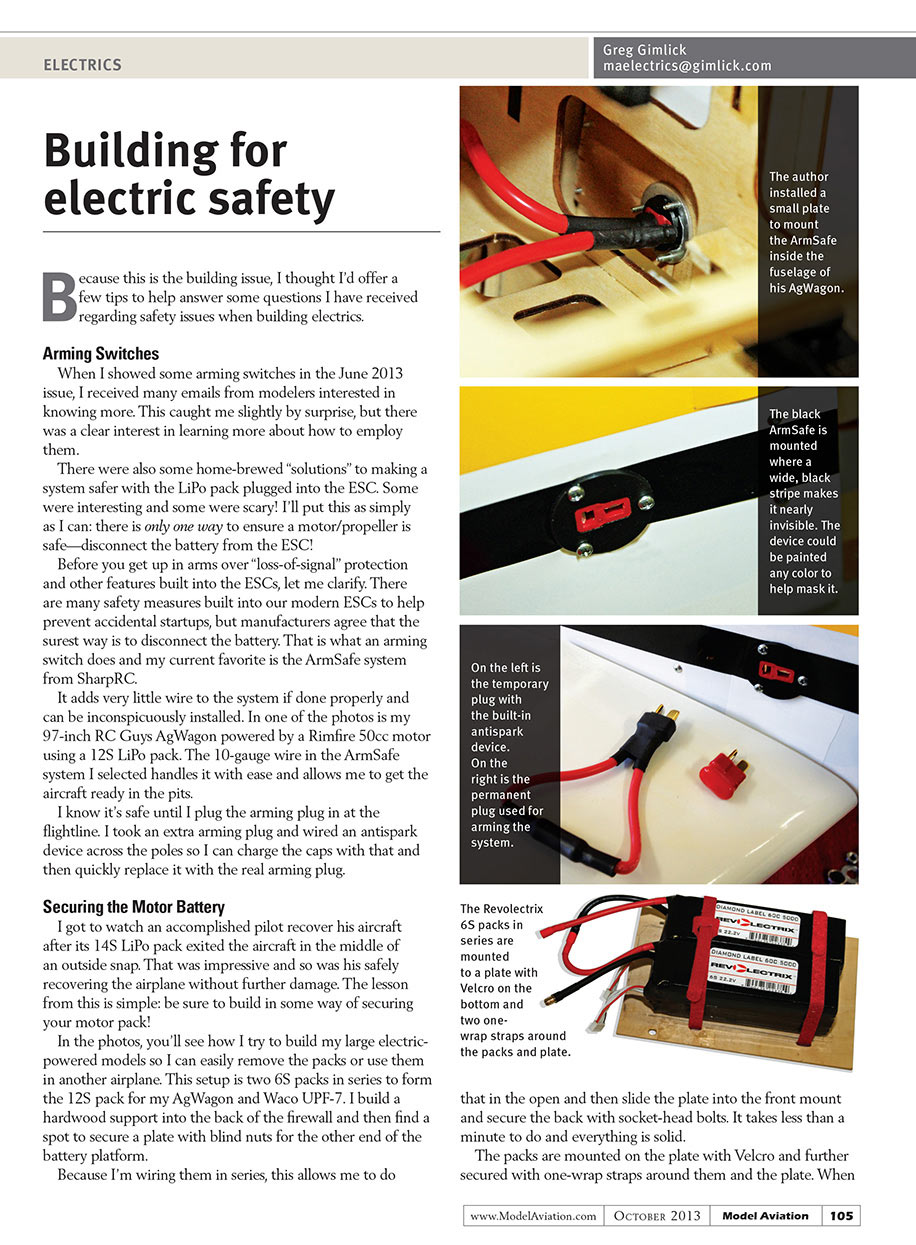
Before you get up in arms over "loss-of-signal" protection and other features built into the ESCs, let me clarify. There are many safety measures built into our modern ESCs to help prevent accidental startups, but manufacturers agree that the surest way is to disconnect the battery. That is what an arming switch does and my current favorite is the ArmSafe system from SharpRC.
It adds very little wire to the system if done properly and can be inconspicuously installed. In one of the photos is my 97-inch RC Guys AgWagon powered by a Rimfire 50cc motor using a 12S LiPo pack. The 10-gauge wire in the ArmSafe system I selected handles it with ease and allows me to get the aircraft ready in the pits.
I know it's safe until I plug the arming plug in at the flightline. I took an extra arming plug and wired an antispark device across the poles so I can charge the caps with that and then quickly replace it with the real arming plug.
Securing the Motor Battery
I got to watch an accomplished pilot recover his aircraft after its 14S LiPo pack exited the aircraft in the middle of an outside snap. That was impressive and so was his safely recovering the airplane without further damage. The lesson from this is simple: be sure to build in some way of securing your motor pack!
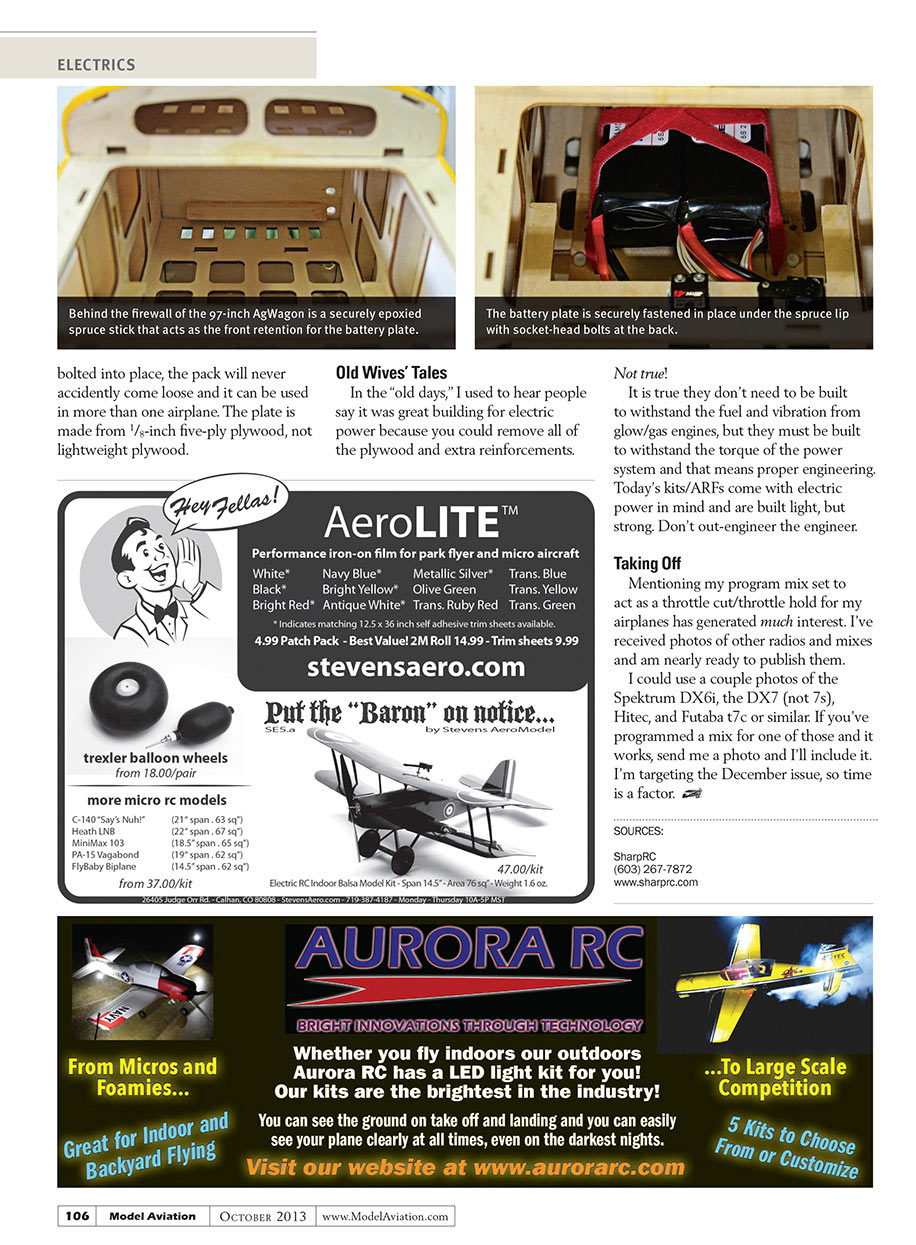
In the photos, you'll see how I try to build my large electric-powered models so I can easily remove the packs or use them in another airplane. This setup is two 6S packs in series to form the 12S pack for my AgWagon and Waco UPF-7. I build a hardwood support into the back of the firewall and then find a spot to secure a plate with blind nuts for the other end of the battery platform.
Because I'm wiring them in series, this allows me to do that in the open and then slide the plate into the front mount and secure the back with socket-head bolts. It takes less than a minute to do and everything is solid.
The packs are mounted on the plate with Velcro and further secured with one-wrap straps around them and the plate. When bolted into place, the pack will never accidentally come loose and it can be used in more than one airplane. The plate is made from 1/8-inch five-ply plywood, not lightweight plywood.
Old Wives' Tales
In the “old days,” I used to hear people say it was great building for electric power because you could remove all of the plywood and extra reinforcements.
Not true!
It is true they don’t need to be built to withstand the fuel and vibration from glow/gas engines, but they must be built to withstand the torque of the power system and that means proper engineering. Today’s kits/ARFs come with electric power in mind and are built light, but strong. Don’t out-engineer the engineer.
Taking Off
Mentioning my program mix set to act as a throttle cut/throttle hold for my airplanes has generated much interest. I’ve received photos of other radios and mixes and am nearly ready to publish them.
I could use a couple photos of the Spektrum DX6i, the DX7 (not 7s), Hitec, and Futaba t7c or similar. If you’ve programmed a mix for one of those and it works, send me a photo and I’ll include it. I’m targeting the December issue, so time is a factor.
SOURCES:
SharpRC (603) 267-7872 www.sharprc.com
Transcribed from original scans by AI. Minor OCR errors may remain.

