
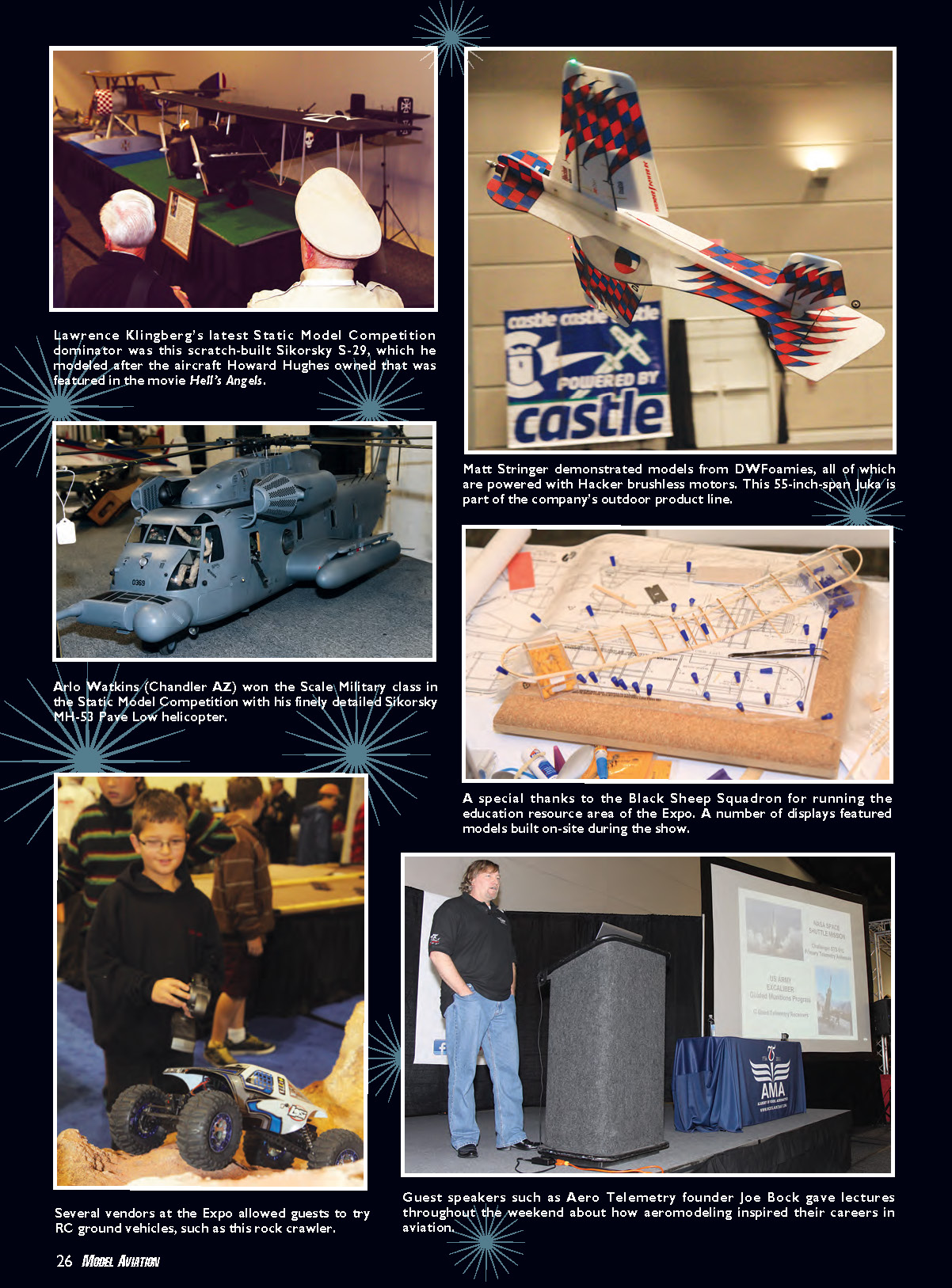
Expo
by Michael Ramsey
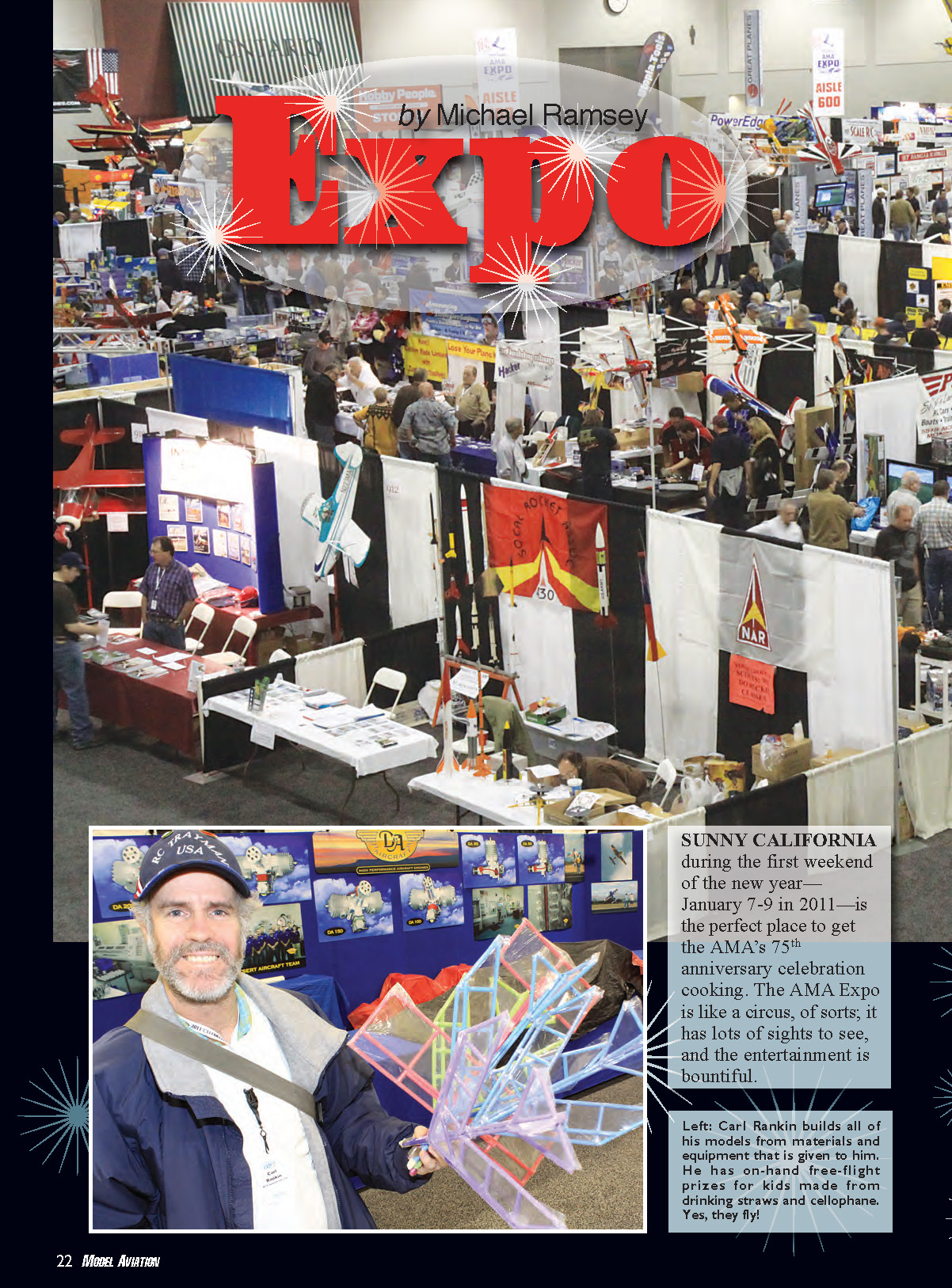
Sunny California during the first weekend of the new year—January 7–9, 2011—was the perfect place to kick off the AMA’s 75th anniversary celebration. The AMA Expo is like a circus of sorts: there are lots of sights to see and the entertainment is bountiful. The effort to put on a "show" was especially apparent for the 2011 gala, thanks to exhibitors large and small, local club volunteers, and AMA SIGs that came out to support West Coast communities.
The Expo got special treatment this year, including carpeting throughout the exhibitor space. Ben Flesher, an AMA staff member, had this to say about the addition:
"The Ontario Convention Center went above and beyond for us this year. Every year we plan for the show, we always look at the floorplan as if anything is possible. A lot of ideas flood the planning meetings, because the Ontario Convention Center is always so accommodating. So the carpeting added a touch of class and made vendors a lot more comfortable."
International Radio Controlled Helicopter Association (IRCHA) President David Millner convinced his group that the AMA's 75th-anniversary Expo would be an opportunity to highlight how the AMA SIGs positively affect the growth of the sport. As IRCHA does at the extremely popular seminars held during its Jamborees in Muncie, Indiana, the group took over the northwest corner of the main hall and scheduled experts for 30-minute discussions.
"What we thought would be a challenge to fill turned out to be a hot segment of the entire weekend," Dave said, giddy with pride. "The presentations and how-to seminars were standing-room only, and the average segment ran almost two hours because audience participation was so active."
AMA Expo management has rewritten the book on convention-like events. AMA Marketing Director Jeff Nance explained:
"The AMA Headquarters Marketing Department pays a huge amount of attention to organizing and executing the AMA Expo. We love to entertain and promote the sport. Everything we do represents a single goal: to help young and old appreciate how valuable and fun aeromodeling can be, no matter where in the world you do it."
To mark the 75th anniversary of the AMA, guest speakers were selected to share stories about how modeling kindled their imagination. Because of aeromodeling, people around the world have advanced into exciting careers at the forefront of technology, including aviation. The AMA is collecting stories similar to those presented at the Expo; to tell yours, visit the AMA's 75th Anniversary website and click the "Share Your Story" button (written accounts and videos are welcomed).
Speakers and presentations
Five AMA members talked at the Expo about how their careers in aviation started with the sport and science of aeromodeling:
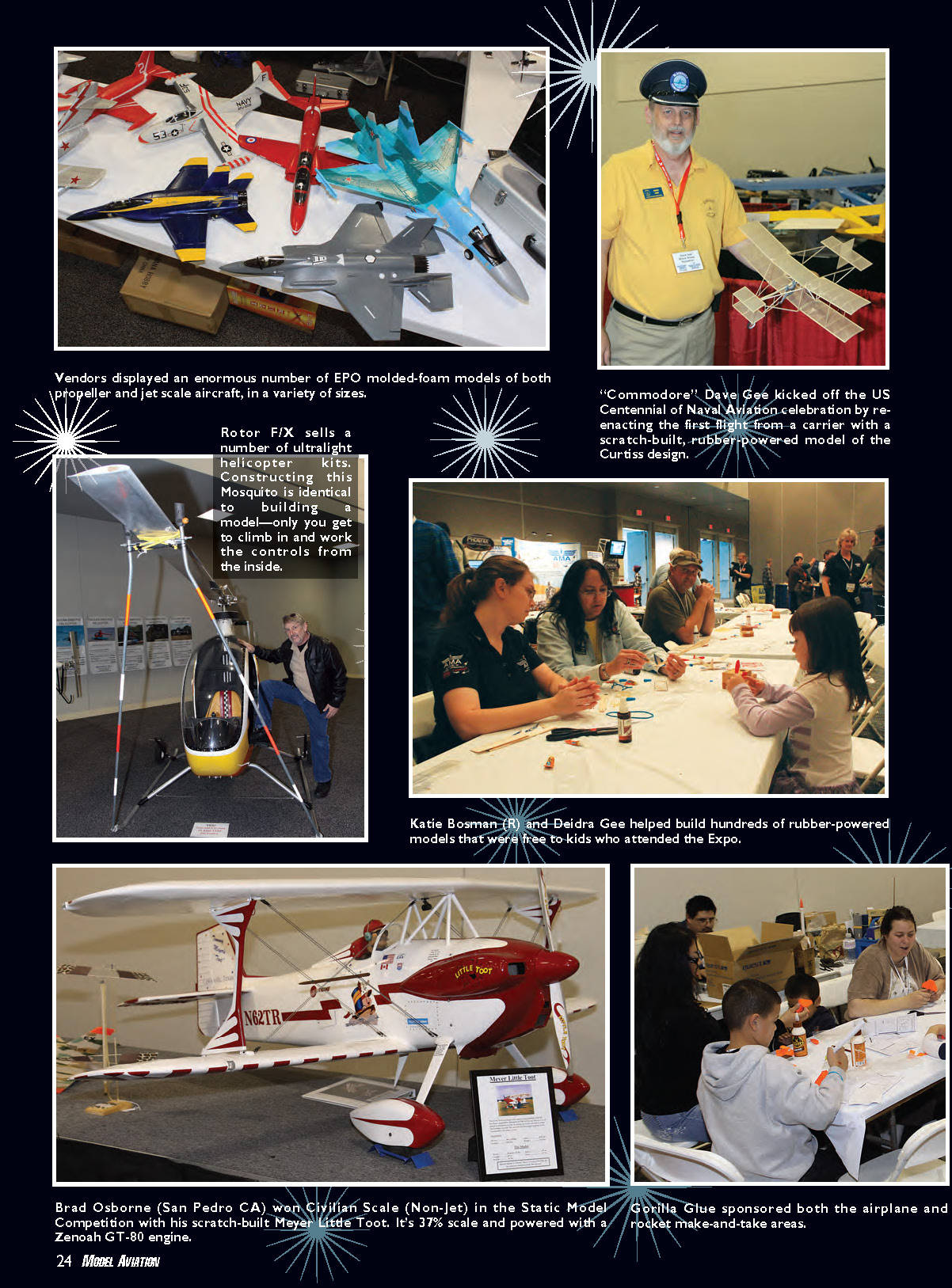
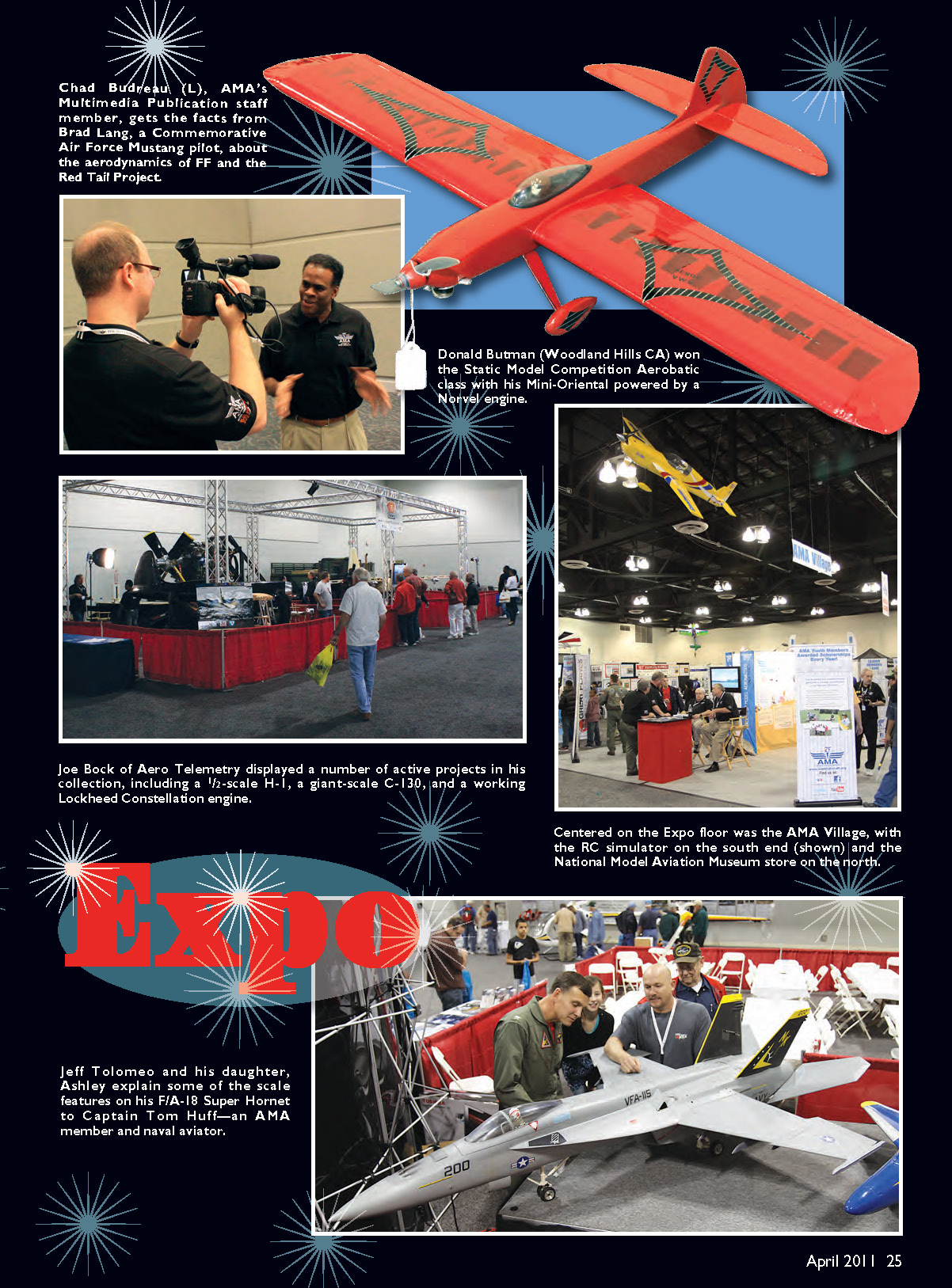
- Captain Tom Huff — He commemorated the Centennial of Naval Aviation and walked the audience through the colorful history of flying from the water. AMA’s safety columnist Dave Gee assisted with a model reenactment of the first launch from a carrier deck. While not a big splash, the flight was entertaining.
- Joe Bock — A famous model maker with Hollywood movie credits including The Aviator and Flight of the Phoenix. He demonstrated how giant-scale models can be superior or essential to computer-generated imagery for capturing realistic aerial drama.
- Katie Bosman — Got her start in free-flight (FF) modeling and became a national champion and AMA scholarship winner. She currently works as a technical writer, demonstration pilot, and sales manager for Jabiru USA Sport Aircraft.
- Gary Fogel — Credited with preserving the Torrey Pines Gliderport in La Jolla, California, a site shared by full-scale and model soaring. His work highlights how well those distinct mediums of aviation can coexist, reflecting aviators’ passion and concern for safety.
- Brad Lang — Son of a Tuskegee Airman and a Commemorative Air Force pilot with the Red Tail Project. He shared perspectives on the P-51 Mustang and the deep science and sociology tied to that iconic fighter.
Those presenters set a mood of pride and appreciation. AMA President Dave Mathewson said:
"We love the modeling crowd here on the West Coast. Their public activity in the sport includes a significant ingredient that feeds the AMA community positively. So many of these folks annually trek to the Midwest and compete in Muncie at the Nats. Putting on a show for them here is the least we can do."
Exhibits, demos, and people
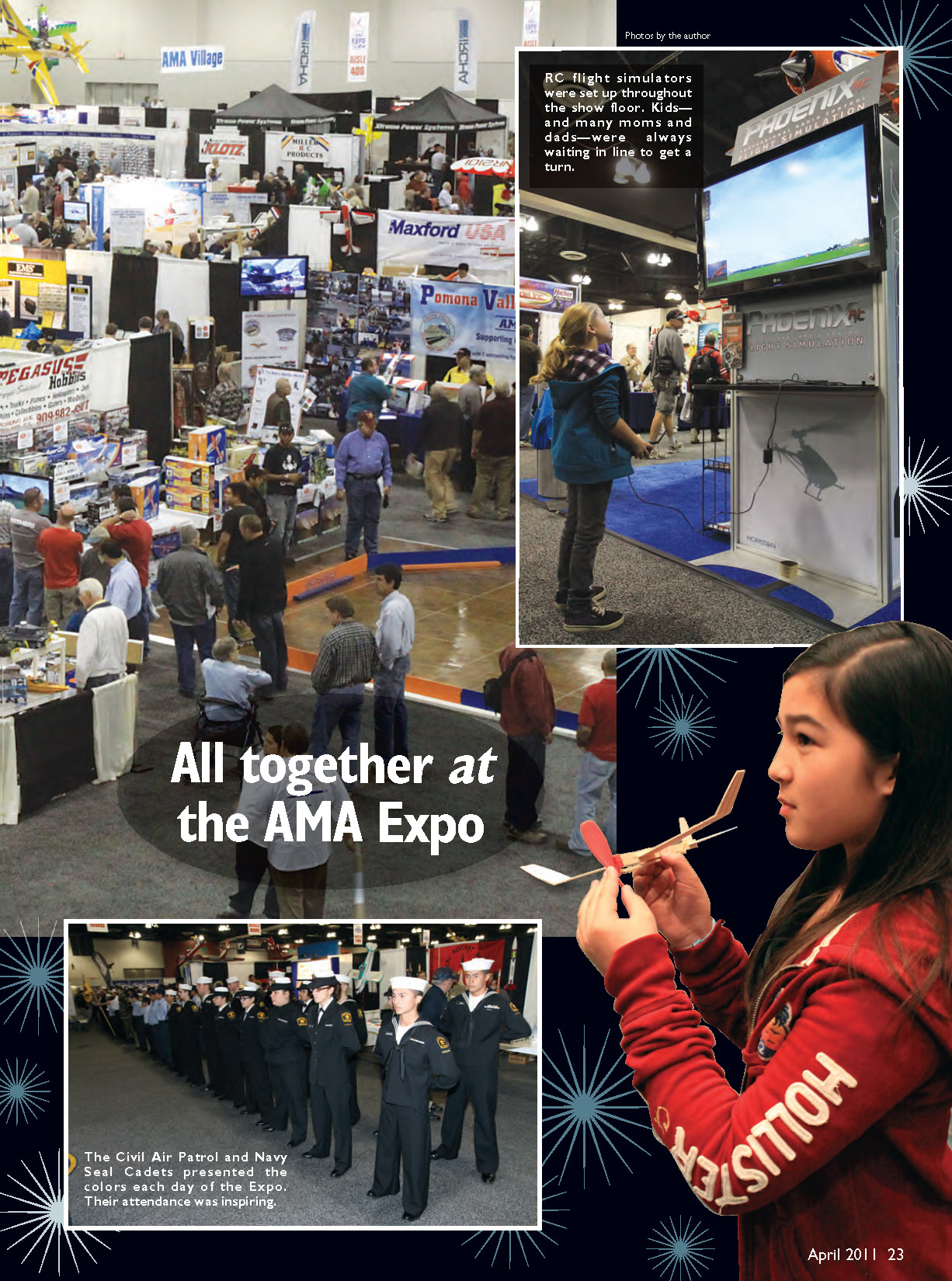
The show of exhibitors and showpeople offered a spontaneous flow of excitement. Indoor flight exhibitions brought motion to the static displays; audiences packed the indoor flight area, and the main hall and swap meet provided a strolling avenue where each pass seemed to reveal something missed on the previous trip.
Carl Rankin is an amusing Expo regular; he often shows RC models made from drinking straws and cellophane. Watching his craft fly recalls the feeling that infects many with the passion for aviation. His new triplane, the Jules Verne, is an example of that inventive spirit.
"I make all of my models from things that people give to me," Carl said. His family collects drinking straws, which he uses to build free-flight models to give to grade-school children. "I love to share the wonder of flight with others."
AMA Education Director Bill Pritchett was picking glue off his fingers after spending the day in the make-and-take-and-fly area of the show. He said:
"It's all good. What I love about shows like the AMA Expo is how it brings so many segments of the sport together under one roof. What we've added is a celebration of those that have moved on to careers in aviation, thanks to the teachings they gained having fun with model aircraft."
Technology trends seen at the Expo
New technology impresses, and it is a big reason people attend the Expo. Several trends were notable:
- Foam models — Molded-foam aircraft were ubiquitous. Manufacturers are getting very good at hiding the bead structure; some surfaces now look almost as smooth as glass. These foam airplanes typically use electric power and keep getting bigger—vendors showed 60-inch and longer scale warbirds and numerous electric-ducted-fan models constructed from EPO foam.
- Wood models and gas engines — Wood models remain extremely popular and are now offered to accommodate current power-system trends. Gas engines are available in a wider range of sizes than seen in years, reviving classes reminiscent of the Ohlsson and Forster era.
- Helicopters and larger gas power — Some helicopter manufacturers are exploring gas power for small machines, and the 30cc-class airplane (formerly called the 120 class) could be the "next big thing" for aerobatic pilots and sport modelers.
The mission continues
The AMA Expo is all about bringing modelers together—a mission that has been central to the AMA for 75 years and counting. This weekend, in particular, kicked off what will be the next 75 years of aeromodeling excitement. AMA Executive Vice President Mark Smith explained:
"It's amazing how the exhibitors have flocked to this show. The variety of offerings impresses me, not just because of what's for sale or what the big manufacturers have released here. Most of all it's the area clubs and youth aviation organizations like the Civil Air Patrol and Navy Cadets that came with an impressive brigade of recruits. It's inspirational."
Contact: [email protected]
AMA Expo Sponsors
- AMA 75th Anniversary — http://ama75.com
- Gorilla Glue — (800) 966-3458, www.gorillaglue.com
- Centennial of Naval Aviation — (619) 545-5939, http://bit.ly/95TYKO
Sources
- Expo videos: www.amaexpo.com
- Expo exhibitor list: http://amaexpo.com/attractions/vendors
- More Expo photos: www.flickr.com/groups/1639234@N22
Transcribed from original scans by AI. Minor OCR errors may remain.

