
Models, techniques, and events
by Gene Smith <REDACTED>
It's not too early to start next year's One Design gas model: the Midwest Fortastrop. It's flown according to National Free Flight Society (NFFS) Early Nostalgia rules. Only specified early Nostalgia engines are permitted.
Plans for the Midwest Fortastrop are available from the NFFS Plans Service for $7; order plans number 255. If you prefer to build from a kit, check out Campbell's Custom Kits. Be sure to get the 1/2A version, not the .020.
Rubber Scale
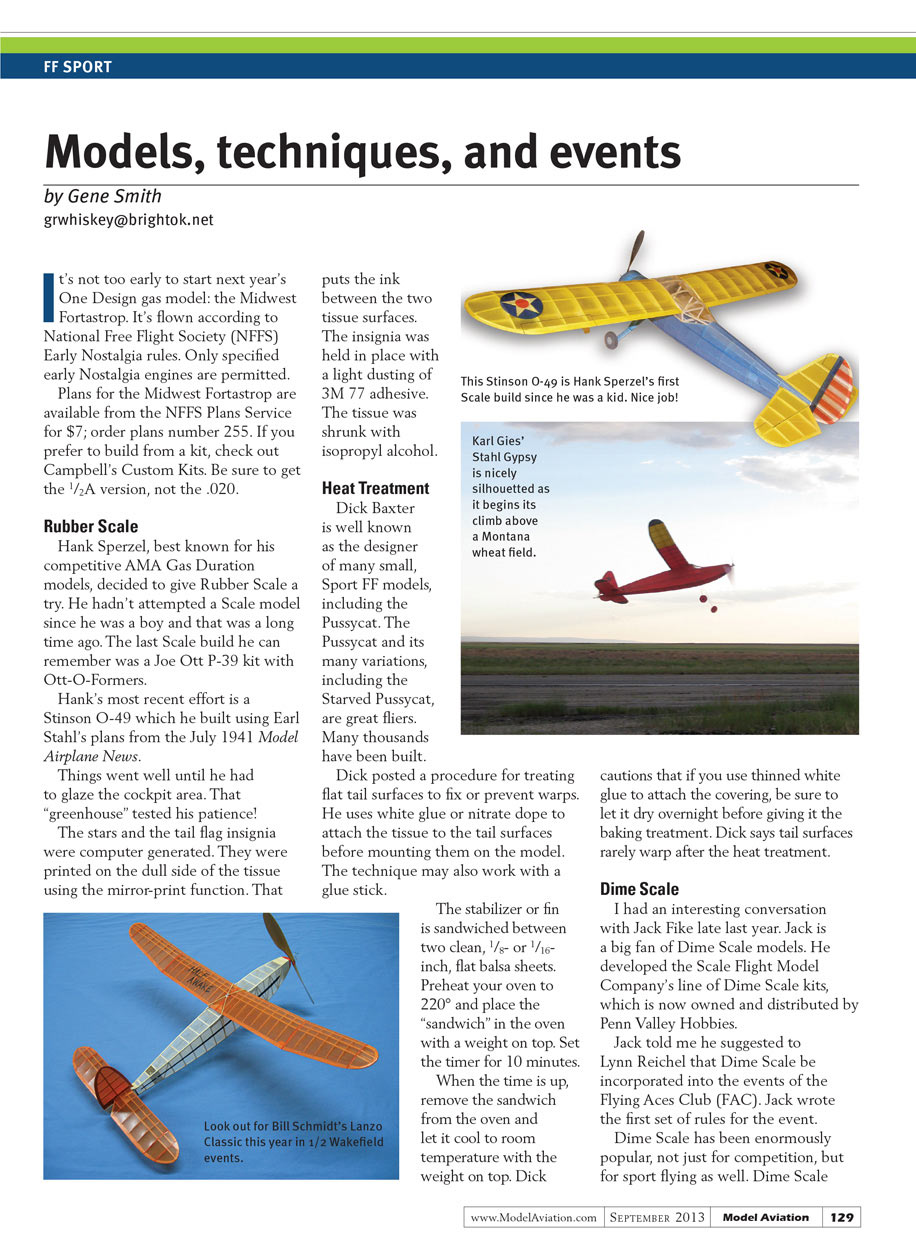
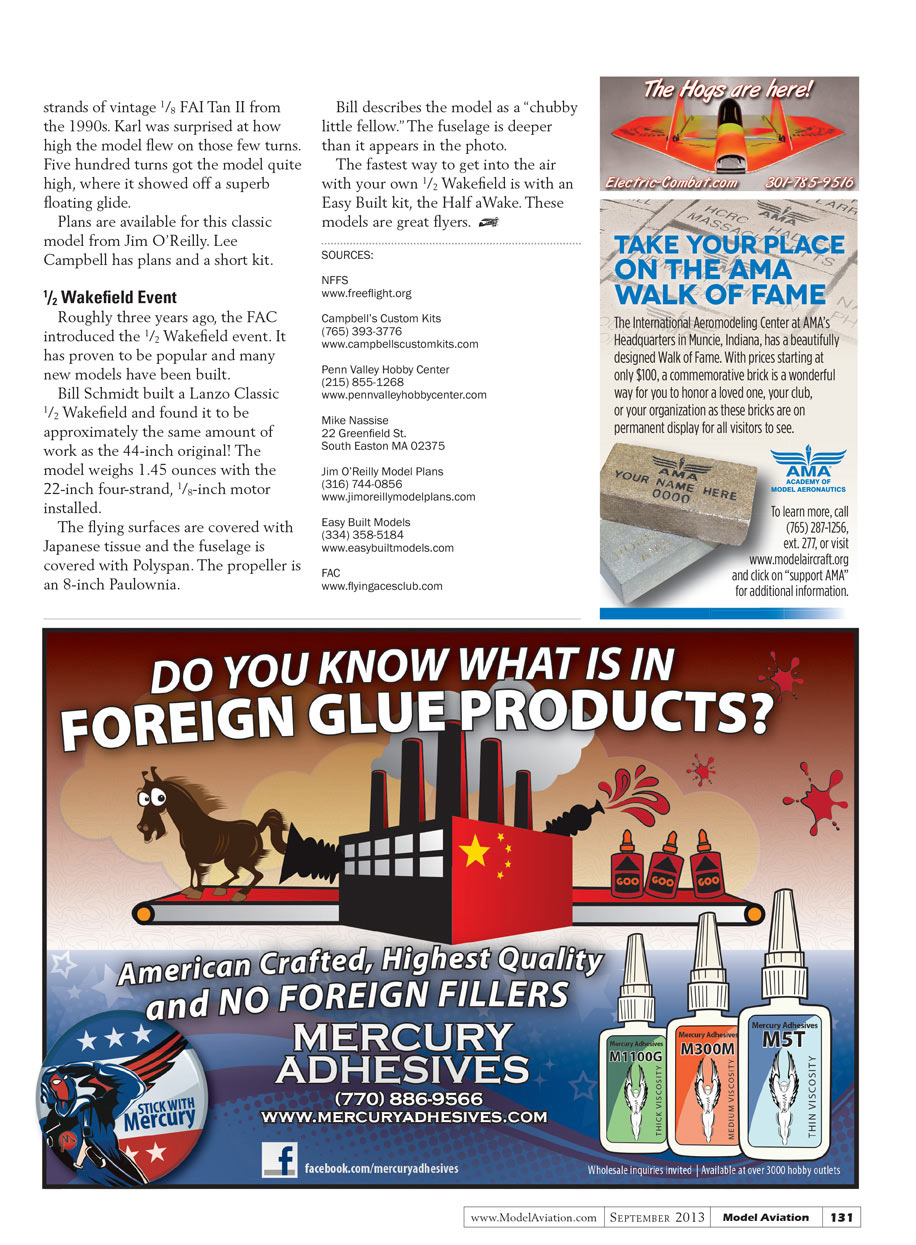
Hank Sperzel, best known for his competitive AMA Gas Duration models, decided to give Rubber Scale a try. He hadn't attempted a Scale model since he was a boy and that was a long time ago. The last Scale build he can remember was a Joe Ott P-39 kit with Ott-O-Formers.
Hank's most recent effort is a Stinson O-49 which he built using Earl Stahl's plans from the July 1941 Model Airplane News.
Things went well until he had to glaze the cockpit area. That "greenhouse" tested his patience!
The stars and the tail flag insignia were computer generated. They were printed on the dull side of the tissue using the mirror-print function. That puts the ink between the two tissue surfaces. The insignia was held in place with a light dusting of 3M 77 adhesive. The tissue was shrunk with isopropyl alcohol.
Heat Treatment
Dick Baxter is well known as the designer of many small, Sport FF models, including the Pussycat. The Pussycat and its many variations, including the Starved Pussycat, are great fliers. Many thousands have been built.
Dick posted a procedure for treating flat tail surfaces to fix or prevent warps. He uses white glue or nitrate dope to attach the tissue to the tail surfaces before mounting them on the model. The technique may also work with a glue stick.
The stabilizer or fin is sandwiched between two clean, 1/8- or 1/16-inch, flat balsa sheets. Preheat your oven to 220° and place the "sandwich" in the oven with a weight on top. Set the timer for 10 minutes.
When the time is up, remove the sandwich from the oven and let it cool to room temperature with the weight on top. Dick cautions that if you use thinned white glue to attach the covering, be sure to let it dry overnight before giving it the baking treatment. Dick says tail surfaces rarely warp after the heat treatment.
Dime Scale
I had an interesting conversation with Jack Flike late last year. Jack is a big fan of Dime Scale models. He developed the Scale Flight Model Company's line of Dime Scale kits, which is now owned and distributed by Penn Valley Hobbies.
Jack told me he suggested to Lynn Reichle that Dime Scale be incorporated into the events of the Flying Aces Club (FAC). Jack wrote the first set of rules for the event.
Dime Scale has been enormously popular, not just for competition, but for sport flying as well. Dime Scale
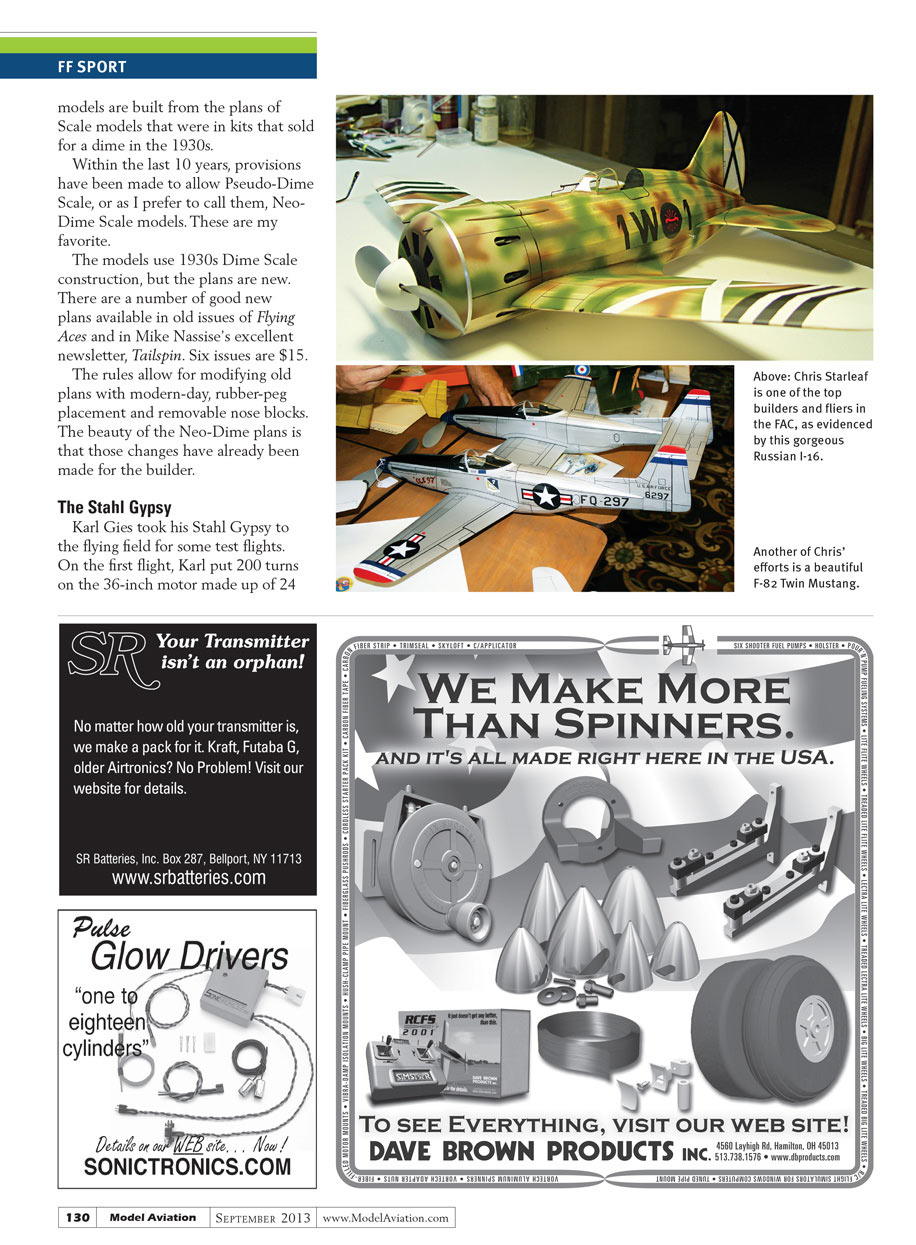
Bill describes the model as a "chubby little fellow." The fuselage is deeper than it appears in the photo.
The fastest way to get into the air with an indoor biplane or own 1/2 Wakefield is with an Easy Built kit, the Half aWake. These models are great flyers.
SOURCES:
- NFFS
- Campbell's Custom Kits
<REDACTED> www.campbellscustomkits.com
- Penn Valley Hobby Center
<REDACTED> www.pennvalleyhobbycenter.com
- Mike Nassise
<REDACTED>
- Jim O'Reilly Model Plans
<REDACTED> www.jimoreillymodelplans.com
- Easy Built Models
<REDACTED> www.easybuiltmodels.com
- FAC
Transcribed from original scans by AI. Minor OCR errors may remain.

