
Flying for Fun
In the June 2001 column I briefly explained the rationale behind the inclusion of fold-up paper model airplanes in cereal boxes or as send-in-a-coupon promotions.
This marketing ploy was not limited to cereal or paper models; several laundry-detergent manufacturers actually included dinner plates, drinking glasses, or even hand towels in their boxes. The detergent cushioned the items, and I can't recall ever seeing a broken piece returned to my grandfather's grocery.
More than a few homes had the evening table set with premiums. Do you remember merchandise that was available with redeemed coupons from Kool® cigarettes? Or the special movie matinees at which dishes or knives and forks were handed out to the ladies as they entered the theater? Or the merchandise stores where one redeemed S&H® Green Stamps?
We may have been better served by merchandise promotions the manufacturers spent their advertising dollars on than the contemporary mass-media advertising campaigns that provide the consumer with little more than annoyance and disruption of train of thought.
In the June column I gave an overview of the profile fold-up paper models included in boxes of Kellogg's® Pep®. I also mentioned cut-out wood, and later cardboard, "identification" models in boxes of Nabisco® Shredded Wheat.
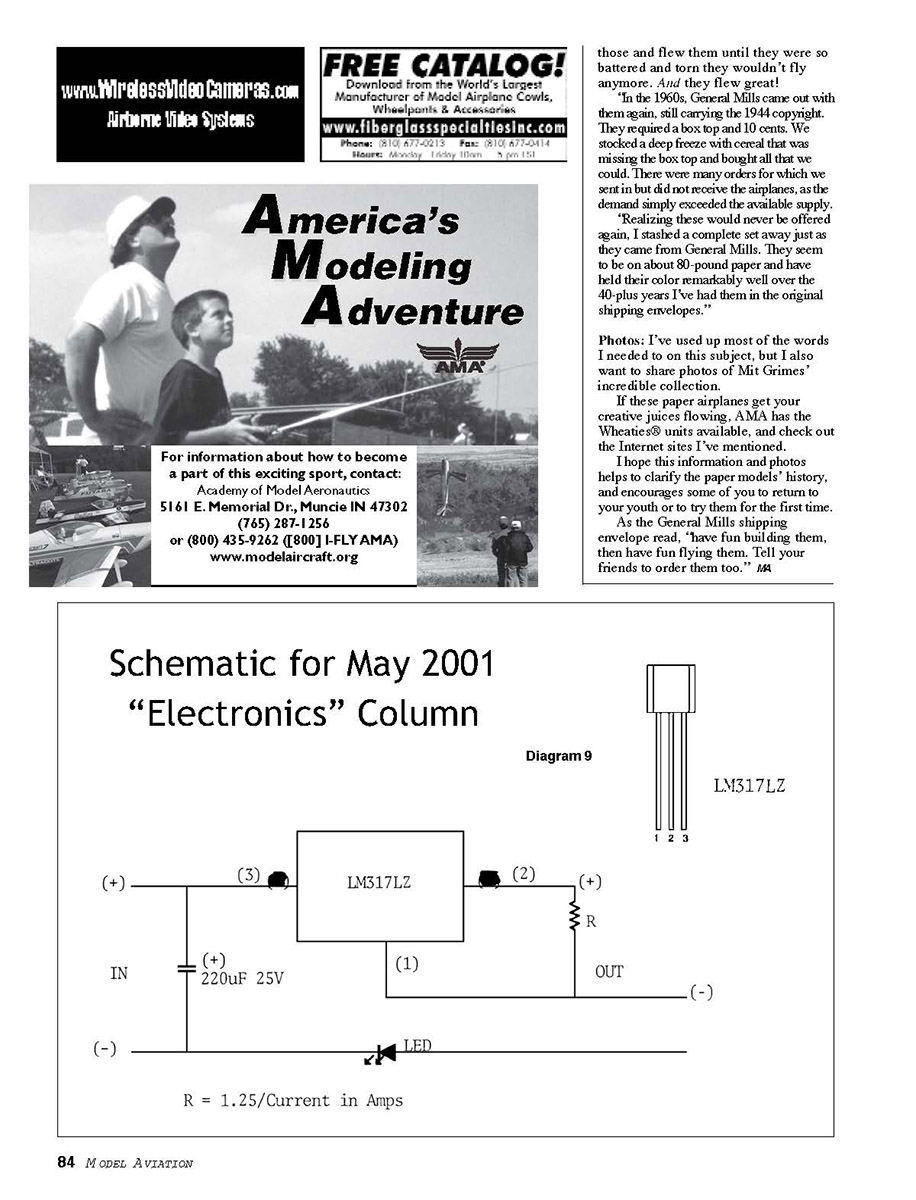
I have learned that starting in 1948, Nabisco® included thin, gray cardboard models from a series of Wallace Rigby designs called the "Nabisco Flying Circus." These consisted of 24 airplanes and 12 "instructions for flying" cards.
These models were to be colored and cut out, and included some unusual prototypes, such as:
- DC-6
- P-80
- Lockheed Constellation
- Bell X-1
- Saunders-Roe flying boat
- Spruce Goose
- Boeing Stratocruiser
- B-36
I am told that the series is rare, but some occasionally appear on the E-bay Web site.
Speaking of the Internet, last month I mentioned a few Web sites that feature paper models for sale. Another to try is Fiddler's Green at www.fiddlersgreen.net, for a free sample color download of a J-3 Cub and a list of many other models, available as downloads for a dollar each.
These downloads print to a letter-size page; put heavier paper in the color printer to begin building the models.
I suggest this site as a first or renewed introduction to this fascinating facet of our hobby. It primarily lists World War I prototypes, and is just one example of what is out there in the wondrous world of paper airplanes.
Wallace Rigby
Wallace Rigby was the prolific English designer of paper models to which all others are compared. His ability to recreate three-dimensional models of any type, whether it be airplane, ship, land vehicle, or structure in paper, was fantastic.
He produced a complete book of paper models, which was advertised in the model magazines and sold in department stores. Fran Ptaszkiewicz of Buffalo, NY writes:
"For a number of weeks Wallace presented a different paper model in the Sunday comic section of one of our local newspapers. They were printed in color. It was recommended to glue the paper onto typing paper or manila folders for rigidity, using a paste-type glue rather than any other type cement.
"Problem was that in trying to form the fuselage around to a desired shape, the newsprint would eventually split due to a lack of elasticity once secured to the backing paper. To try to assemble the model without backing produced a sagging wing and flimsy model. Newsprint was tough to work with."
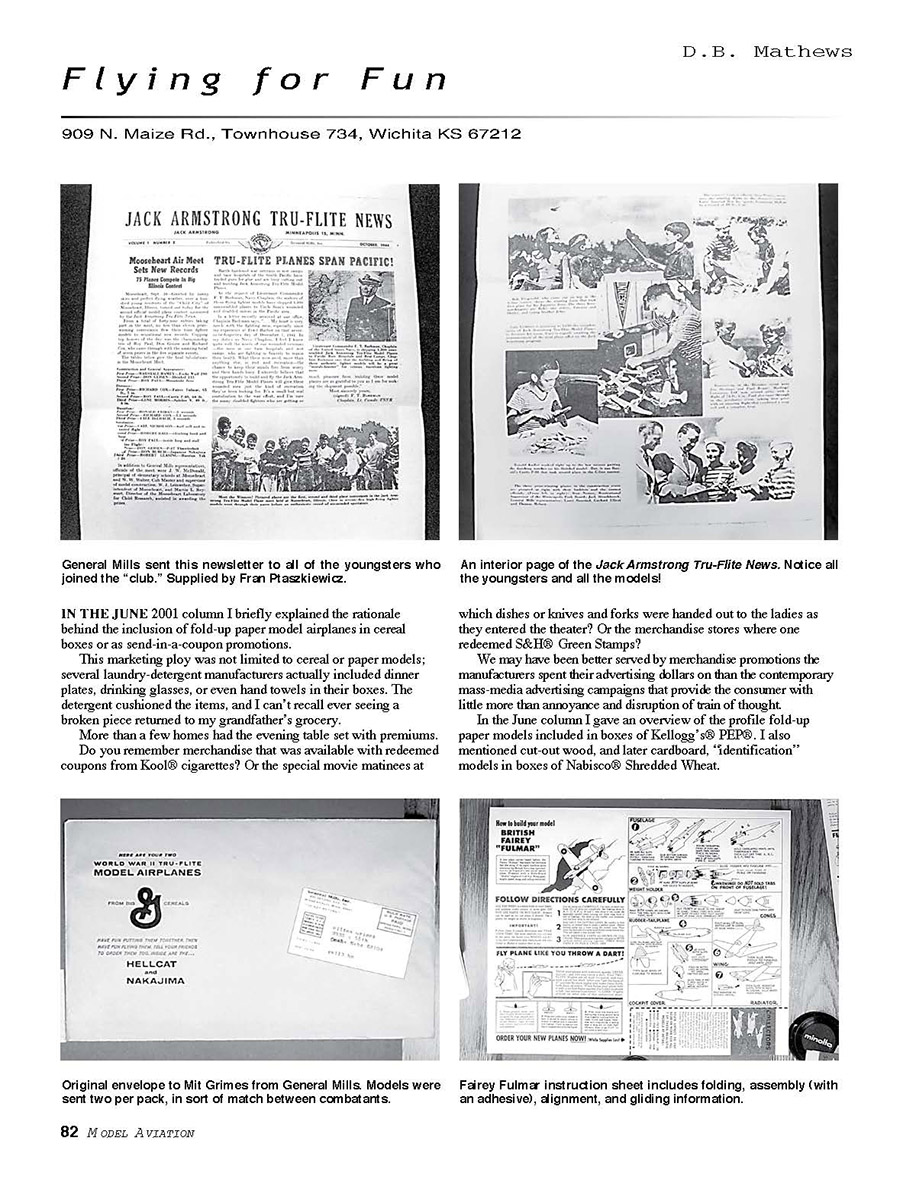
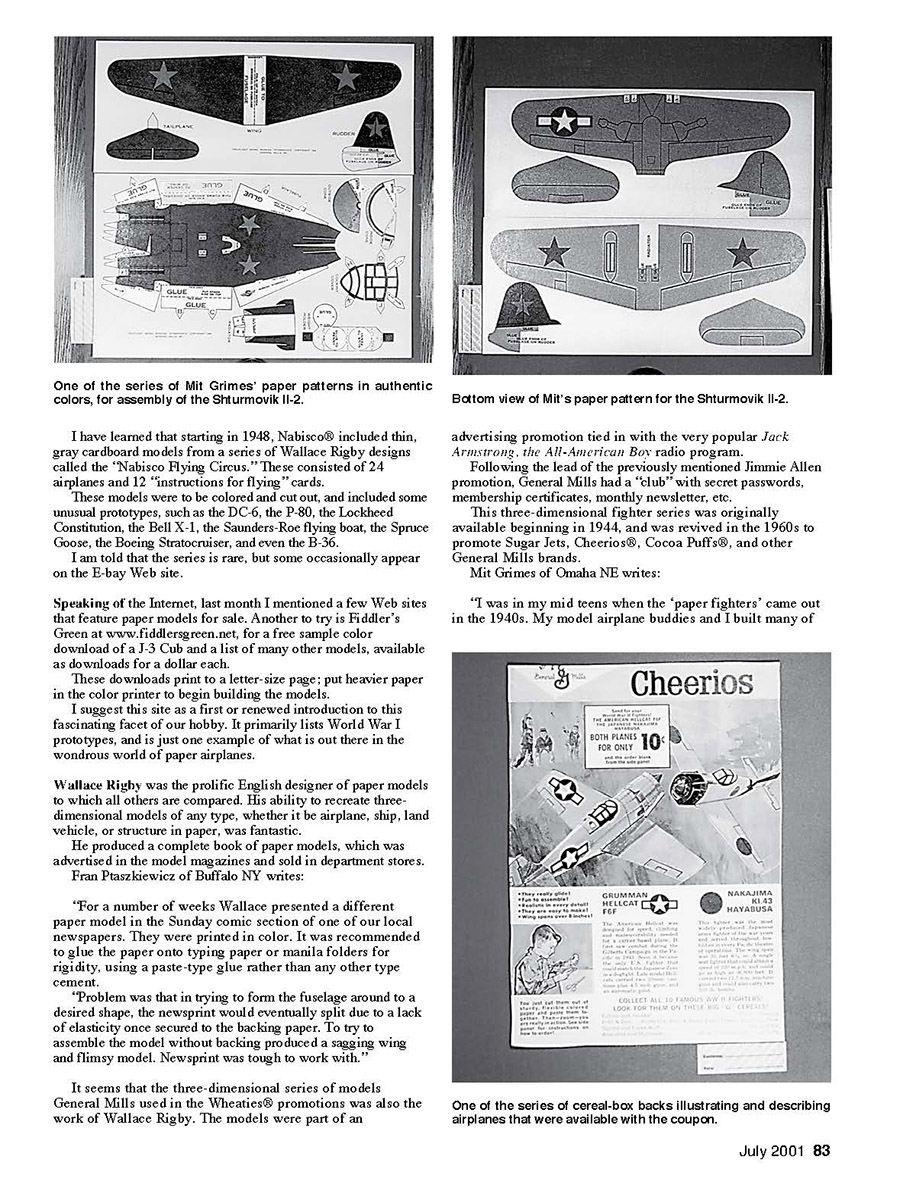
It seems that the three-dimensional series of models General Mills used in the Wheaties® promotions was also the work of Wallace Rigby. The models were part of an advertising promotion tied in with the very popular Jack Armstrong, the All-American Boy radio program.
Following the lead of the previously mentioned Jimmie Allen promotion, General Mills had a "club" with secret passwords, membership certificates, monthly newsletter, etc.
This three-dimensional fighter series was originally available beginning in 1944, and was revived in the 1960s to promote Sugar Jets, Cheerios®, Cocoa Puffs®, and other General Mills brands.
Reader Notes
Mit Grimes of Omaha, NE writes:
"I was in my mid teens when the 'paper fighters' came out in the 1940s. My model airplane buddies and I built many of those and flew them until they were so battered and torn they wouldn't fly anymore. And they flew great!
"In the 1960s, General Mills came out with them again, still carrying the 1944 copyright. They required a box top and 10 cents. We stocked a deep freeze with cereal that was missing the box top and bought all that we could. There were many orders for which we sent in but did not receive the airplanes, as the demand simply exceeded the available supply.
"Realizing these would never be offered again, I stashed a complete set away just as they came from General Mills. They seem to be on about 80-pound paper and have held their color remarkably well over the 40-plus years I've had them in the original shipping envelopes."
Photos: I've used up most of the words I needed to on this subject, but I also want to share photos of Mit Grimes' incredible collection.
If these paper airplanes get your creative juices flowing, AMA has the Wheaties® units available, and check out the Internet sites I've mentioned.
I hope this information and photos help to clarify the paper models' history, and encourage some of you to return to your youth or to try them for the first time.
As the General Mills shipping envelope read, "have fun building them, then have fun flying them. Tell your friends to order them too." MA
Transcribed from original scans by AI. Minor OCR errors may remain.

