
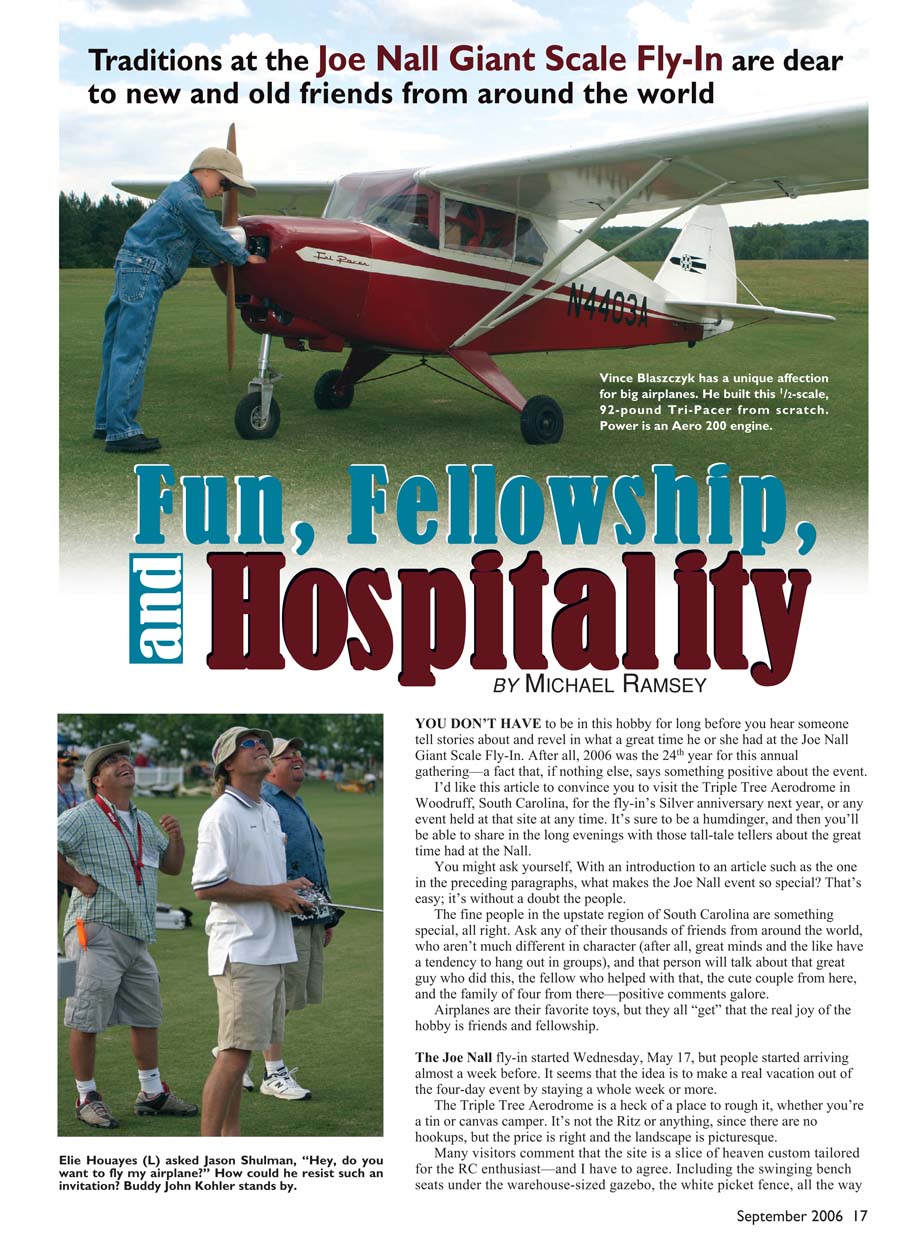
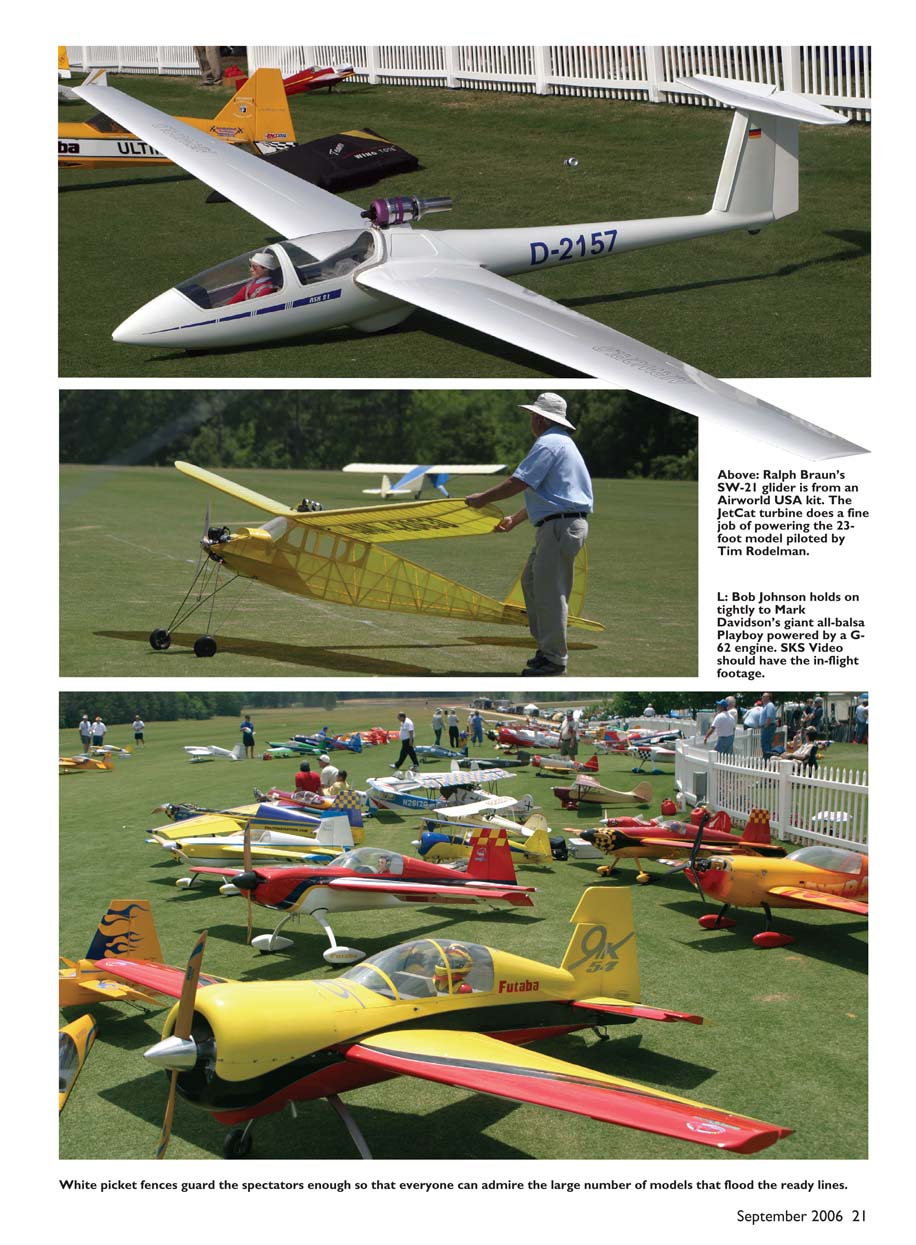
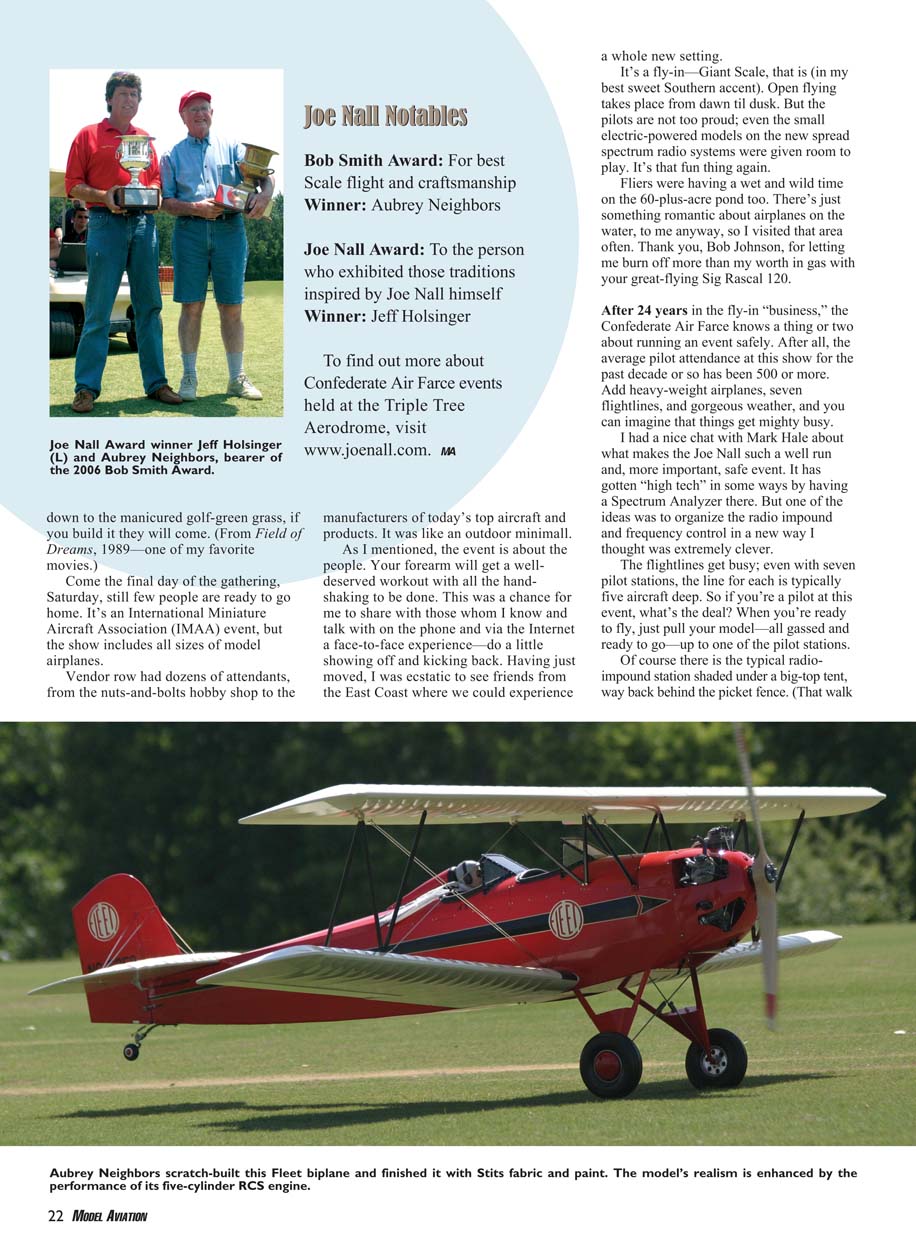
Fun, Fellowship, and Hospitality
BY MICHAEL RAMSEY
The People
You don't have to be in this hobby for long before you hear someone tell stories about and revel in what a great time he or she had at the Joe Nall Giant Scale Fly-In. After all, 2006 was the 24th year for this annual gathering—a fact that, if nothing else, says something positive about the event.
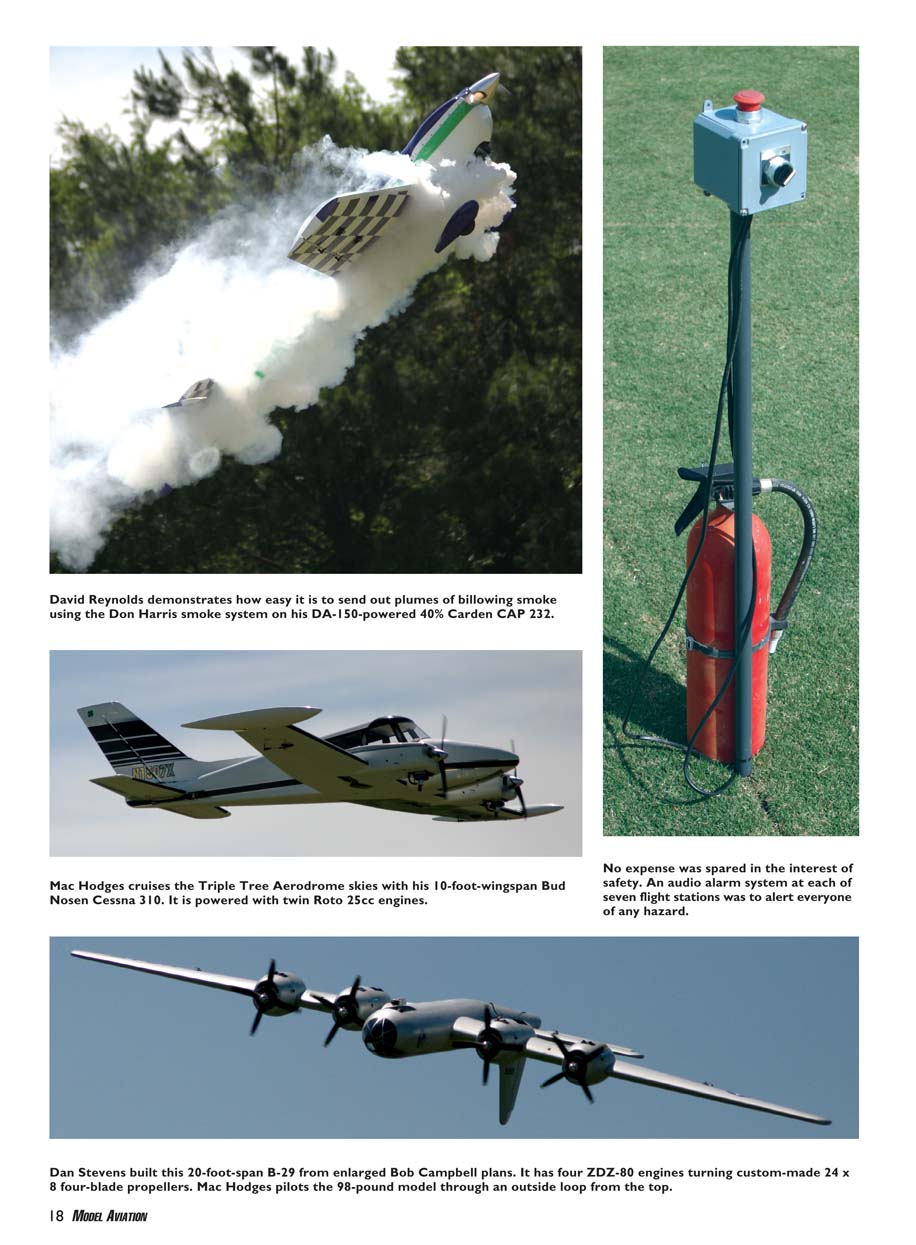
What makes the Joe Nall event so special? That's easy: it's without a doubt the people. The fine folks in the upstate region of South Carolina are something special. Ask any of their thousands of friends from around the world, who aren't much different in character (after all, great minds tend to hang out in groups), and you'll hear stories about that great guy who did this, the fellow who helped with that, the cute couple from here, or the family of four from there—positive comments galore.
Airplanes are their favorite toys, but they all "get" that the real joy of the hobby is friends and fellowship.
The Site
The Joe Nall fly-in officially started Wednesday, May 17, but people began arriving almost a week earlier. Many make a real vacation of the four-day event by staying a whole week or more.
The Triple Tree Aerodrome is a heck of a place to rough it, whether you're a tin or canvas camper. It's not the Ritz or anything—there are no hookups—but the price is right and the landscape is picturesque. Many visitors comment that the site is a slice of heaven custom-tailored for the RC enthusiast—and I have to agree.
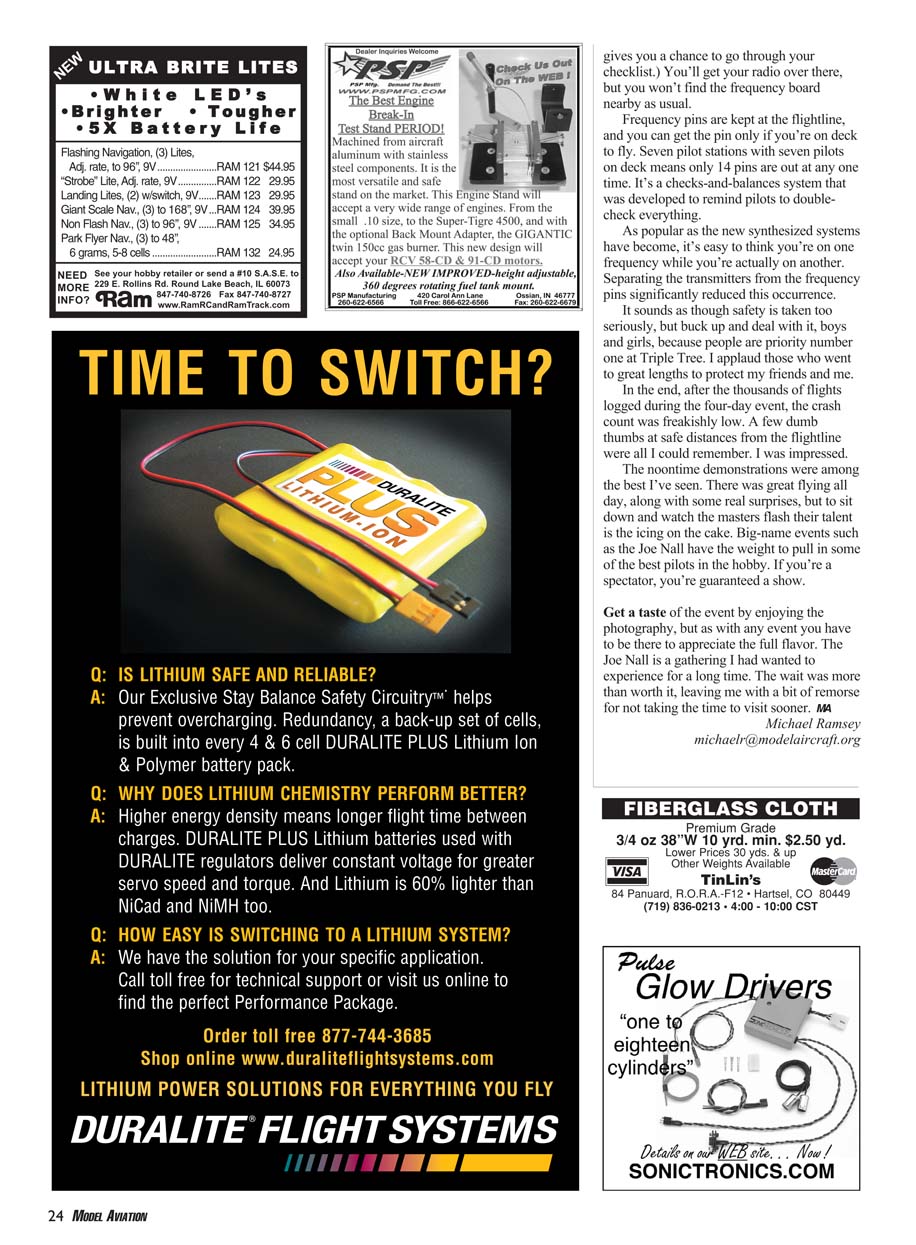
Including the swinging bench seats under the warehouse-sized gazebo, the white picket fence all the way to the flight line, and the manicured golf-green grass, if you build it they will come. (From Field of Dreams, 1989—one of my favorite movies.)
Come the final day of the gathering, Saturday, still few people are ready to go home.
The Event
It's an International Miniature Aircraft Association (IMAA) event, but the show includes all sizes of model airplanes. Vendor row had dozens of attendants, from the nuts-and-bolts hobby shop to the manufacturers of today's top aircraft and products—it was like an outdoor mini-mall.
As I mentioned, the event is about the people. Your forearm will get a well-deserved workout with all the handshaking to be done. This was a chance for me to share with those I know and talk with on the phone and via the Internet in a face-to-face setting—do a little showing off and kicking back. Having just moved, I was ecstatic to see friends from the East Coast and to experience a whole new setting.
It's a fly-in—Giant Scale, that is. Open flying takes place from dawn till dusk. But the pilots are not too proud; even the small electric-powered models on the new spread-spectrum radio systems were given room to play.
Fliers were having a wet and wild time on the 60-plus-acre pond too. There's just something romantic about airplanes on the water, to me anyway, so I visited that area often. Thank you, Bob Johnson, for letting me burn off more than my worth in gas with your great-flying Sig Rascal 120.
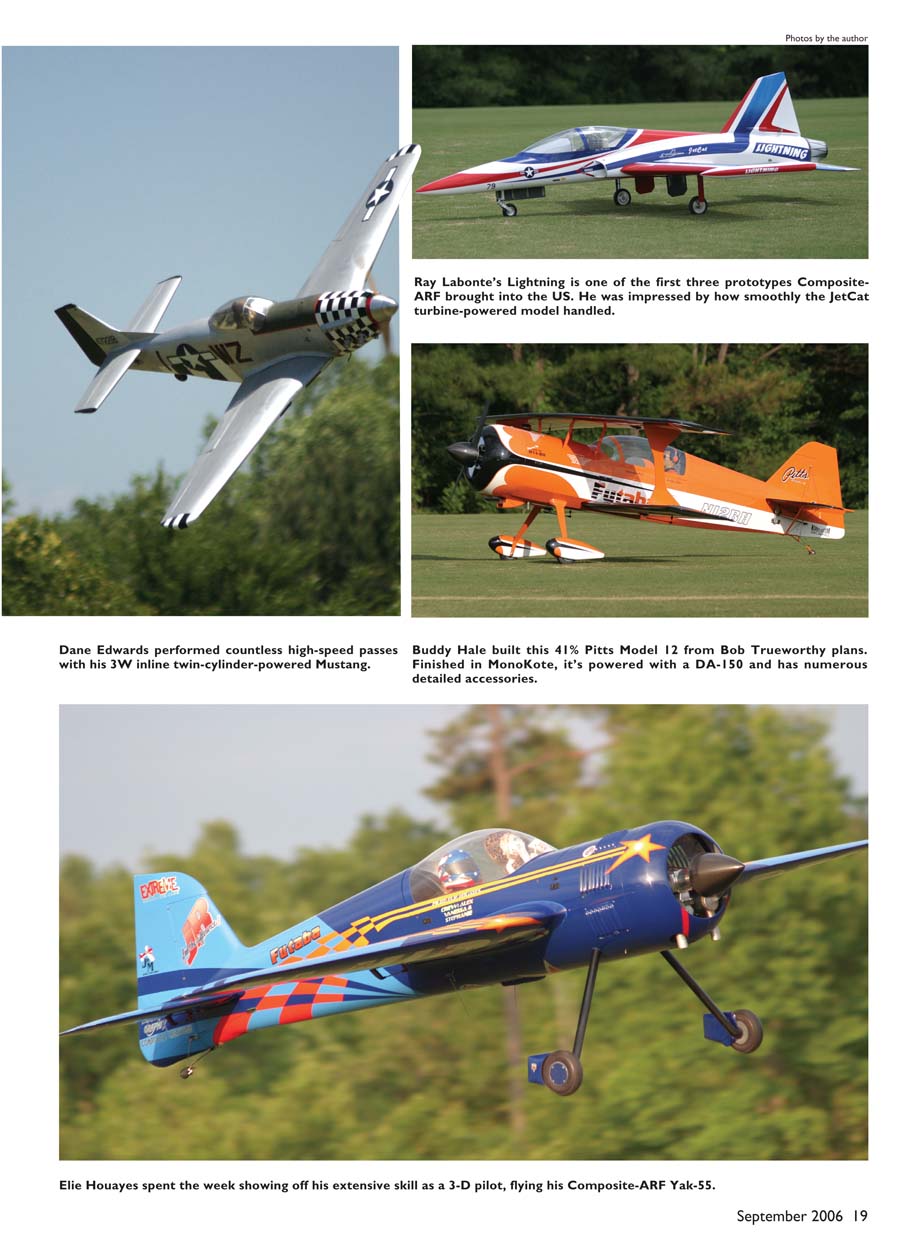
After 24 years in the fly-in "business," the Confederate Air Force knows a thing or two about running an event safely. The average pilot attendance at this show for the past decade or so has been 500 or more. Add heavy-weight airplanes, seven flightlines, and gorgeous weather, and you can imagine that things get mighty busy.
Safety and Radio Control
I had a nice chat with Mark Hale about what makes Joe Nall such a well-run and, more important, safe event. It has gotten "high tech" in some ways by using a Spectrum Analyzer or the like. But one of the ideas was to organize the radio impound and frequency control in a new way I thought was extremely clever.
The flightlines get busy; even with seven pilot stations, the line for each is typically five aircraft deep. So if you're a pilot at this event, here's how it works:
- There is a typical radio-impound station shaded under a big-top tent way back behind the picket fence. You'll get your radio impounded there.
- You won't find the frequency board nearby as usual. Frequency pins are kept at the flightline.
- You can get a pin only if you're on deck to fly. Seven pilot stations with seven pilots on deck means only 14 pins are out at any one time.
- This checks-and-balances system was developed to remind pilots to double-check everything and to reduce the chance of being on the wrong frequency.
As popular as the new synthesized systems have become, it's easy to think you're on one frequency while you're actually on another. Separating the transmitters from the frequency pins significantly reduced this occurrence. It may sound like taking safety too seriously, but people are priority number one at Triple Tree, and I applaud those who went to great lengths to protect my friends and me.
In the end, after the thousands of flights logged during the four-day event, the crash count was freakishly low. A few dumb thumbs at safe distances from the flightline were all I could remember. I was impressed.
Final Impressions
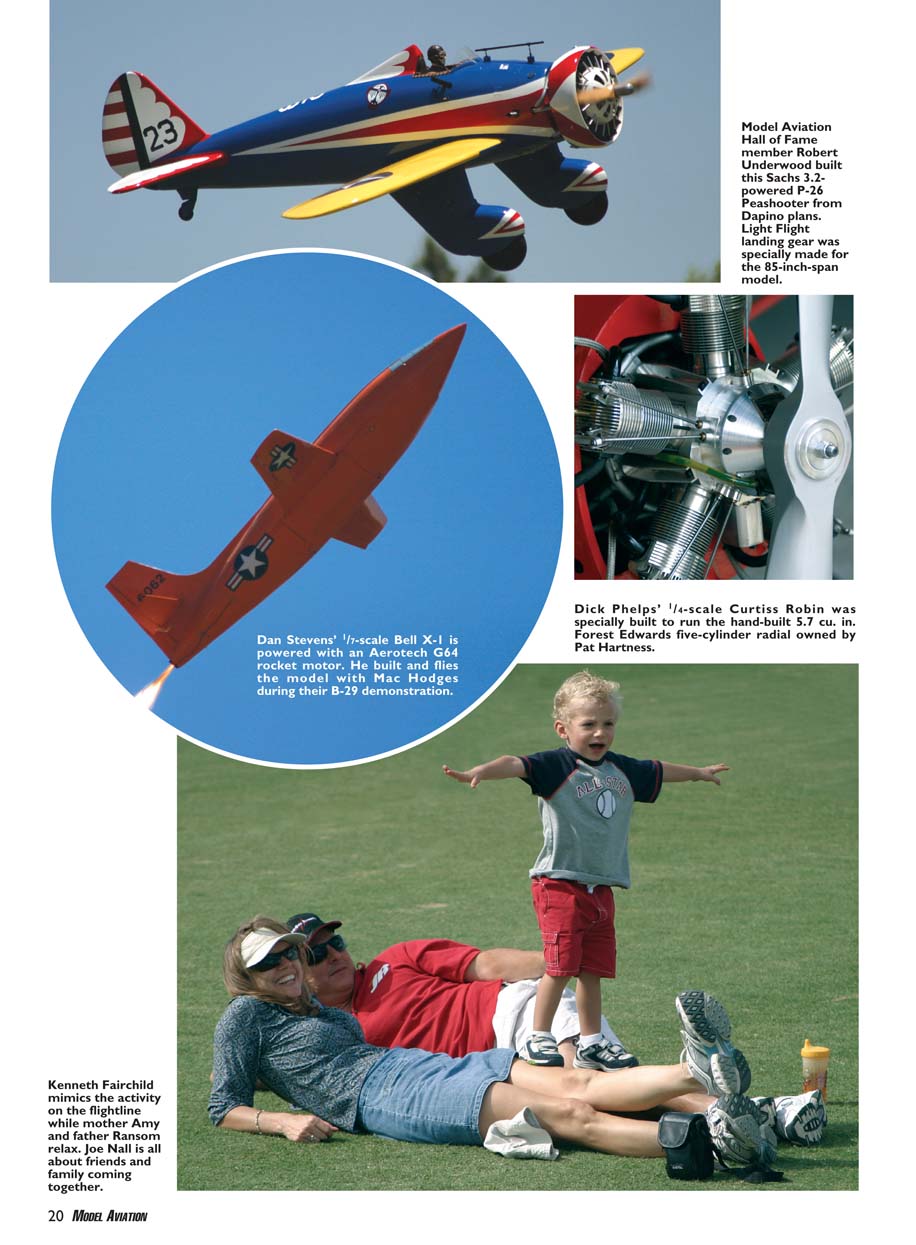
The noontime demonstrations were among the best I've seen. There was great flying all day, along with some real surprises, but to sit down and watch the masters flash their talent is the icing on the cake. Big-name events such as the Joe Nall have the weight to pull in some of the best pilots in the hobby. If you're a spectator, you're guaranteed a show.
Get a taste of the event by enjoying the photography, but as with any event you have to be there to appreciate the full flavor. The Joe Nall is a gathering I had wanted to experience for a long time. The wait was more than worth it, leaving me with a bit of remorse for not taking the time to visit sooner.
MA
Michael Ramsey [email protected]
Transcribed from original scans by AI. Minor OCR errors may remain.

