
A Super Fun Fly
by Michael Brown
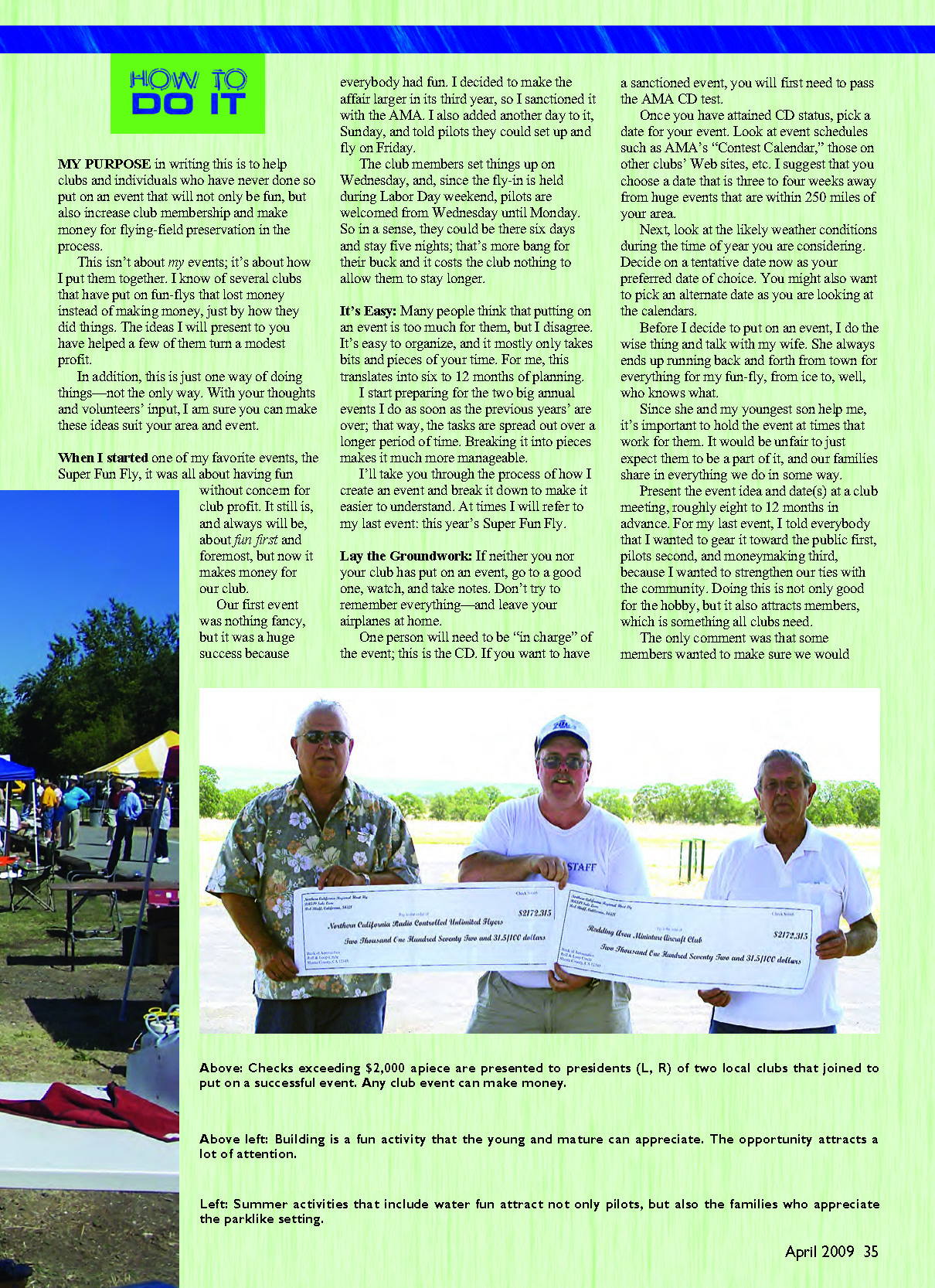
My purpose in writing this is to help clubs and individuals who have never put on an event do so in a way that is fun for pilots and spectators, increases club membership, and makes money for flying-field preservation. This isn't about my events so much as how I put them together. Several clubs have run fun-flys that lost money simply because of how they organized them. The ideas here have helped some of those clubs turn a modest profit. This is one approach—not the only way—and you should adapt these ideas to suit your area and volunteers.
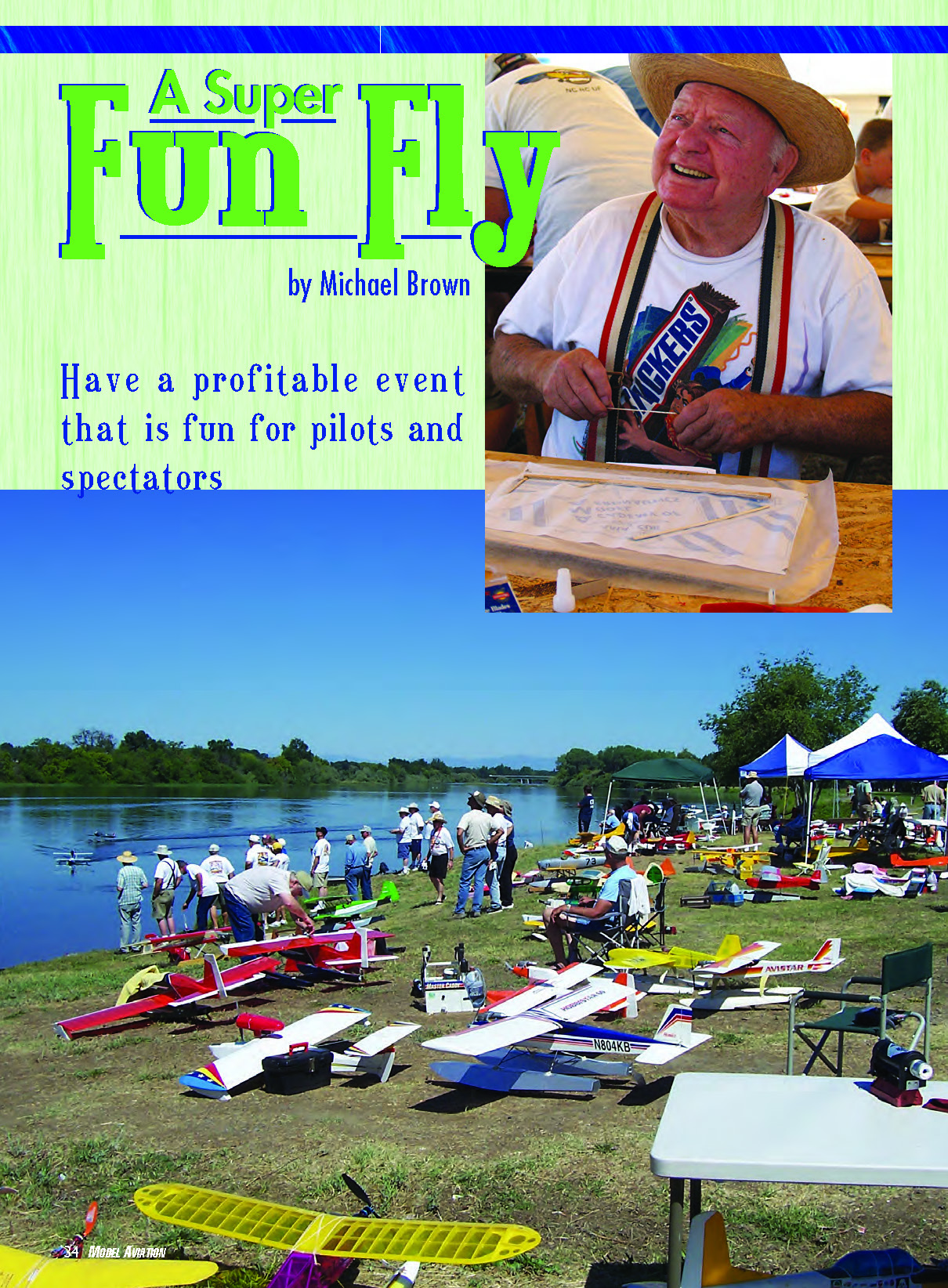
When I started one of my favorite events, the Super Fun Fly, it was all about having fun without concern for club profit. It still is, and always will be, about fun first and foremost, but now it makes money for our club. Our first event was nothing fancy, but it was a huge success because everybody had fun. I sanctioned it with the AMA in its third year and added a second day. Pilots can set up and fly on Friday, we set things up on Wednesday, and because the fly-in is held over Labor Day weekend pilots are welcomed from Wednesday until Monday. In a sense they can be there six days and stay five nights—more bang for their buck at no extra cost to the club.
It's Easy
Many people think putting on an event is too much, but it's easy to organize if you break the work into pieces. For me that translates into six to 12 months of planning. I start preparing for my two big annual events as soon as the previous year’s are over so tasks are spread out and manageable. Below I’ll take you through the process I use.
Lay the Groundwork
If neither you nor your club has put on an event, go to a good one, watch, and take notes. Don’t try to remember everything—and leave your airplanes at home.
One person will need to be in charge of the event; this is the contest director (CD). If you want a sanctioned event, the CD must pass the AMA CD test.
Steps to get started:
- Pick a tentative date about eight to 12 months in advance. Check calendars (AMA Contest Calendar, other clubs’ sites) and avoid dates three to four weeks near huge events within about 250 miles.
- Consider likely weather during your chosen time of year and pick an alternate date if needed.
- Talk with family or other key volunteers early so the date works for them—this is important if family members are helping with errands and staging.
- Present the event idea and dates at a club meeting roughly eight to 12 months out. Explain your priorities (for our event it was: public first, pilots second, moneymaking third) to strengthen community ties and attract members.
- Address ground rules in your publicity so neither spectators nor pilots assume they can do whatever they want. Have volunteers available to answer questions and direct people.
After the club approves the event, recruit volunteers. Look for members you respect or who already help the club. Consider their skills and past jobs when assigning roles. Hold regular planning meetings and listen to volunteers—they often know what their department needs. Make a checklist for each department (registration, impound, food, raffle, volunteers, etc.) and track items from ordering to loading and transport. Good organization prevents a beautiful site from becoming a mess.
Send AMA sanction papers at least six months early to get three months of free magazine advertising. If your club doesn't own the property, obtain AMA site insurance; it’s affordable and protects the property owners. I also tell the club upfront there will be registration fees and a raffle booth—both help make the event profitable.
Sanctions and Safety
Safety must be the top priority—especially since some visiting pilots might not be used to flying together. Basics include:
- Communication at the flightline: use spotters and talk to each other.
- Consider a transmitter impound for systems other than 2.4 GHz and limit the number of models in the air (we cap at five, depending on site conditions).
- Airplane inspections: optional, but highly recommended. When I inspect, I check tightness of engine/motor mounts, propellers/spinners, landing gear, flying surfaces, clevis keepers, and superior linkages (ball joints or Z-bends). Worn hinges or a loose motor can ruin a day—inspections have saved many airplanes.
- Think safety in every aspect of your event, not just pilots and airplanes.
Spread the News
I make three distinct flyers so each audience gets relevant information:
- Out-of-town pilots: event details, maps, motel phone numbers, number of days they can stay, arrival/early setup info.
- Club newsletter and other clubs: announce the event and begin volunteer recruitment.
- The public: avoid calling it a “fun-fly”—use headlines like “Free Air Show.” Promote highlights (air races, airplane combat, food, swap meet, raffle, public welcome, buddy-box flights, building seminars) and include contact info and a map.
Post public flyers on supermarket boards for free advertising.
Raffle Talk
If your goal is to make money, run a raffle. Start collecting items during the Christmas shopping season when sales are best. Choose prizes that appeal to a broad audience (tools, folding chairs, coolers, picture frames, etc.), and make a trainer model the top prize. Hobby shops may donate items or ask suppliers on your behalf.
Organize raffle solicitations:
- Three months before the event, research hobby suppliers and keep a spreadsheet of postal addresses, emails, phone numbers, and websites.
- Draft a professional donation-request letter, include your sanction and flyer, and mail to about 50 companies (12–15 weeks early). Include local businesses too.
- To save postage, fold a two-sided sheet with your request, sanction/flyer, and addresses—no envelope needed.
Raffle logistics:
- Use a raffle wheel to entice purchases. We sell tickets $1 each or $5 for six tickets plus a spin. Our wheel has 16 spaces numbered 6–20; buyers receive the base tickets plus additional tickets from the wheel.
- Raffle tickets are inexpensive (under $10 for 2,000 tickets). The spin wheel encourages people to spend at least $5.
- Set up a small table of free magazines at the raffle area—spectators love free publications and it draws them in.
Reward sponsors by printing their names on colored paper and posting them at the event. Afterward, send thank-you letters and photos.
Contact Your Talent
If you don’t know many out-of-town pilots, use clubs as resources—the AMA club locator and event directory help. Attend events, ask CDs for sign-up sheets (with permission), gather email lists, and ask attendees to pass your flyer along. Contact pilots at least two months early to give them time to plan.
Publicize Your Event
Write a press release and mail it to TV, radio, and newspapers within about 150 miles. I typically send to around 34 media outlets. Use phrases like “a free air show,” “aeromodeling is a good family hobby,” and “will help bring the community together.”
Sure Path to the Heart (Food & Concessions)
If you prepare concessions rather than cater, plan all supplies (food, tape, tablecloths, utensils). Shop smart for quality—decent paper plates and plastic ware matter.
Tips:
- Buy sale or closeout items when possible. I once bought 1,000 knives and forks because the price matched a smaller pack and we’ll need them in future years.
- Keep food simple and appealing: all-beef hot dogs grilled (don’t boil), burgers, chips, and a drink make an affordable, profitable lunch. Sell brand-name soft drinks for $1 each and keep them cold.
- Consider a limited banquet dinner if there’s interest—sell tickets and limit the count.
- Breakfast options (pancakes, sausage, eggs) for $5 can be profitable.
Food equals money for the club, but you must have volunteers to run concessions.
Keep 'Em Busy
Add non-flying attractions to keep families at the event longer:
- Kids’ games away from the flying area.
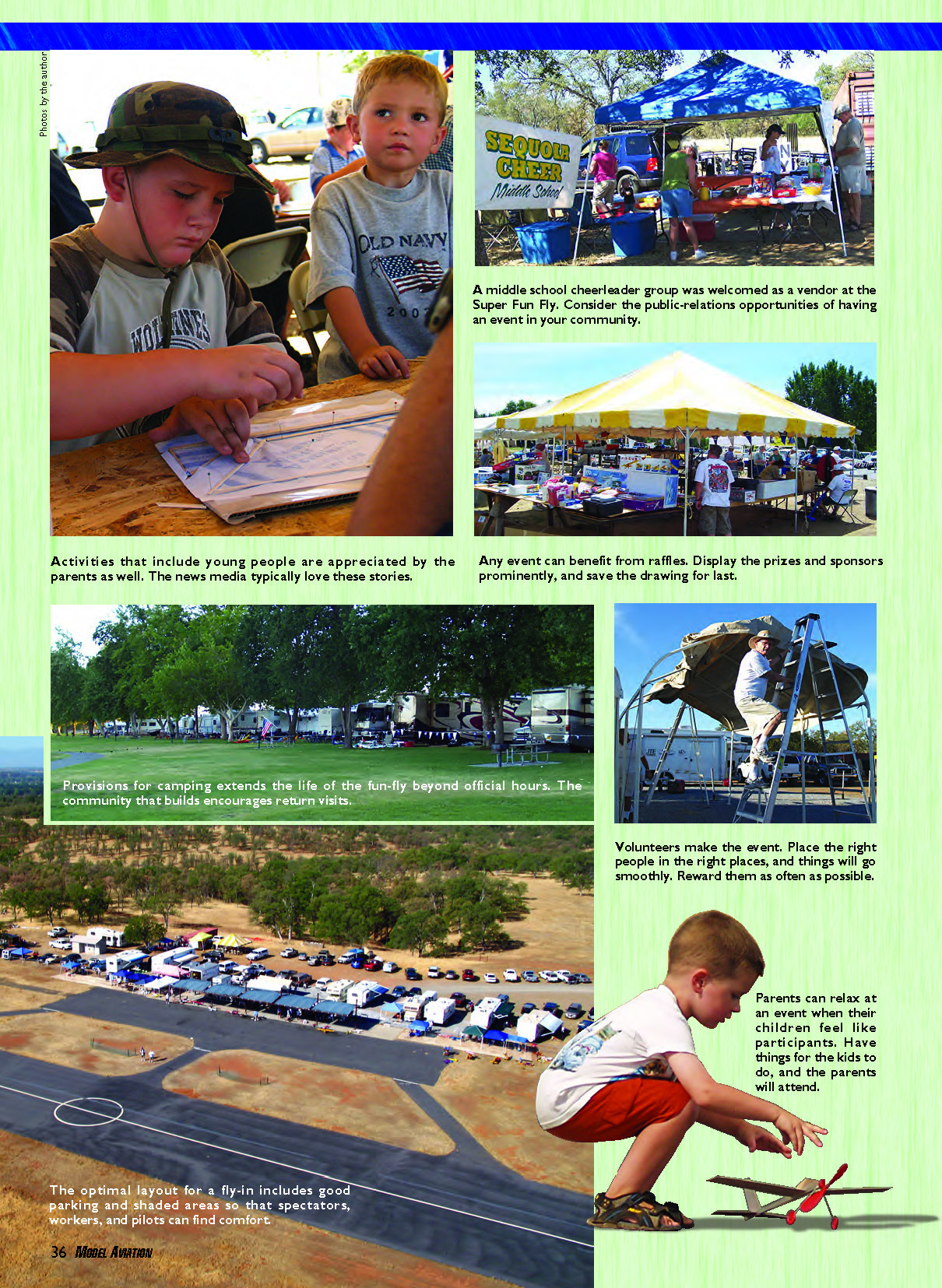
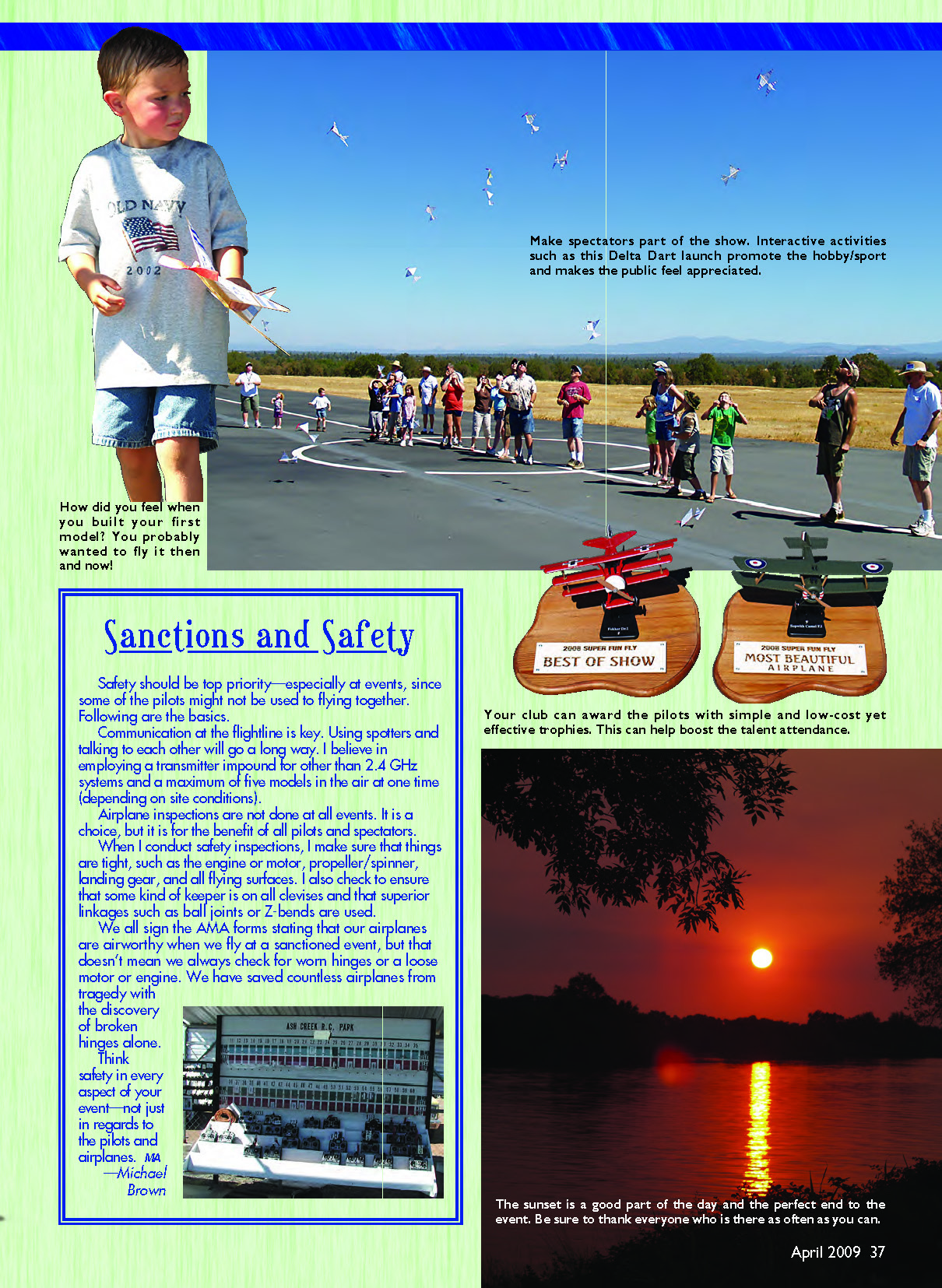
- A free Delta Dart build (a simple rubber-powered model) for up to 40 participants with volunteer help; the session takes about an hour and ends with a mass launch and a prize for the longest flight.
- Buddy-box flights for the public for two to three hours at one of several flying stations—this introduces people to flying without disrupting regular pilots.
These activities cost little (we spent $70 total on toys and Delta Darts) but keep parents and kids on-site longer, increasing food and raffle sales.
Be Heard
A sound system is essential to communicate with both the public and pilots—announce pilots’ meetings, food times, sponsors (mention them repeatedly), safety concerns, and schedule items. Borrow a system or buy an inexpensive one if needed.
Many clubs borrow tables, chairs, tents, and equipment from members or local groups (churches, Moose or Elks Lodges). If your events become regularly profitable, invest in club-owned gear: tables, chairs, shade tents, mowers, a generator, etc. Spend wisely and be patient.
Budget considerations (example):
- AMA sanction: about $20
- Paper, stamps, printing: $100–$150
- Kids’ entertainment: $70
- Raffle prizes: $200–$500
- Raffle tickets: about $8 per roll
If you’ve never run an event, start small. If you already run a one-day fly-in, try adding days.
If you have questions or want to see my signs, flyers, or checklists, feel free to ask—I’d love to help.
—Michael Brown [email protected]
Transcribed from original scans by AI. Minor OCR errors may remain.

