
Micro-Flying
Dave Robelen | [email protected]
Dave takes an in-depth look at an exciting new micro RC system
GREETINGS micro fans. I have several topics to go over this month, so grab a fresh cup of coffee and settle back. I am going to show a new entry in the micro control field, share some information about my latest micro scale project, and take you to a fly-in at the US Naval Academy.
The micro control system is the new Plantraco HFX900. Because of many new features of interest, this system deserves more than a passing glance. The Web site for the company is www.plantraco.com, and the street address is 1105 8th St. E., Saskatoon, SK, Canada, S7H 0S3. The telephone number is (306) 955-1836.
This system operates on 900 mHz, making it fully compatible with our present equipment on 72 mHz, and there is even more. The transmitter can radiate on three different channels with a synthesizer: 904.4775, 915.9975, and 927.5175 mHz. The user can select from these channels at any time when switching on the transmitter. The tiny receiver automatically detects the correct signal and locks on so you can operate this equipment alongside the 72 mHz channels, and three of the Plantraco systems can fly at the same time.
The transmitter is a cutie. It's much smaller than normal, and there is no external antenna. Power is supplied by four AA Pencell batteries, which appear to have a decent life span. There are two stick assemblies; the one on the right is self-centering in both axes and the one on the left may be ordered with conventional friction on the vertical movement or spring centering for a "deadman" sort of throttle action.
In this case, the power starts at zero in the center off position and reaches full at the top of the movement. In the case of a crash or such, the operator is likely to release the throttle stick and take the strain off of the battery and drive, etc. I chose the friction type and it feels really nice. The trims are little thumbwheels set into the transmitter face.
Also included in this column is information about:
- A sheet-balsa version of a Fokker Eindecker
- US Naval Academy Indoor FF and RC model club
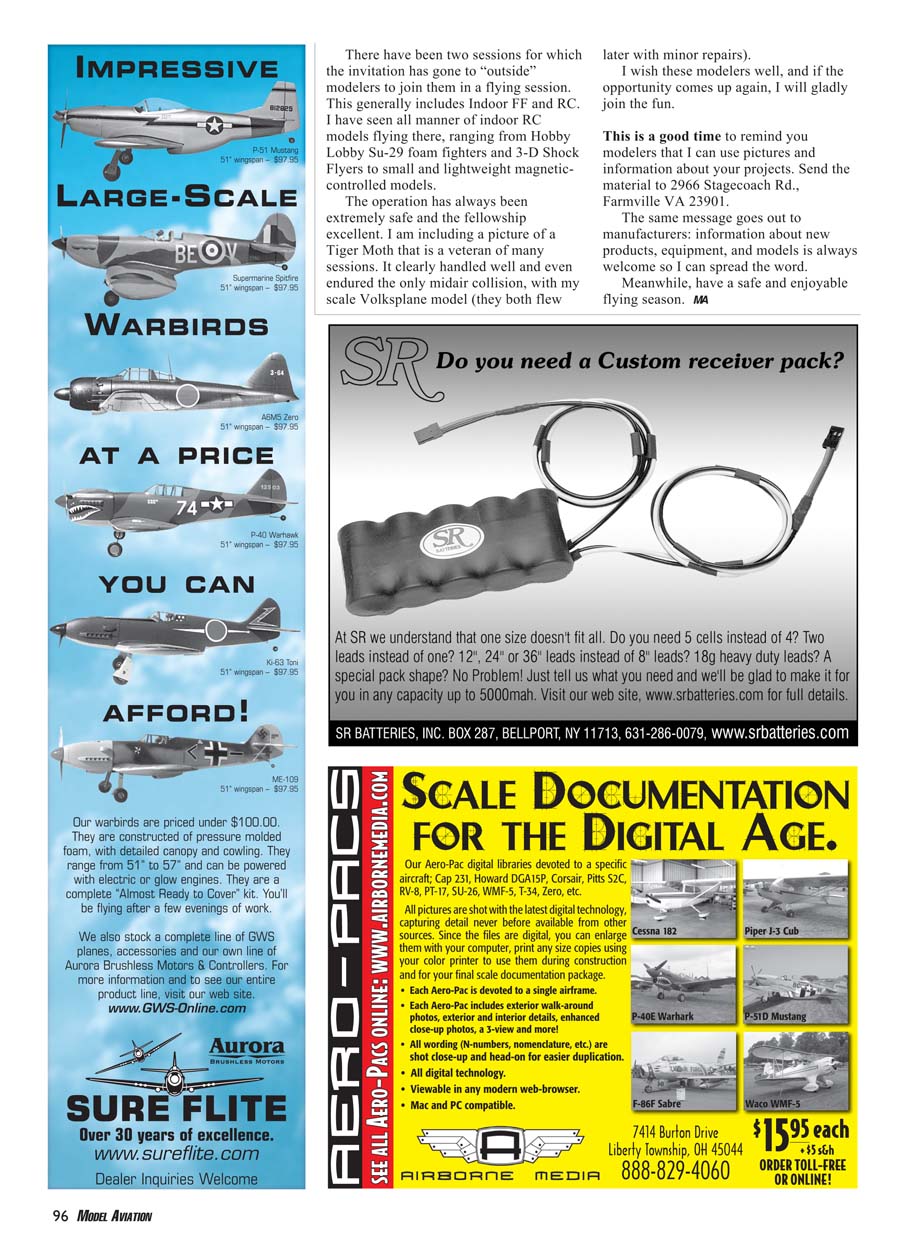
The close-up shot of the Plantraco Micro 900 receiver indicates the level of precision in the electronics. The Bahoma magnet contacts for the battery are also clearly visible in this view.
I will continue to experiment with model designs for this new line of equipment. It is clear that there has been a significant leap in technology to have these goodies available.
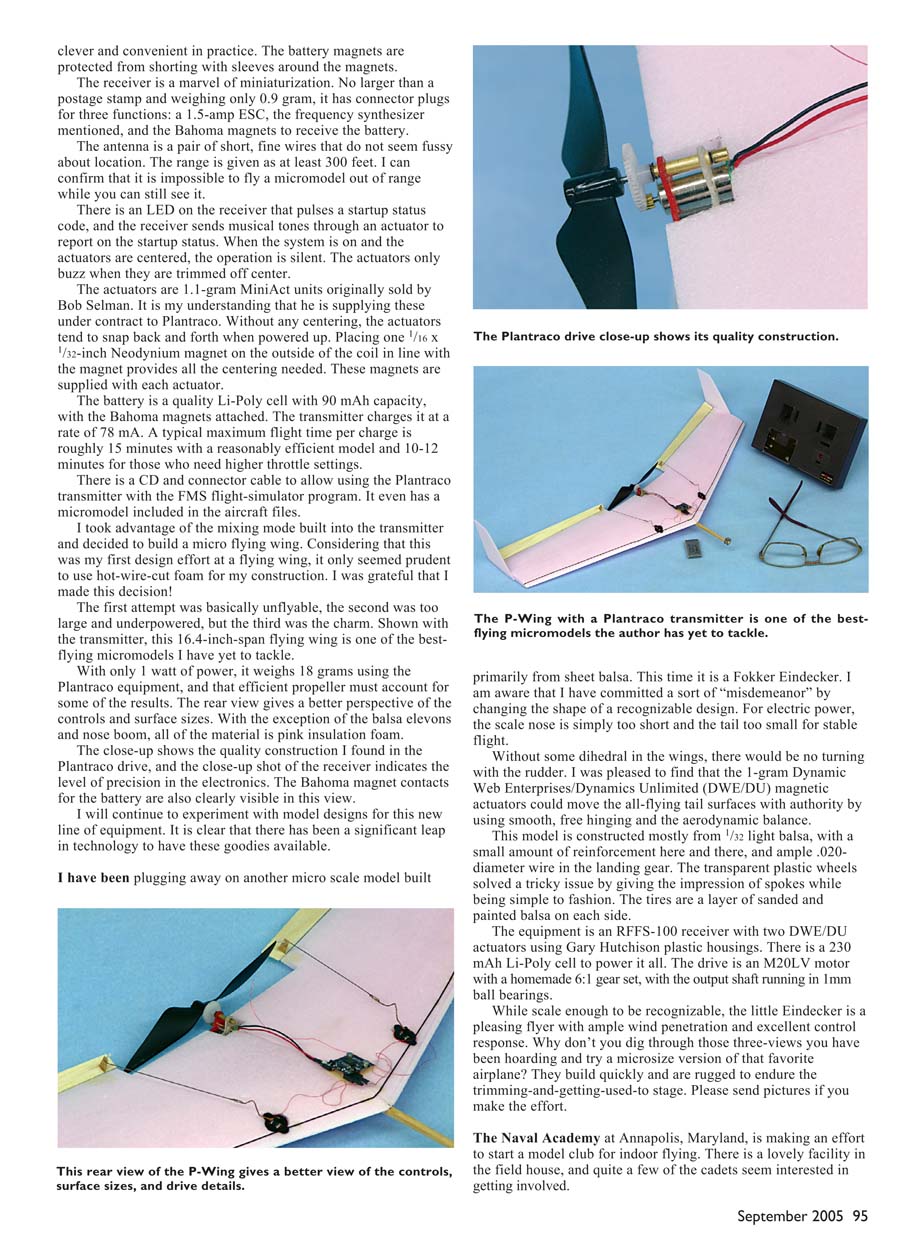
I have been plugging away on another micro scale model built primarily from sheet balsa. This time it is a Fokker Eindecker. I am aware that I have committed a sort of “misdemeanor” by changing the shape of a recognizable design. For electric power, the scale nose is simply too short and the tail too small for stable flight.
Without some dihedral in the wings, there would be no turning with the rudder. I was pleased to find that the 1-gram Dynamic Web Enterprises/Dynamics Unlimited (DWE/DU) magnetic actuators could move the all-flying tail surfaces with authority by using smooth, free hinging and the aerodynamic balance.
This model is constructed mostly from 1/32 light balsa, with a small amount of reinforcement here and there, and ample .020-diameter wire in the landing gear. The transparent plastic wheels solved a tricky issue by giving the impression of spokes while being simple to fashion. The tires are a layer of sanded and painted balsa on each side.
The equipment is an RFFS-100 receiver with two DWE/DU actuators using Gary Hutchison plastic housings. There is a 230 mAh Li-Poly cell to power it all. The drive is an M20LV motor with a homemade 6:1 gear set, with the output shaft running in 1 mm ball bearings.
While scale enough to be recognizable, the little Eindecker is a pleasing flyer with ample wind penetration and excellent control response. Why don’t you dig through those three-views you have been hoarding and try a microsize version of that favorite airplane? They build quickly and are rugged to endure the trimming-and-getting-used-to stage. Please send pictures if you make the effort.
The Naval Academy at Annapolis, Maryland, is making an effort to start a model club for indoor flying. There is a lovely facility in the field house, and quite a few of the cadets seem interested in getting involved.
Micro-Flying
Dave Robelen
There have been two sessions for which the invitation has gone to "outside" modelers to join them in a flying session. This generally includes Indoor FF and RC. I have seen all manner of indoor RC models flying there, ranging from Hobby Lobby Su-29 foam fighters and 3-D Shock Flyers to small and lightweight magnetic-controlled models.
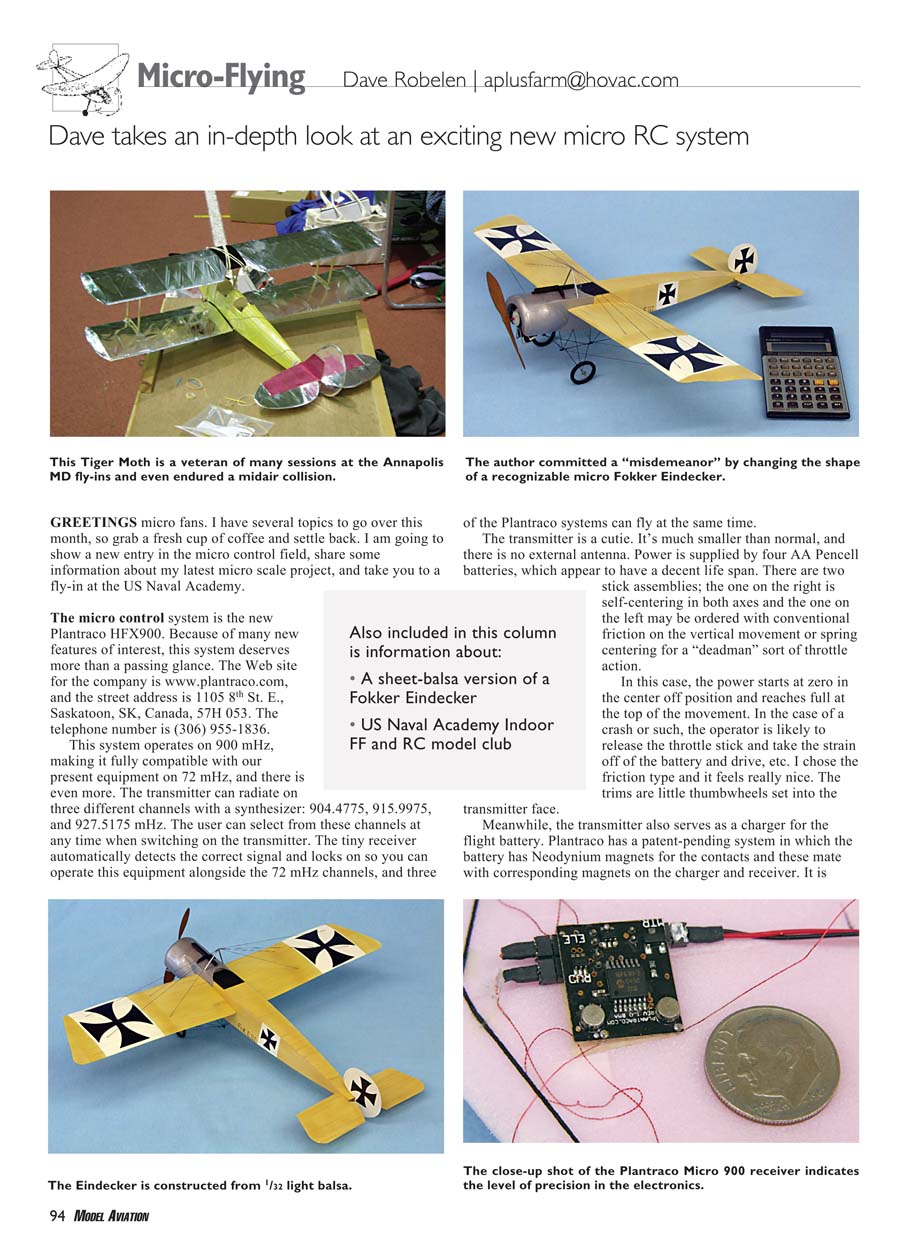
The operation has always been extremely safe and the fellowship excellent. I am including a picture of a Tiger Moth that is a veteran of many sessions. It clearly handled well and even endured the only midair collision, with my scale Volksplane model (they both flew later with minor repairs).
I wish these modelers well, and if the opportunity comes up again, I will gladly join the fun.
This is a good time to remind you modelers that I can use pictures and information about your projects. Send the material to 2966 Stagecoach Rd., Farmville VA 23901.
The same message goes out to manufacturers: information about new products, equipment, and models is always welcome so I can spread the word.
Meanwhile, have a safe and enjoyable flying season. MA
Transcribed from original scans by AI. Minor OCR errors may remain.

