
Model Airplane Nostalgia—Magazines
by Dick Sarpolous
A flight down memory lane with rags of gold
NOSTALGIA IS a big part of today's model-airplane scene. Modelers are building and flying old aircraft designs, sometimes with old engines and equipment, sometimes in serious competition, and sometimes just for fun. It's happening in all categories of the hobby: FF, CL, and RC.
The collectors among us are going after old engines, old airplane kits and plans, and the old magazines. Anybody who wants to see how active we collectors are only has to turn on the computer, look on eBay, and note for how much old modeling items are selling.
Today's Vintage: The organized, active groups that are interested in collecting old items make it easier for us to get into the nostalgia fun. There's something for almost every interest.
Most of those organizations have been around for a while. They have Web sites, representatives across the country, newsletters, organized activities, and/or periodic meetings. You join them and pay dues to support them. Following are some of those groups.
- SAM (Society of Antique Modelers): These modelers are into the really old airplanes—those from before 1942. Their activities include FF, flying old FF designs via RC, and some CL.
- MECA (Model Engine Collectors Association): This well-organized group disseminates a great deal of helpful information in its periodic newsletters, holds "Collectogethers," and shares tips for the old ignition, glow, and diesel engines that are used in our hobby.
- VRC/S (Vintage Radio Control Society): RC goes way back, and this group keeps those RC airplane designs from before 1970 flying.
- SPA (Senior Pattern Association): This is not an age-restricted group. These fliers use RC Aerobatics, or Pattern, designs from before 1976 and hold competitions based on the older flight-maneuver patterns.
- PAMA (Precision Aerobatics Model Pilots Association): This is a modern CL group, but it encourages and supports Old-Time Stunt (Aerobatics) designs from before 1952 and classic-era designs from before 1970.
- KAPA (Kits And Plans Antiquitus): This group is for those who collected old airplane kits and plans. They have been around for some time and they have a newsletter, but I don't believe they have a Web site. Let's get modern, KAPA!
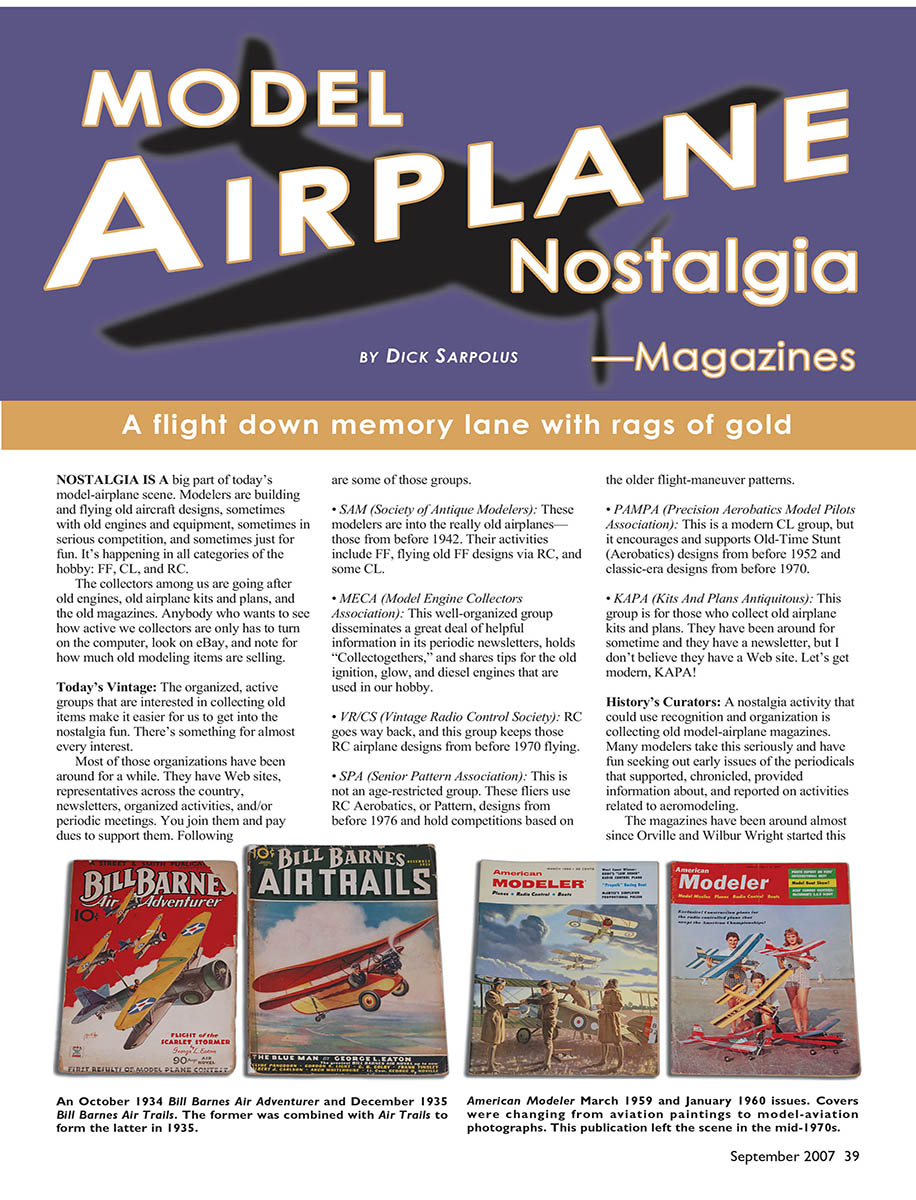
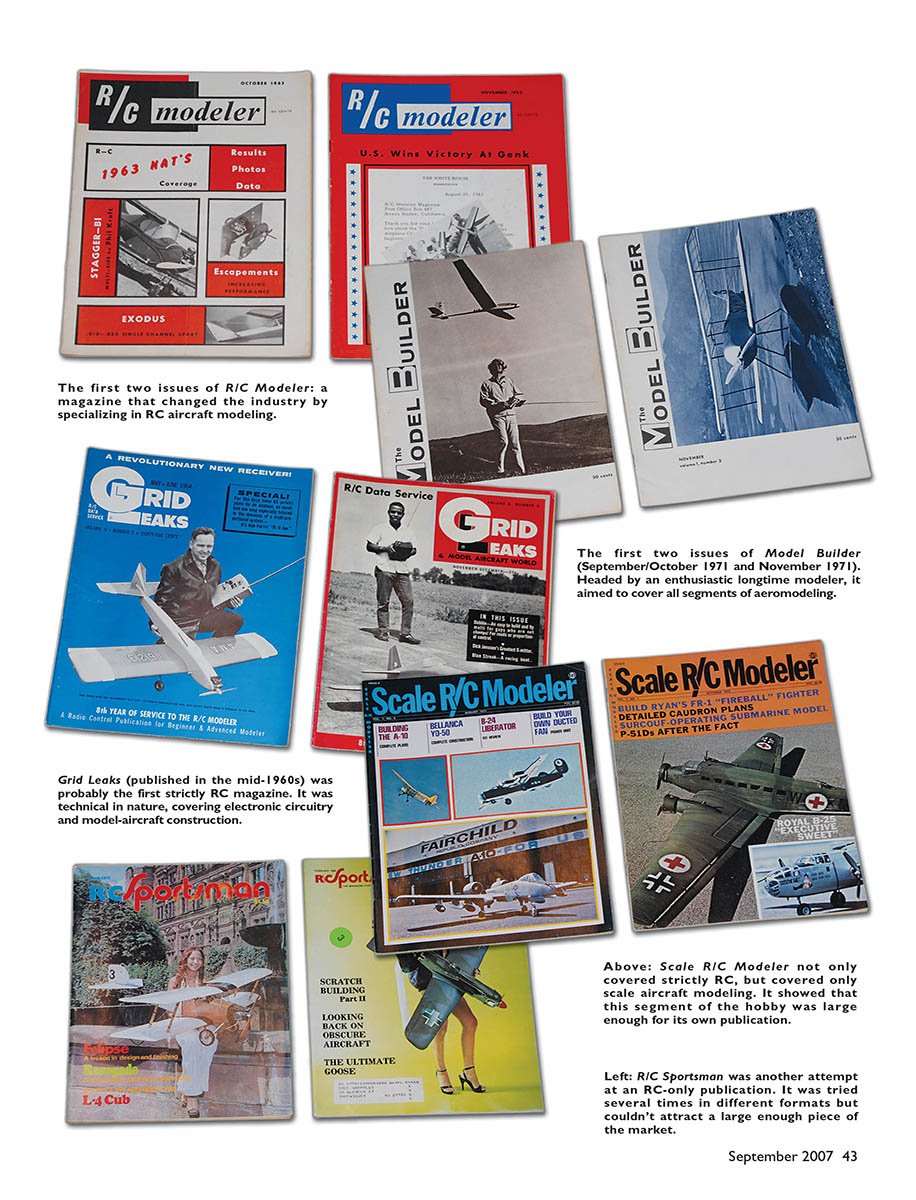
History's Curators: A nostalgia activity that could use recognition and organization is collecting old model-airplane magazines. Many modelers take this seriously and have fun seeking out early issues of the periodicals that reported, chronicled, provided information about, and reported on activities related to aeromodeling.
The magazines have been around almost since Orville and Wilbur Wright started this whole flying thing. Some of the titles have flourished, many have gone by the wayside, and there have been plenty of new ones along the way. Magazine content has changed just as aeromodeling has changed.
This is the sort of thing dedicated collectors thrive on, and the prices of old modeling magazines reflect the interest in them. But bargains are out there, even on eBay, if you're diligent in your searching.
I'm not an old airplane-magazine collector; I have only a few hundred and I pick up just a few more at each swap shop I attend. I sold a 1,600-issue collection when my workshop got too crowded, so now I specialize a bit.
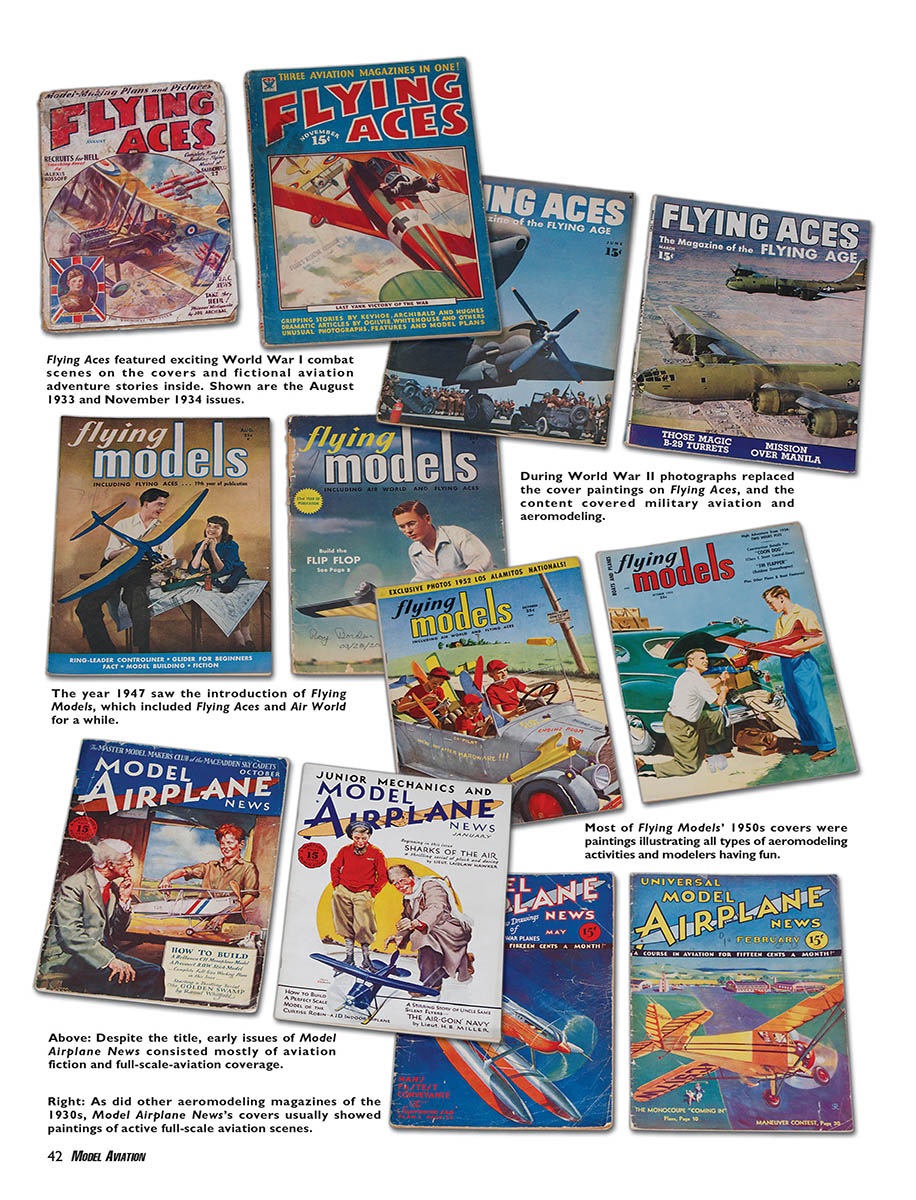
Most would agree that the three main older magazines of interest are Air Trails, Model Airplane News, and Flying Aces. The latter was started in 1928, and the two former began in 1929. Air Trails' early history is interesting. The purely fiction Bill Barnes Air Adventurer magazine merged with Air Trails for a mix of content.
Story Time: The early aeromodeling magazines didn't have much actual model-airplane information in them; they were primarily filled with full-scale aviation fiction stories and factual articles about full-scale aviation. The small amount of model-airplane information was frequently in the back of the magazine.
This mix of aviation fiction, full-scale aviation coverage, and modeling matters gradually shifted through the years until the aeromodeling subject matter took over.
Today our magazines have digital photography, digital imaging, lots of color throughout, CAD drawings, and all the advantages of modern technology. In the early magazine days artists and illustrators were needed to put visual appeal in the magazine layouts.
Many of the early color magazine covers consisted of great artwork done by talented people, but I've heard that they worked for little money and the original paintings were frequently thrown out after they were used.
During the World War II years Air Trails went from the usual magazine size to the 10- x 14-inch Life-magazine size. This larger format, with the larger photos, advertisements, drawings and other artwork, was impressive.
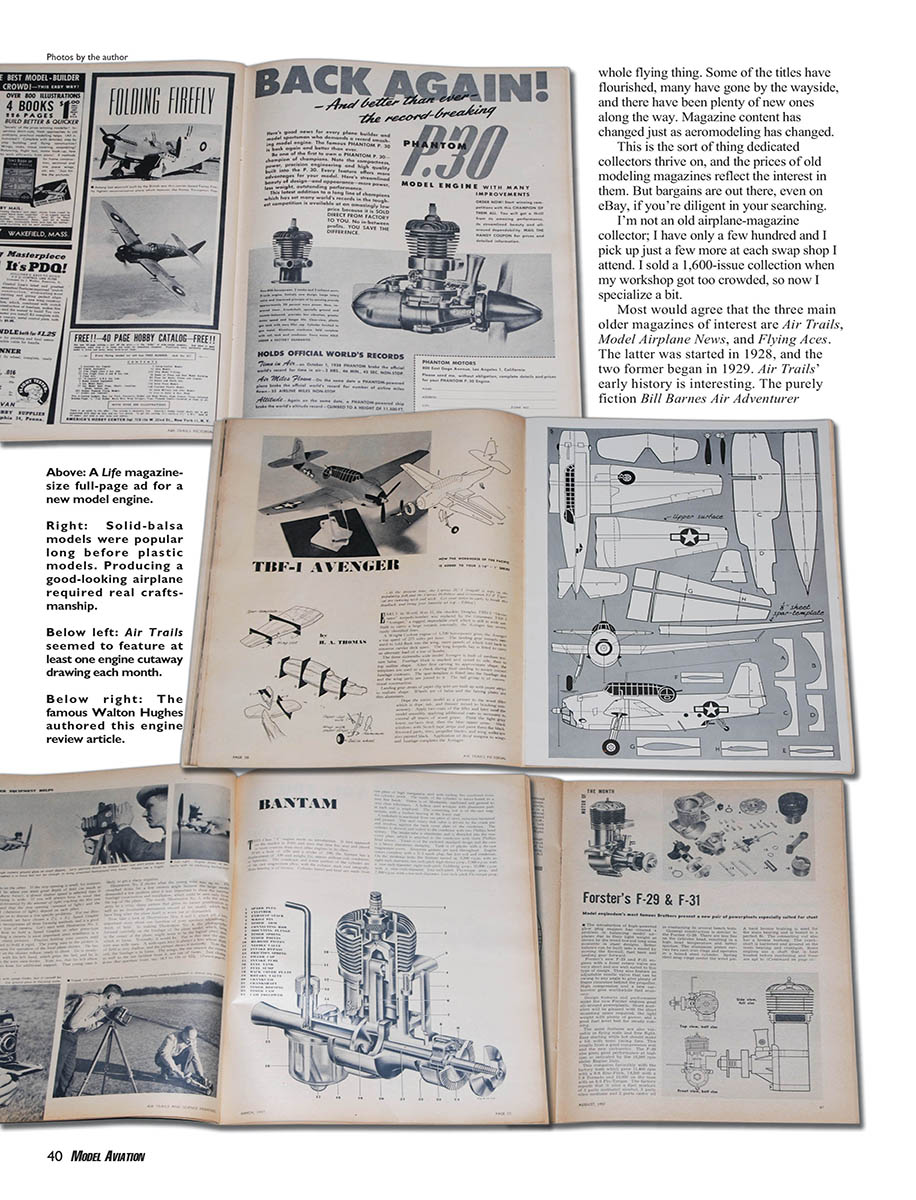
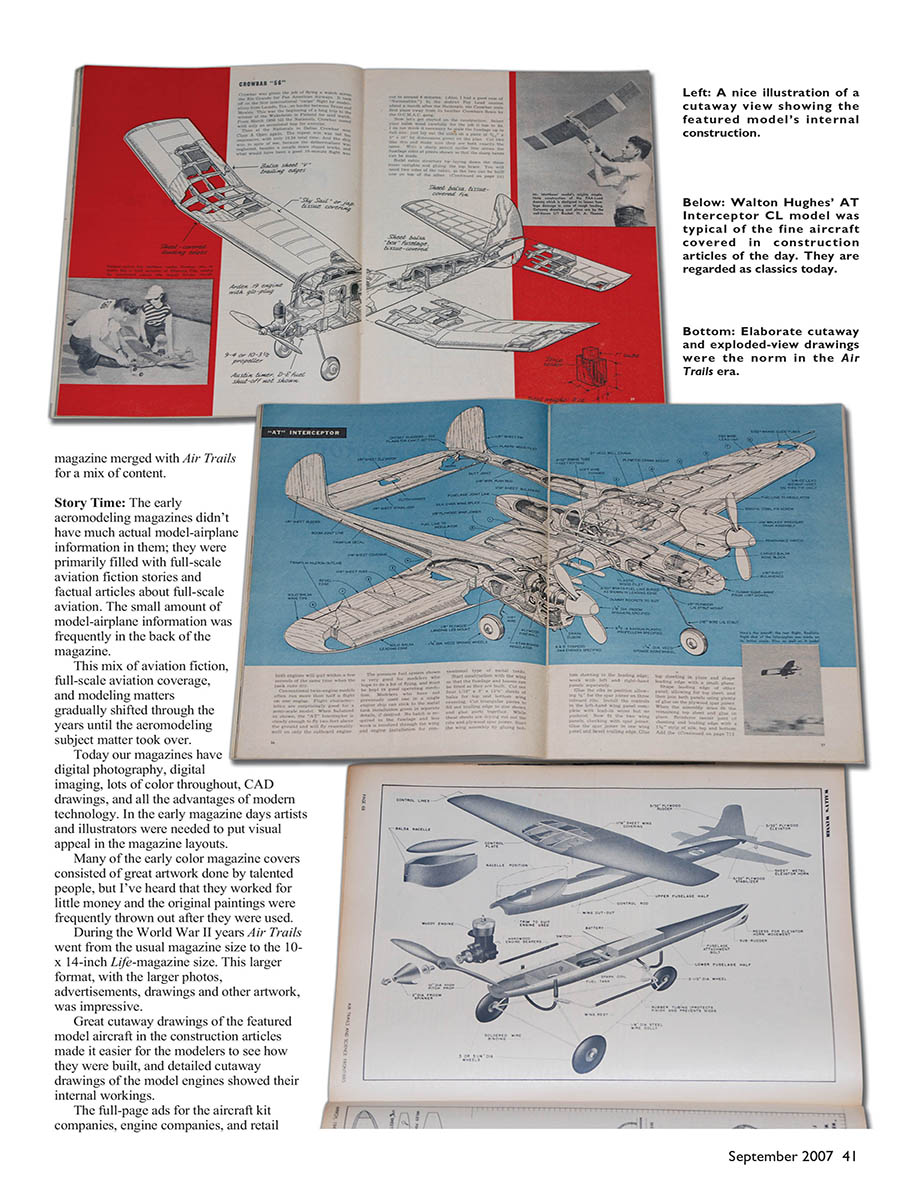
Great cutaway drawings of the featured model aircraft in the construction articles made it easier for the modelers to see how they were built, and detailed cutaway drawings of the model engines showed their internal workings.
The full-page ads for the aircraft kit companies, engine companies, and retail outlets were impressive.
The airframes. Molded foam, sheet foam, and ARFs came along. The magazine industry reflected those changes.
New magazine titles for electric-power-only aeromodelling emerged, and some of the older titles disappeared from the scene. More new titles have appeared since 2000, and electric power and ARF technology are possibly the most often-covered subjects today.
The collectors of the future will seek out the magazines of today. Looking back, with nostalgia, many model-airplane magazines have been printed in the past 80 years. You can find just a few favorite issues to hang onto, particular titles that bring back good memories, or go after every magazine ever printed.
What’s Next? The magazine collectors and nostalgia enthusiasts might welcome some sort of national organization; there’s a great deal of information to be shared and discussed. Maybe there could be a newsletter including a for-sale-and-wanted section; articles about cover artists, particular authors, and the editors; and what titles were published and when. There’s plenty of potential subject matter here.
The magazine collectors could use a comprehensive guide to the different publications that would include titles, starting dates, how long they lasted, photos of the covers, etc. Maybe somebody could even write a book about them.
A magazine-collector spot on Internet forums for E-mail discussion could be created. Maybe KAPA could establish a magazine-collectors’ section; it could be named “Kits and Plans and Magazines” and posted on the Internet for more accessibility.
There is one Web site out there for the old-magazine enthusiasts; Kenny’s Old Time Model Airplane Magazine page at www.ualberta.ca/~khorne/. The site lists many links to more old-time airplane stuff.
Whether or not the magazine collectors get organized and start something, I will keep looking at those old aeromodeling publications at the swap shops, club auctions, and on eBay. Nostalgia is fun! MA
Dick Sarpolous [email protected]
Transcribed from original scans by AI. Minor OCR errors may remain.

