
A new engine-mount series from Merle Hyde
FROM the creative and fertile mind of Merle Hyde is a series of new Firm Idle mounts. These include the Hyde safety feature that prevents them from pulling apart—a problem that is sometimes encountered with soft mounts. The "Firm Idle" feature addresses the need for engines to move around less at low idle. It helps considerably where long header pipes are being connected to tuned pipes and tube-type mufflers.
In the case of the O.S. fuel-injector engine, the manufacturer states that a soft mount must not be used. My O.S. 1.60 FIs have had no fuel-injector failures since I converted to the firmer-style mount.
Mount types and construction
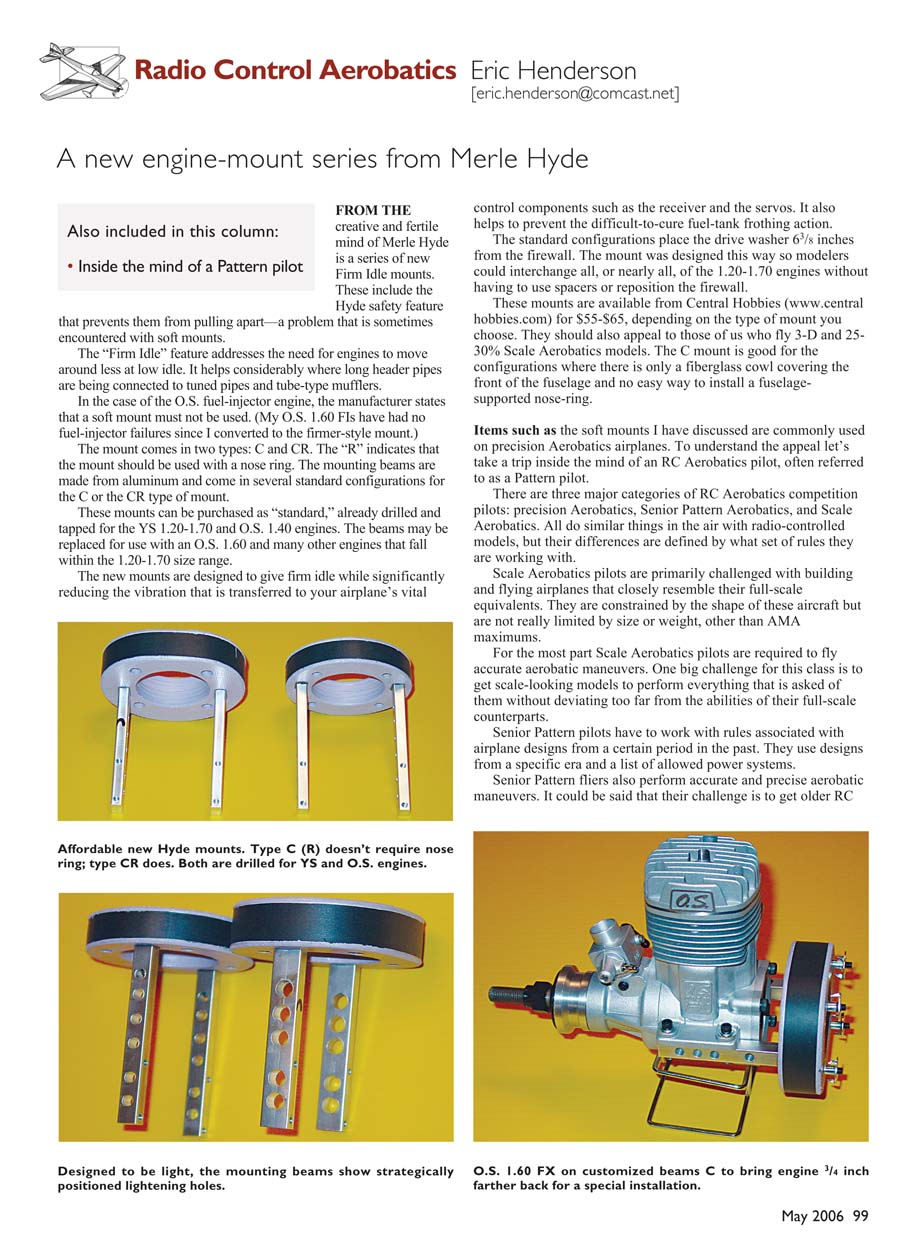
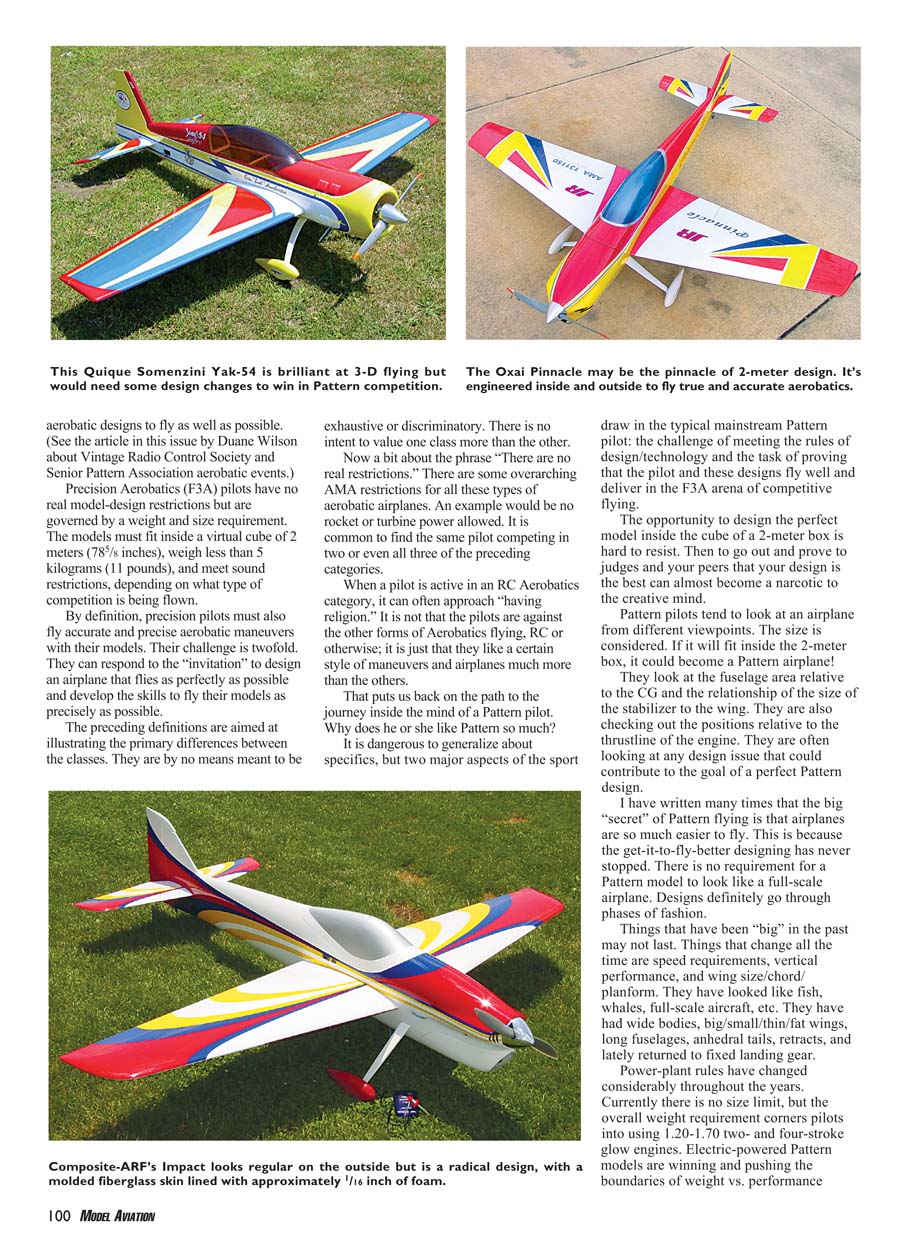
The mount comes in two types: C and CR. The "R" indicates that the mount should be used with a nose ring. The mounting beams are made from aluminum and come in several standard configurations for the C or the CR type of mount.
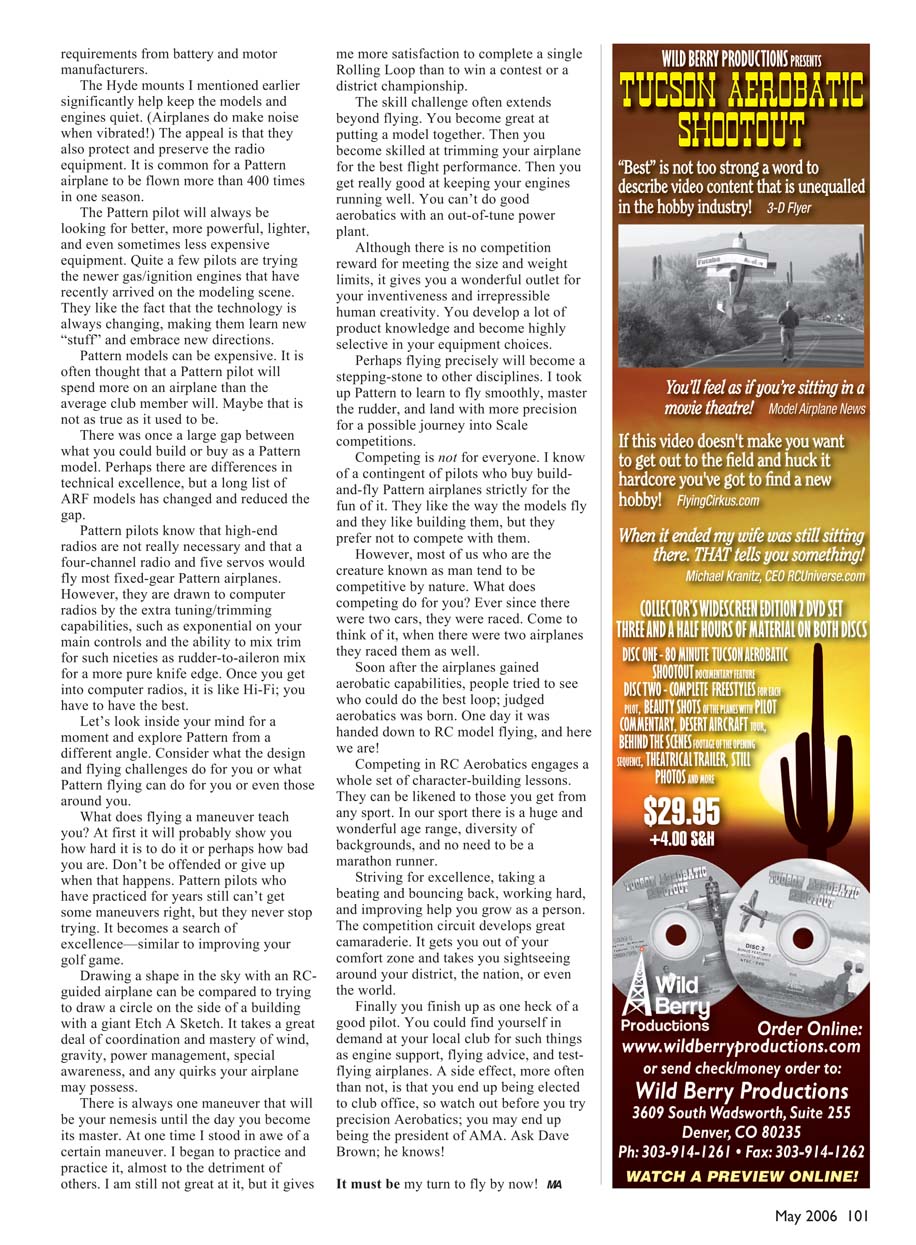
These mounts can be purchased as "standard," already drilled and tapped for the YS 1.20–1.70 and O.S. 1.40 engines. The beams may be replaced for use with an O.S. 1.60 and many other engines that fall within the 1.20–1.70 size range.
Benefits
The new mounts are designed to give firm idle while significantly reducing the vibration that is transferred to your airplane's vital control components such as the receiver and the servos. They also help to prevent the difficult-to-cure fuel-tank frothing action.
The Hyde mounts significantly help keep the models and engines quiet. (Airplanes do make noise when vibrated!) The appeal is that they also protect and preserve the radio equipment. It is common for a Pattern airplane to be flown more than 400 times in one season.
Dimensions and interchangeability
The standard configurations place the drive washer 6 3/8 inches from the firewall. The mount was designed this way so modelers could interchange all, or nearly all, of the 1.20–1.70 engines without having to use spacers or reposition the firewall.
Availability
These mounts are available from Central Hobbies (www.centralhobbies.com) for $55–$65, depending on the type of mount you choose. They should also appeal to those who fly 3-D and 25–30% Scale Aerobatics models. The C mount is good for configurations where there is only a fiberglass cowl covering the front of the fuselage and no easy way to install a fuselage-supported nose ring.
A trip inside the mind of an RC Aerobatics pilot
Items such as the soft mounts I have discussed are commonly used on precision Aerobatics airplanes. To understand the appeal, let’s take a trip inside the mind of an RC Aerobatics pilot, often referred to as a Pattern pilot.
There are three major categories of RC Aerobatics competition pilots: precision Aerobatics, Senior Pattern Aerobatics, and Scale Aerobatics. All do similar things in the air with radio-controlled models, but their differences are defined by what set of rules they are working with.
Categories of RC Aerobatics
- Scale Aerobatics
- Scale pilots are primarily challenged with building and flying airplanes that closely resemble their full-scale equivalents. They are constrained by the shape of these aircraft but are not really limited by size or weight, other than AMA maximums.
- For the most part, scale pilots are required to fly accurate aerobatic maneuvers. One big challenge is to get scale-looking models to perform everything that is asked of them without deviating too far from the abilities of their full-scale counterparts.
- Senior Pattern Aerobatics
- Senior Pattern pilots work with rules associated with airplane designs from a certain period. They use designs from a specific era and a list of allowed power systems.
- They perform accurate and precise aerobatic maneuvers; their challenge is to get older RC aerobatic designs to fly as well as possible.
- Precision Aerobatics (F3A)
- Precision pilots have no real model-design restrictions but are governed by a weight and size requirement. The models must fit inside a virtual cube of 2 meters (78 5/8 inches), weigh less than 5 kilograms (11 pounds), and meet sound restrictions, depending on the type of competition.
- By definition, precision pilots must fly accurate and precise aerobatic maneuvers. Their challenge is twofold: design an airplane that flies as perfectly as possible inside the cube and develop the skills to fly it as precisely as possible.
These definitions illustrate the primary differences between the classes. They are not exhaustive or discriminatory; there is no intent to value one class more than another. There are some overarching AMA restrictions for all these types of aerobatic airplanes—for example, no rocket or turbine power allowed. It is common to find the same pilot competing in two or even all three of the preceding categories.
Why Pattern pilots like the class
When a pilot is active in an RC Aerobatics category, it can often approach "having religion." It is not that pilots are against the other forms of aerobatics flying; it is just that they like a certain style of maneuvers and airplanes much more than the others.
Two major aspects draw in the typical mainstream Pattern pilot:
- The challenge of meeting the rules of design and technology.
- The task of proving that the pilot and these designs fly well and deliver in the F3A arena of competitive flying.
The opportunity to design the perfect model inside the cube of a 2-meter box is hard to resist. Then to go out and prove to judges and peers that your design is the best can almost become a narcotic to the creative mind.
Pattern pilots tend to look at an airplane from many viewpoints. If it will fit inside the 2-meter box, it could become a Pattern airplane. They examine fuselage area relative to the CG, the relationship of stabilizer size to the wing, thrustline positions, and any design issue that could contribute to a near-perfect Pattern design.
I have written many times that the big "secret" of Pattern flying is that airplanes are so much easier to fly. Designers continually refine things to make the model fly better. There is no requirement for a Pattern model to look like a full-scale airplane. Designs go through fashions and have included all sorts of shapes: fish, whales, full-scale look-alikes, wide bodies, long fuselages, anhedral tails, retracts, and lately a return to fixed landing gear.
Power-plant rules have changed considerably over the years. Currently there is no size limit, but the overall weight requirement corners pilots into using 1.20–1.70 two- and four-stroke glow engines. Electric-powered Pattern models are winning and pushing the boundaries of weight vs. performance requirements from battery and motor manufacturers. Many pilots are also trying the newer gas/ignition engines.
Pattern pilots will always be looking for equipment that is better, more powerful, lighter, and sometimes less expensive. The Hyde mounts are appealing because they reduce vibration and preserve radio gear.
Equipment and radios
Pattern pilots know that high-end radios are not strictly necessary; a four-channel radio and five servos will fly most fixed-gear Pattern airplanes. However, pilots are drawn to computer radios for extra tuning and trimming capabilities, such as exponential on main controls and mix trims like rudder-to-aileron for a purer knife edge. Once you get into computer radios, it is like Hi‑Fi—you want the best.
The challenge of learning and practice
What does flying a maneuver teach you? At first it will probably show you how hard it is to do it or perhaps how bad you are. Don't be offended or give up when that happens. Pattern pilots who have practiced for years still can't get some maneuvers right, but they never stop trying. It becomes a search for excellence—similar to improving your golf game.
Drawing a shape in the sky with an RC-guided airplane can be compared to trying to draw a circle on the side of a building with a giant Etch A Sketch. It takes coordination and mastery of wind, gravity, power management, situational awareness, and any quirks your airplane may possess.
There is always one maneuver that will be your nemesis until the day you become its master. I once stood in awe of a certain maneuver and practiced it to the detriment of others. I'm still not great at it, but completing a single Rolling Loop gives me more satisfaction than winning a contest or district championship.
The skill challenge extends beyond flying. You become great at building a model, trimming it for best performance, and keeping engines running well. You can't do good aerobatics with an out-of-tune power plant.
Although there is no competition reward for meeting the size and weight limits, the rules give a wonderful outlet for inventiveness and creativity. You develop product knowledge and become highly selective in equipment choices.
Perhaps flying precisely will become a stepping stone to other disciplines. I took up Pattern to learn to fly smoothly, master the rudder, and land with more precision for a possible journey into Scale competitions.
Competing and personal growth
Competing is not for everyone. Some pilots buy build-and-fly Pattern airplanes strictly for the fun of it—they like the way the models fly and enjoy building them but prefer not to compete.
However, many of us are competitive by nature. Competing in RC Aerobatics engages character-building lessons similar to other sports. The competition circuit develops camaraderie, gets you out of your comfort zone, and often takes you sightseeing around your district, the nation, or even the world.
Striving for excellence, taking a beating and bouncing back, working hard, and improving help you grow as a person. You can end up being a go-to person at your local club for engine support, flying advice, and airplane testing. As a side effect, you may find yourself elected to club office—so watch out before you try Precision Aerobatics; you may end up being the president of AMA. Ask Dave Brown; he knows!
It must be my turn to fly by now! MA
Transcribed from original scans by AI. Minor OCR errors may remain.

