
Radio Control Jets
Jim Hiller [email protected]
Jet events bring out new and exciting products
During the summer I attended three jet events in four weekends; I love our flying season! The people involved in setting up and running these events did a great job, and the sites allowed for great jet flying.
The meets included:
- Bluegrass Jet Jam
- Flying Aeros Jet Jam
- Jets Over the Heartland
The host clubs were extremely involved, and the sites were excellent. I definitely feel in the jet zone now!
Event hosts and sites
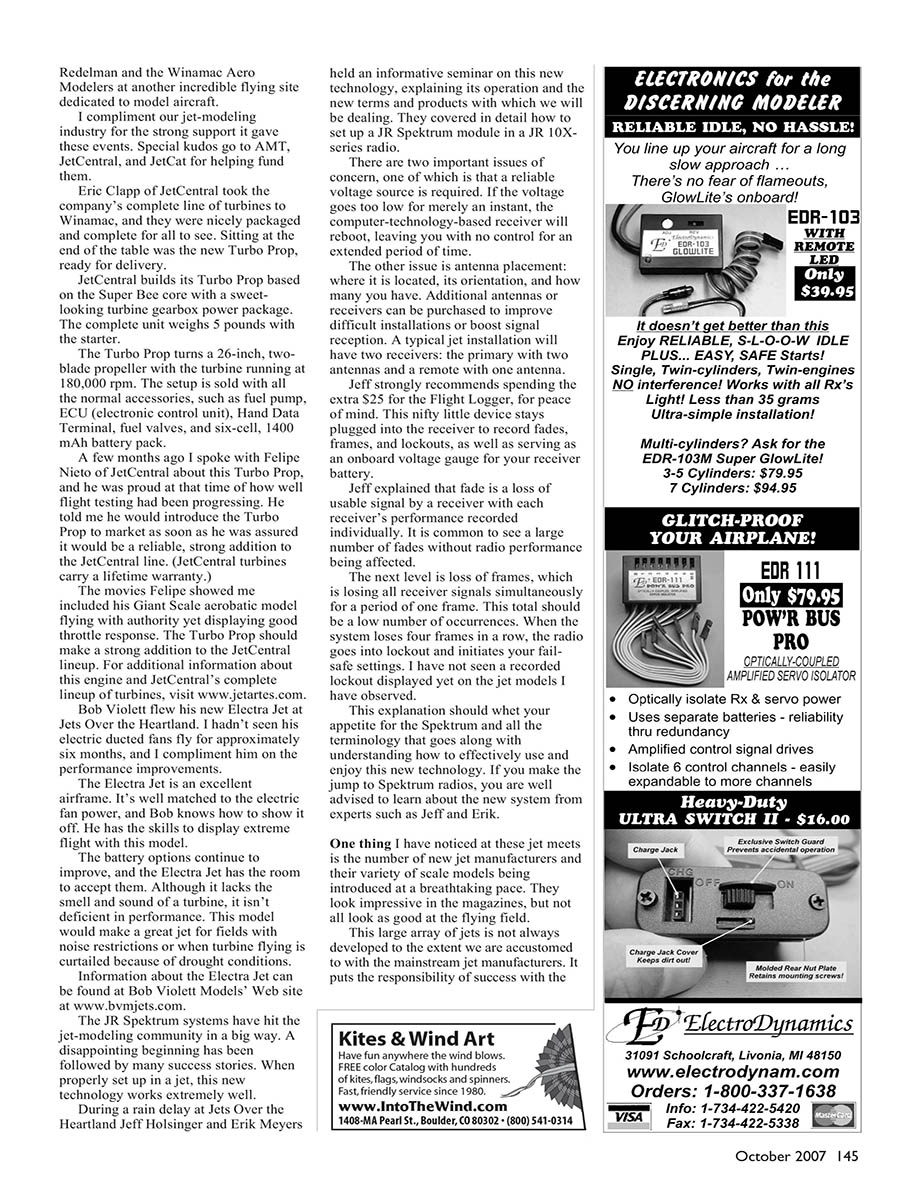
- The Bluegrass Jet Jam is organized by Mike Kirby and the Southern Kentucky Model Aero Club (SKYMAC) at its own flying field. The site has a 1,000-foot paved runway and the club consists of a great group of guys.
- The Flying Aeros event in Ohio was run by Joe Lewis and the Flying Aeros Association at the Braceville Airport. That private facility strongly supports aviation of all types, including an Experimental Aircraft Association chapter and model aircraft.
- The Jets Over the Heartland event in Indiana was run by Tim Redelman and the Winamac Aero Modelers at another incredible flying site dedicated to model aircraft.
I compliment our jet-modeling industry for the strong support it gave these events. Special kudos go to AMT, JetCentral, and JetCat for helping fund them.
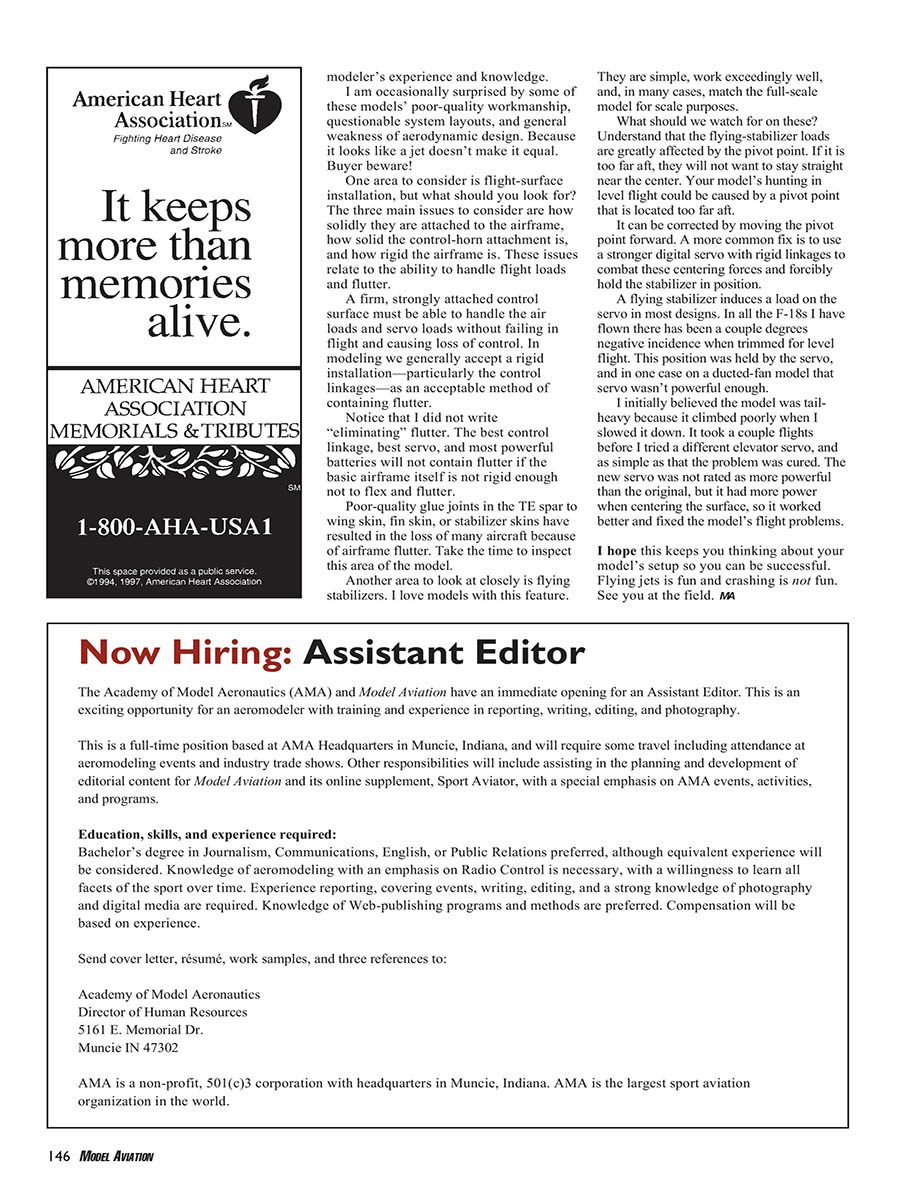
JetCentral Turbo Prop
Eric Clapp of JetCentral took the company's complete line of turbines to Winamac, and they were nicely packaged and complete for all to see. Sitting at the end of the table was the new Turbo Prop, ready for delivery.
JetCentral builds its Turbo Prop based on the Super Bee core with a sweet-looking turbine gearbox power package. The complete unit weighs 5 pounds with the starter. The Turbo Prop turns a 26-inch, two-blade propeller with the turbine running at 180,000 rpm. The setup is sold with all the normal accessories, such as:
- fuel pump
- ECU (electronic control unit)
- Hand Data Terminal
- fuel valves
- six-cell, 1400 mAh battery pack
A few months ago I spoke with Felipe Nieto of JetCentral about this Turbo Prop, and he was proud at that time of how well flight testing had been progressing. He told me he would introduce the Turbo Prop to market as soon as he was assured it would be a reliable, strong addition to the JetCentral line. (JetCentral turbines carry a lifetime warranty.)
The movies Felipe showed me included his Giant Scale aerobatic model flying with authority yet displaying good throttle response. The Turbo Prop should make a strong addition to the JetCentral lineup. For additional information about this engine and JetCentral’s complete lineup of turbines, visit www.jetcentral.com.
Electric jets — the Electra Jet
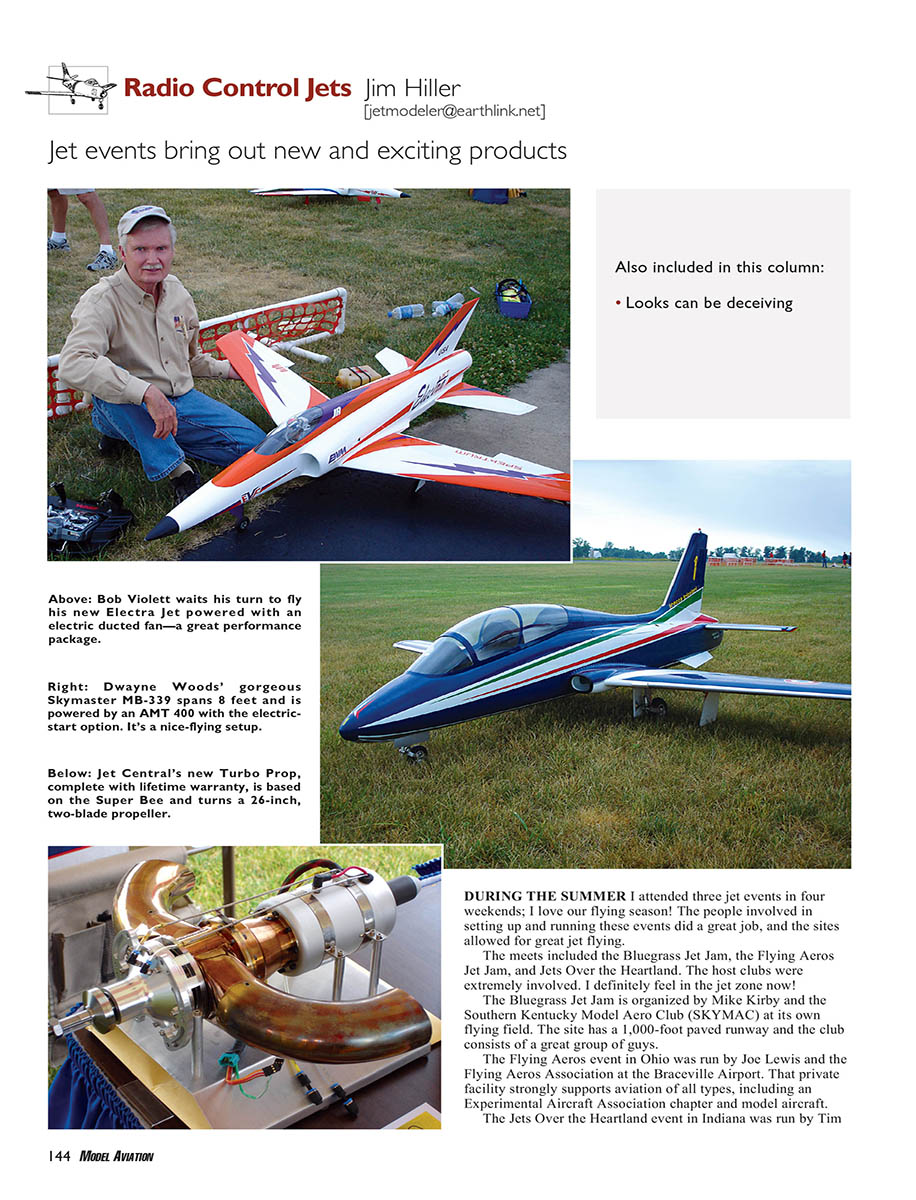
Bob Violett flew his new Electra Jet at Jets Over the Heartland. I hadn't seen his electric ducted fans fly for approximately six months, and I compliment him on the performance improvements. The Electra Jet is an excellent airframe. It's well matched to the electric fan power, and Bob knows how to show it off. He has the skills to display extreme flight with this model.
The battery options continue to improve, and the Electra Jet has the room to accept them. Although it lacks the smell and sound of a turbine, it isn't deficient in performance. This model would make a great jet for fields with noise restrictions or when turbine flying is curtailed because of drought conditions. Information about the Electra Jet can be found at Bob Violett Models' website: www.bvmjets.com.
JR Spektrum systems
The JR Spektrum systems have hit the jet-modeling community in a big way. A disappointing beginning has been followed by many success stories. When properly set up in a jet, this new technology works extremely well.
During a rain delay at Jets Over the Heartland, Jeff Holsinger and Erik Meyers held an informative seminar on this new technology, explaining its operation and the new terms and products with which we will be dealing. They covered in detail how to set up a JR Spektrum module in a JR 10X-series radio.
Two important issues of concern:
- Reliable voltage source — If the voltage goes too low merely for an instant, the computer-technology-based receiver will reboot, leaving you with no control for an extended period of time.
- Antenna placement — where it is located, its orientation, and how many you have. Additional antennas are available or receivers can be purchased to improve difficult installations or boost signal reception.
A typical jet installation will have:
- two receivers: the primary with two antennas and a remote with one antenna.
Jeff strongly recommends spending the extra $25 for the Flight Logger, for peace of mind. This nifty little device stays plugged into the receiver to record fades, frame losses, and lockouts, as well as serving as an onboard voltage gauge for your receiver battery.
Definitions explained:
- Fade — a loss of usable signal by a receiver; each receiver's performance is recorded individually. It is common to see a large number of fades without radio performance being affected.
- Loss of frames — losing all receiver signals simultaneously for a period of one frame. This should be a low number of occurrences.
- Lockout — when the system loses four frames in a row, the radio goes into lockout and initiates your failsafe settings. I have not seen a recorded lockout displayed yet on the jet models I have observed.
This explanation should whet your appetite for the Spektrum and all the terminology. If you make the jump to Spektrum radios, you are well advised to learn about the new system from experts such as Jeff and Erik.
Proliferation of new jet manufacturers
One thing I have noticed at these jet meets is the number of new jet manufacturers and their variety of scale models being introduced at a breathtaking pace. They look impressive in the magazines, but not all look as good at the flying field.
This large array of jets is not always developed to the extent we are accustomed to with the mainstream jet manufacturers. It puts the responsibility of success on the modeler's experience and knowledge.
I am occasionally surprised by some of these models' poor-quality workmanship, questionable system layouts, and general weakness of aerodynamic design. Because it looks like a jet doesn't make it equal. Buyer beware!
Flight-surface installation — what to look for
The three main issues to consider are:
- How solidly the surfaces are attached to the airframe.
- How solid the control-horn attachment is.
- How rigid the airframe is.
These issues relate to the ability to handle flight loads and flutter. A firm, strongly attached control surface must be able to handle the air loads and servo loads without failing in flight and causing loss of control. In modeling we generally accept a rigid installation—particularly the control linkages—as an acceptable method of containing flutter.
Notice that I did not write "eliminating" flutter. The best control linkage, best servo, and most powerful batteries will not contain flutter if the basic airframe itself is not rigid enough not to flex and flutter.
Poor-quality glue joints in the trailing-edge spar to wing skin, fin skin, or stabilizer skins have resulted in the loss of many aircraft because of airframe flutter. Take the time to inspect this area of the model.
Flying stabilizers
I love models with this feature. They are simple, work exceedingly well, and, in many cases, match the full-scale model for scale purposes.
What should we watch for?
- The pivot point greatly affects flying-stabilizer loads. If it is too far aft, the stabilizer will not stay straight near center and the model may hunt in level flight. This can be corrected by moving the pivot point forward.
- A more common fix is to use a stronger digital servo with rigid linkages to combat centering forces and forcibly hold the stabilizer in position.
A flying stabilizer induces a load on the servo in most designs. In all the F-18s I have flown there has been a couple degrees of negative incidence when trimmed for level flight. This position was held by the servo, and in one case on a ducted-fan model that servo wasn't powerful enough.
I initially believed the model was tail-heavy because it climbed poorly when I slowed it down. It took a couple flights before I tried a different elevator servo, and as simple as that the problem was cured. The new servo was not rated as more powerful than the original, but it had more power when centering the surface, so it worked better and fixed the model's flight problems.
Conclusion
I hope this keeps you thinking about your model's setup so you can be successful. Flying jets is fun and crashing is not fun. See you at the field. MA
Transcribed from original scans by AI. Minor OCR errors may remain.

