
RC Combat: the year in review
by Don Grissom [email protected]
This past year was a great year of Combat and it is again time to recognize the top pilots. Unlike past seasons where a few pilots dominated everything, 2013 showed that there is a change in the way Combat is being flown.
One of the year's biggest changes was adding short, one-day contests to the schedule. These events were held across the country; some clubs held as many as six.
The most popular event continues to be Slow Survivable Combat (SSC). More than 85% of RC Combat pilots fly SSC. We also added the Gnat Combat event, which should become popular considering the low cost of the airplanes and the ease of building them.
SSC was again commanded by William Drumm III. He flew in 52 rounds of Combat during the year. His qualifying average was 550, which was slightly more than 100 points lower than the previous year.
Jerry Haines did not have the highest average in Open B, but he flew more rounds and therefore accumulated the most qualifying points. Jerry was also strong in 2610 Scale Combat with an average of 202 points. The 2610 event is currently only flown in the Northwest, but a strong group in that area continues to fly at every contest.
In the Provisional classes, Scale 2948 saw first-time winner David Smithgall lead the total points for the year. I met David last summer at the Nats and I hope he will return next summer and show his Scale flying skills.
Limited B was another win for William Drumm III. He had a solid qualifying average of 417. Gnat Combat, which was flown by 13 pilots last year, showed signs that it could grow over the next few years. William Drumm III took home first place in Gnat Combat's inaugural year.
Preparing for Next Season
When it comes to flying, I get to fly most of the year because I live in the South, but even in my case I do not get to fly Combat that often. I usually throw my airplanes in my trailer and don't think about them again until it is time for another Combat contest.
After many years of replacing batteries and having engine issues, I decided to make sure that I get my airplanes ready during the winter between contest seasons.
One of the first things I did was make sure that all of the fuel had been run out of each tank and engine. I started an engine with a small amount of fuel and ran it until the tank was empty so the fuel was burned out of the engine.
Next I put after-run oil in the engine through the carburetor and, using the starter, spun the engine over a few times to make sure the inside was coated.
The most important thing was to make sure I charged the batteries and disconnected them from anything that would drain them too quickly. Batteries will lose some charge over a long period of time. I have also changed to a LiFe battery, which seems to hold charge better over time and has fewer problems.
Airplanes should be stored where there is little temperature change. I have noticed that double-sided tape can have issues with temperature fluctuations. Airplanes should also not be stored in front of a window because the sun can do a lot of damage. My old trailer had windows in it, and it caused problems with my aircraft.
Wounded Warrior Project
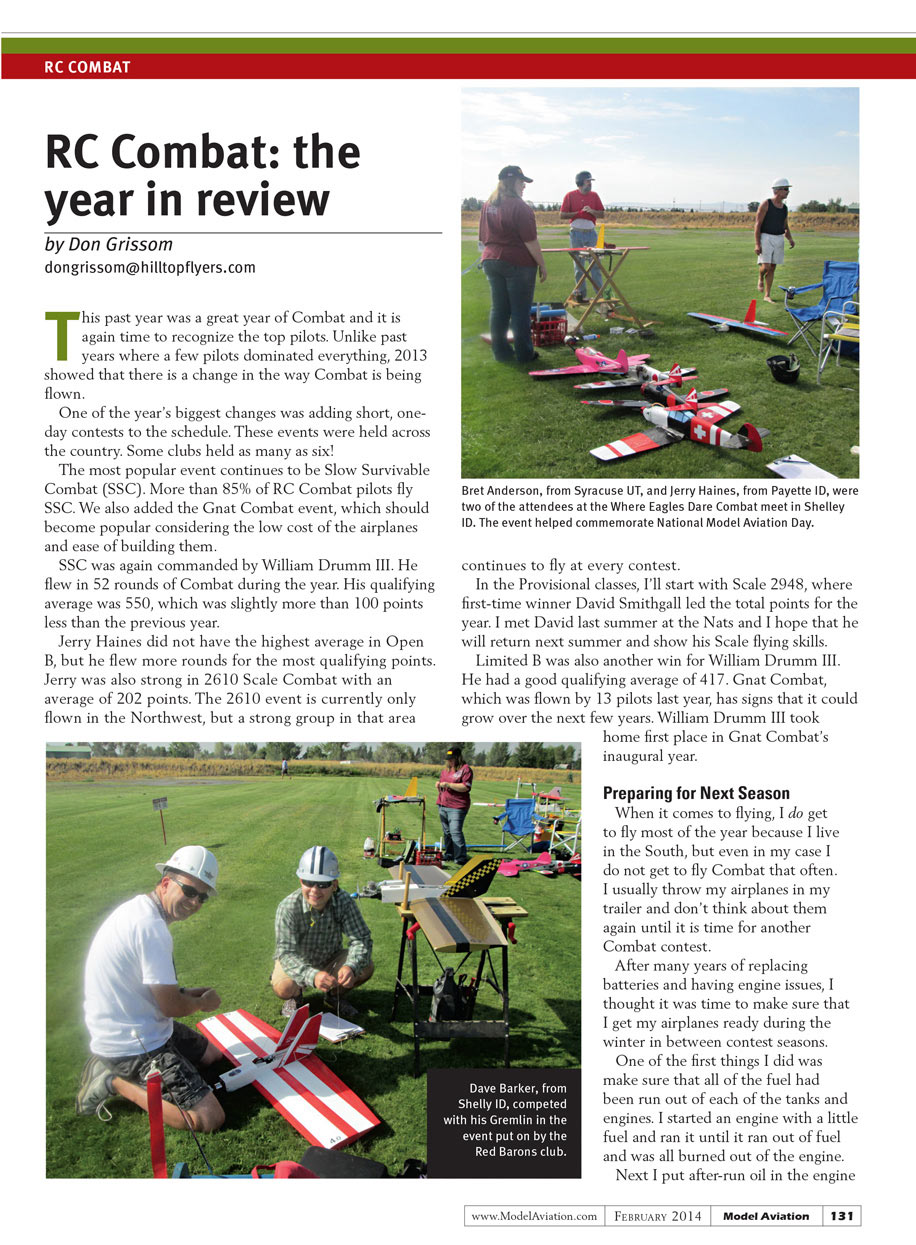
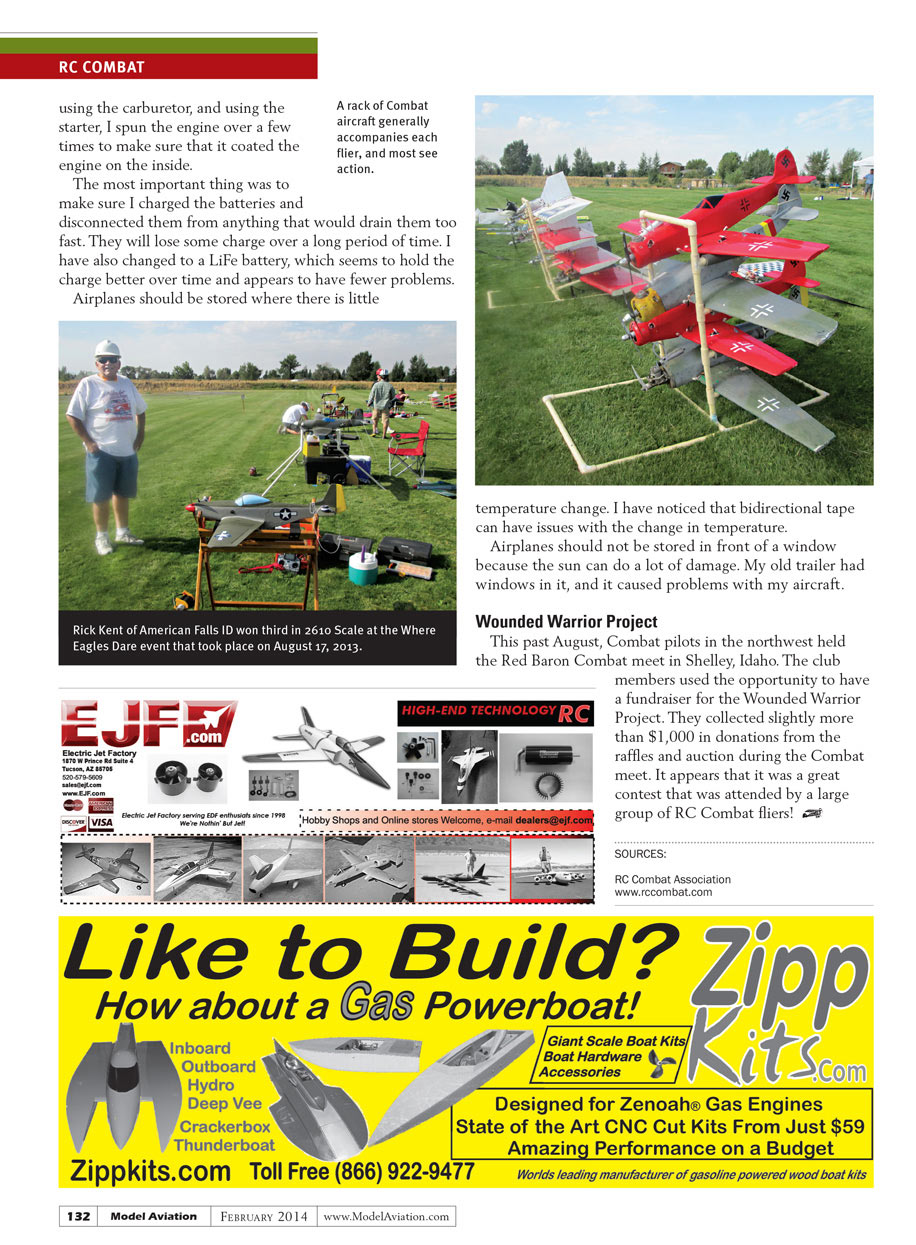
This past August, Combat pilots in the Northwest held the Red Baron Combat meet in Shelley, Idaho. They used the opportunity to have a fundraiser for the Wounded Warrior Project. They collected slightly more than $1,000 in donations from the raffles and auction during the Combat meet. It appears that it was a great contest attended by a large group of RC Combat fliers.
SOURCES
- RC Combat Association
- www.rccombat.com
Transcribed from original scans by AI. Minor OCR errors may remain.

