
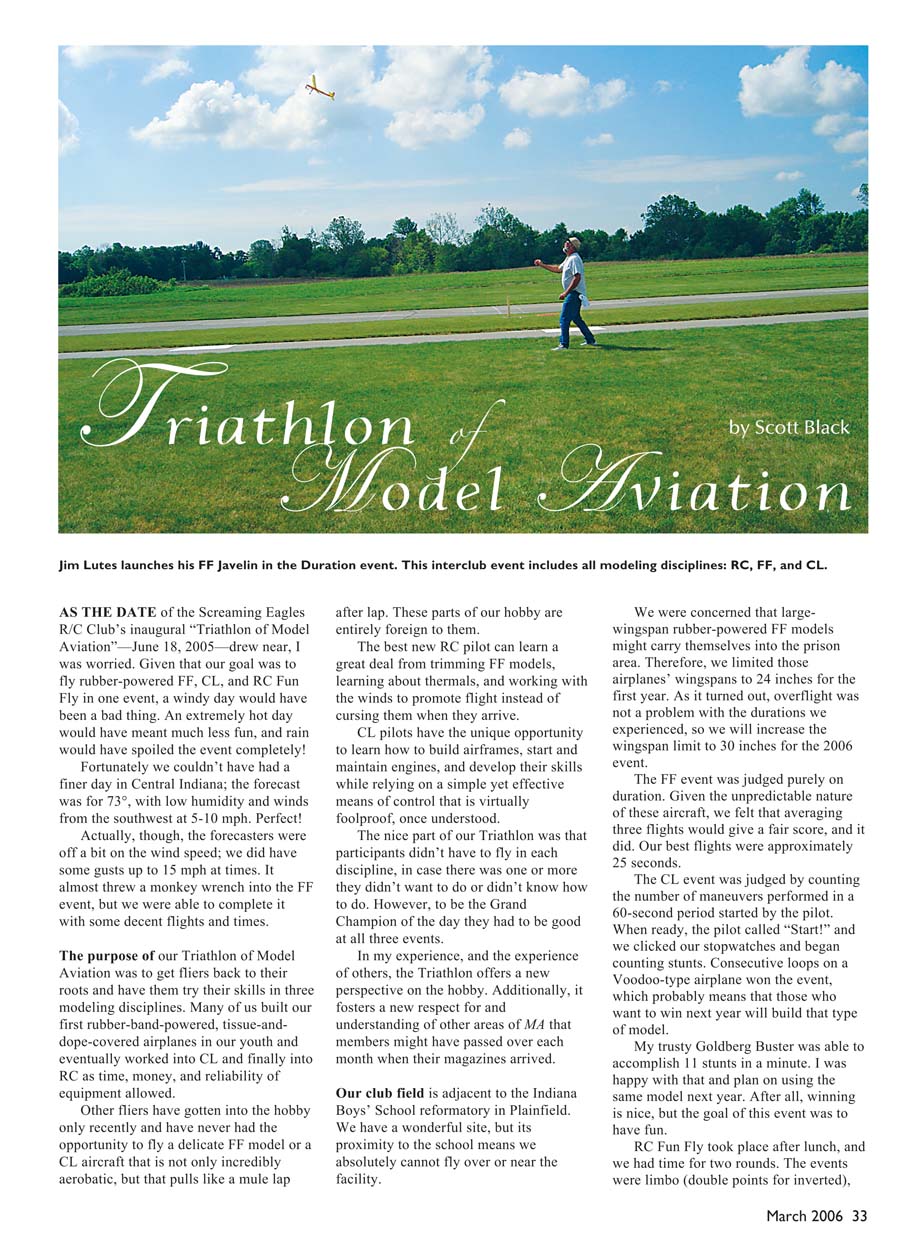
Triathlon of Model Aviation
by Scott Black
Overview
As the date of the Screaming Eagles R/C Club’s inaugural “Triathlon of Model Aviation”—June 18, 2005—drew near, I was worried. Given that our goal was to fly rubber-powered FF, CL, and RC Fun Fly in one event, a windy day would have been a bad thing. An extremely hot day would have meant much less fun, and rain would have spoiled the event completely!
Fortunately we couldn’t have had a finer day in Central Indiana; the forecast was for 73°, with low humidity and winds from the southwest at 5–10 mph. Perfect! Actually, though, the forecasters were off a bit on the wind speed; we did have some gusts up to 15 mph at times. It almost threw a monkey wrench into the FF event, but we were able to complete it with some decent flights and times.
The purpose of our Triathlon of Model Aviation was to get fliers back to their roots and have them try their skills in three modeling disciplines. Many of us built our first rubber-band-powered, tissue-and-dope-covered airplanes in our youth and eventually worked into CL and finally into RC as time, money, and reliability of equipment allowed. Other fliers have gotten into the hobby only recently and have never had the opportunity to fly a delicate FF model or a CL aircraft that is not only incredibly aerobatic but that pulls like a mule lap after lap. These parts of our hobby are entirely foreign to them.
The best new RC pilot can learn a great deal from trimming FF models, learning about thermals, and working with the winds to promote flight instead of cursing them when they arrive. CL pilots have the unique opportunity to learn how to build airframes, start and maintain engines, and develop their skills while relying on a simple yet effective means of control that is virtually foolproof, once understood.
The nice part of our Triathlon was that participants didn’t have to fly in each discipline, in case there was one or more they didn’t want to do or didn’t know how to do. However, to be the Grand Champion of the day they had to be good at all three events.
In my experience, and the experience of others, the Triathlon offers a new perspective on the hobby. Additionally, it fosters a new respect for and understanding of other areas of model aviation that members might have passed over each month when their magazines arrived.
Field and rules
Our club field is adjacent to the Indiana Boys’ School reformatory in Plainfield. We have a wonderful site, but its proximity to the school means we absolutely cannot fly over or near the facility.
We were concerned that large-wingspan rubber-powered FF models might carry themselves into the prison area. Therefore, we limited those airplanes’ wingspans to 24 inches for the first year. As it turned out, overflight was not a problem with the durations we experienced, so we will increase the wingspan limit to 30 inches for the 2006 event.
Events
FF (Free Flight)
- The FF event was judged purely on duration.
- Each competitor flew three flights; scores were based on the average of those flights.
- Our best flights were approximately 25 seconds.
CL (Control Line)
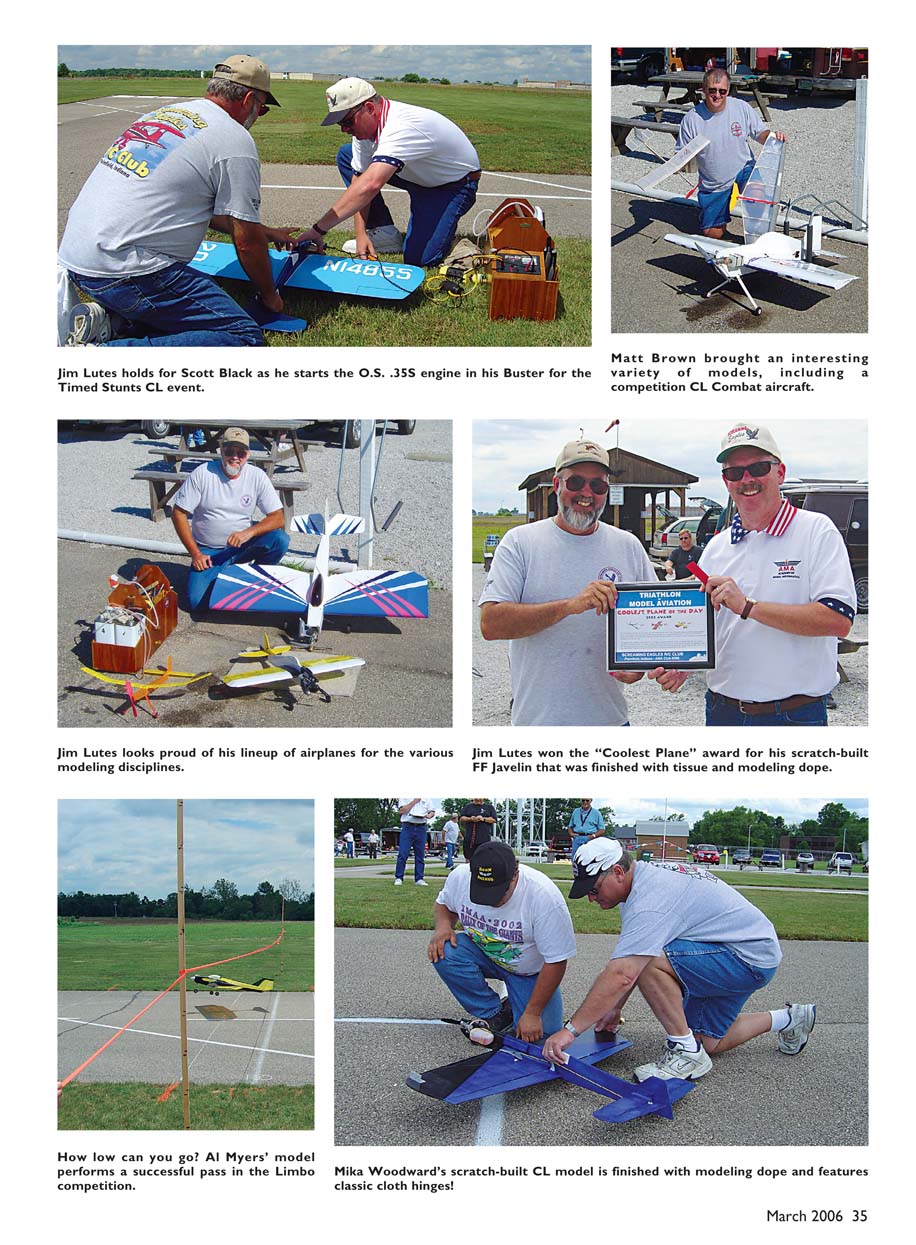
- The CL event was judged by counting the number of maneuvers performed in a 60-second period started by the pilot.
- When ready, the pilot called “Start!” and we clicked our stopwatches and began counting stunts.
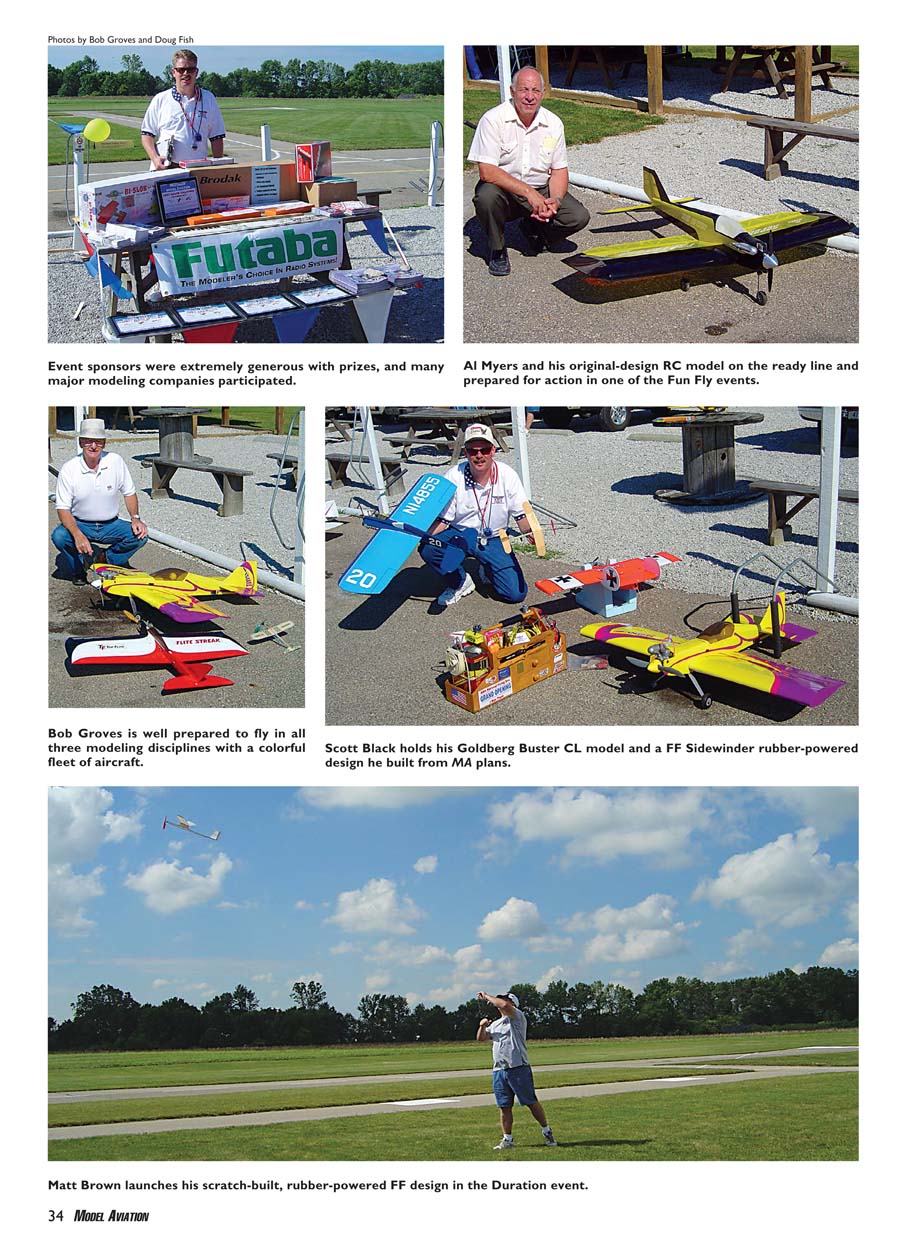
- Consecutive loops on a Voodoo-type airplane won the event. My trusty Goldberg Buster accomplished 11 stunts in a minute.
RC Fun Fly
- RC Fun Fly took place after lunch, with time for two rounds.
- Events included:
- limbo (double points for inverted)
- spot landing
- timed touch-and-go landings in a two-minute period
- Kamikaze Balloon Bust
Because of the wind, we couldn’t use helium-filled balloons as planned. I had intended to weigh them just enough so they would rise slowly. Instead we did a “Groundhog”-style balloon bust and stapled the balloon to a flat sheet of plywood on the runway. Intentional taxiing was prohibited; the balloon had to be burst by intentional low passes or touch-and-gos. Three attempts were allowed. Roughly 50% of the pilots were successful on their strafing runs.
Participants and schedule
Only seven pilots participated:
- Bob Groves
- Mike Woodward
- Matt Brown
- Steve Ragsdale
- Al Myers
- Jim Lutes
- Scott Black (author)
We intentionally did not advertise the event outside the club because we wanted to work out the bugs. With the seven fliers it took from 9 a.m. until 2:30 p.m. to complete the events, taking about a half hour for lunch. We may not want more than 15 pilots next year; that number would make for a full day. Advance registration might help so we can plan ahead.
A huge thank-you goes out to Mark Crittendon and Dennis Anderson for working the concessions. We had plenty of great food and service with a smile for all the pilots, their support crews, and spectators. Several other people helped out with timing, judging, and other chores; each helper received a raffle ticket for participation.
Results and awards
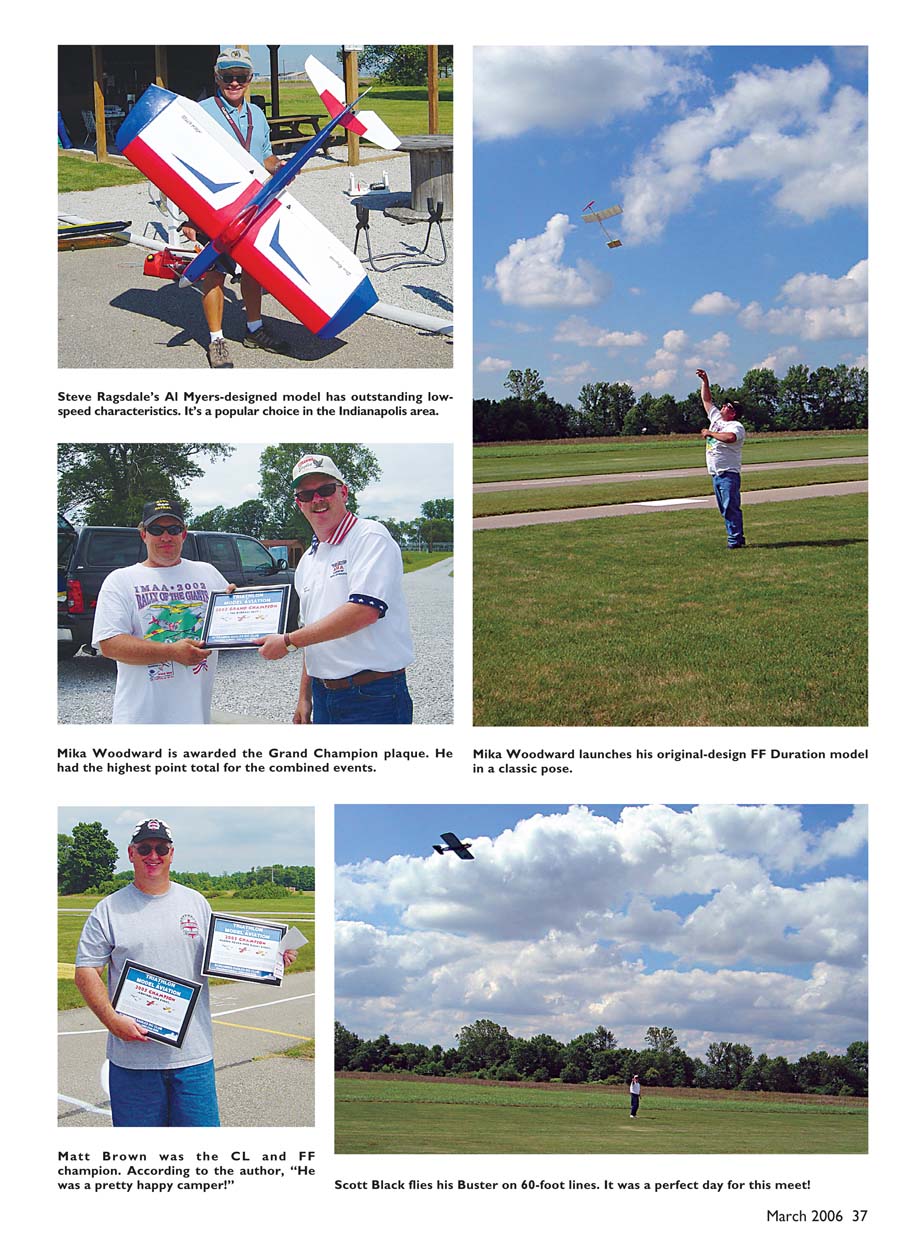
- Champion — Rubber Power: Matt Brown
- Champion — Control Line: Matt Brown
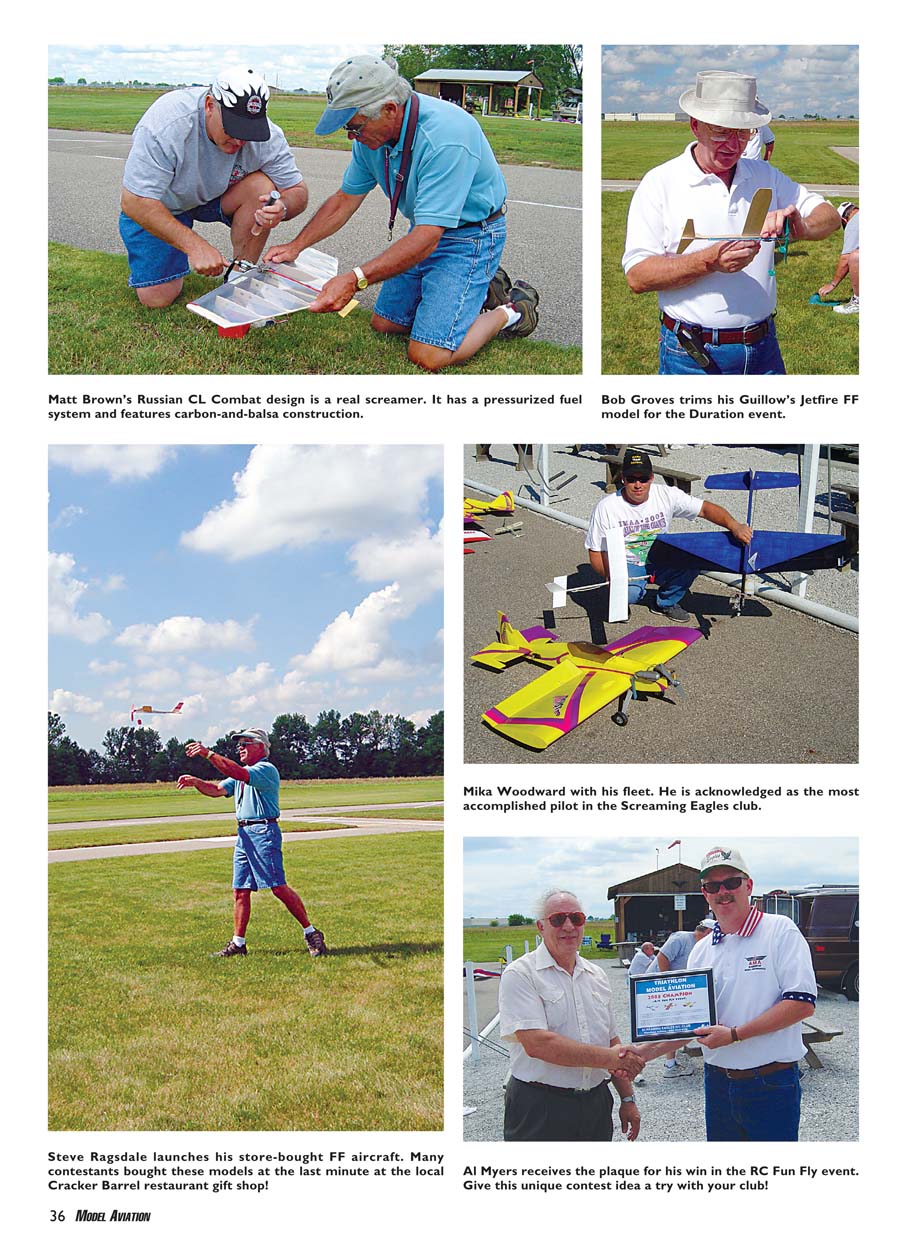
- Champion — RC Fun Fly: Al Myers
- Grand Champion (highest combined total): Mike Woodward
- Coolest Plane of the Day: Jim Lutes (balsa-and-tissue Javelin rubber-powered model)
We had some fun awards and many prizes, including six unique airplane kits from Brodak, Sig Manufacturing, and Peck-Polymers; several gift certificates; and many other items.
We were also given two complete radio-control systems to award as prizes. Tower Hobbies sent a Futaba system and Horizon Hobby sent a JR system the week before the event. Our participants were spoiled!
AMA personnel sent us literature to pass out to prospective modelers and provided positive feedback about the concept of the event.
Sponsors and thanks
- Brodak
- Sig Manufacturing
- Peck-Polymers
- Tower Hobbies (donated a Futaba radio)
- Horizon Hobby (donated a JR radio)
- AMA (provided literature and support)
Many thanks to everyone who helped make the first Triathlon a success.
Looking ahead
The tentative date for the second annual Triathlon of Model Aviation is June 17, 2006—Father’s Day weekend again. The weather seemed just right in Indiana in 2005, and we’ve had ample winter building time so far. If your club is looking for a great event that’s out of the ordinary, put together your own Triathlon of Model Aviation. The pride and giggles that emerged from our group convinced me that the concept is a new kind of fun and something we will look forward to again.
Contact
For more information, go to www.screamingeagles.org or contact me; I’m the CD. Scott Black [email protected]
MA
Transcribed from original scans by AI. Minor OCR errors may remain.

