
Troubleshooting Landings
by Dave Scott
Many pilots think that stick time and getting better at making corrections are the main requirements for better landings, so little thought is given to how they land or whether they are flying correctly.
As a consequence of flying without a plan — i.e., reacting to the airplane — most pilots end up making four to five times more control inputs than required when the landing is set up correctly. This reactive style of flying demands more effort and is why pilots get behind their airplanes during the runway lineup and landing flare. Reactive flying is also why certain fliers struggle to land on windier days or when flying a new model.
A characteristic of good pilots is that they make landing look easy. While most pilots continually make corrections, better fliers set up their landings so that fewer adjustments are needed, allowing plenty of time to prepare for an easier, smoother touchdown.
Most landing difficulties are not due to a lack of stick time or reflexes, but are primarily the result of reacting to the airplane rather than proactively controlling it when setting up the landing.
Anticipate the Final Turn
The ease of your landings reflects the quality of the final base-leg turn that sets them up. Although you might salvage a landing after a poor turn, the experience will be far more stressful. A comfortable, well-executed final turn tends to carry you all the way to the ground.
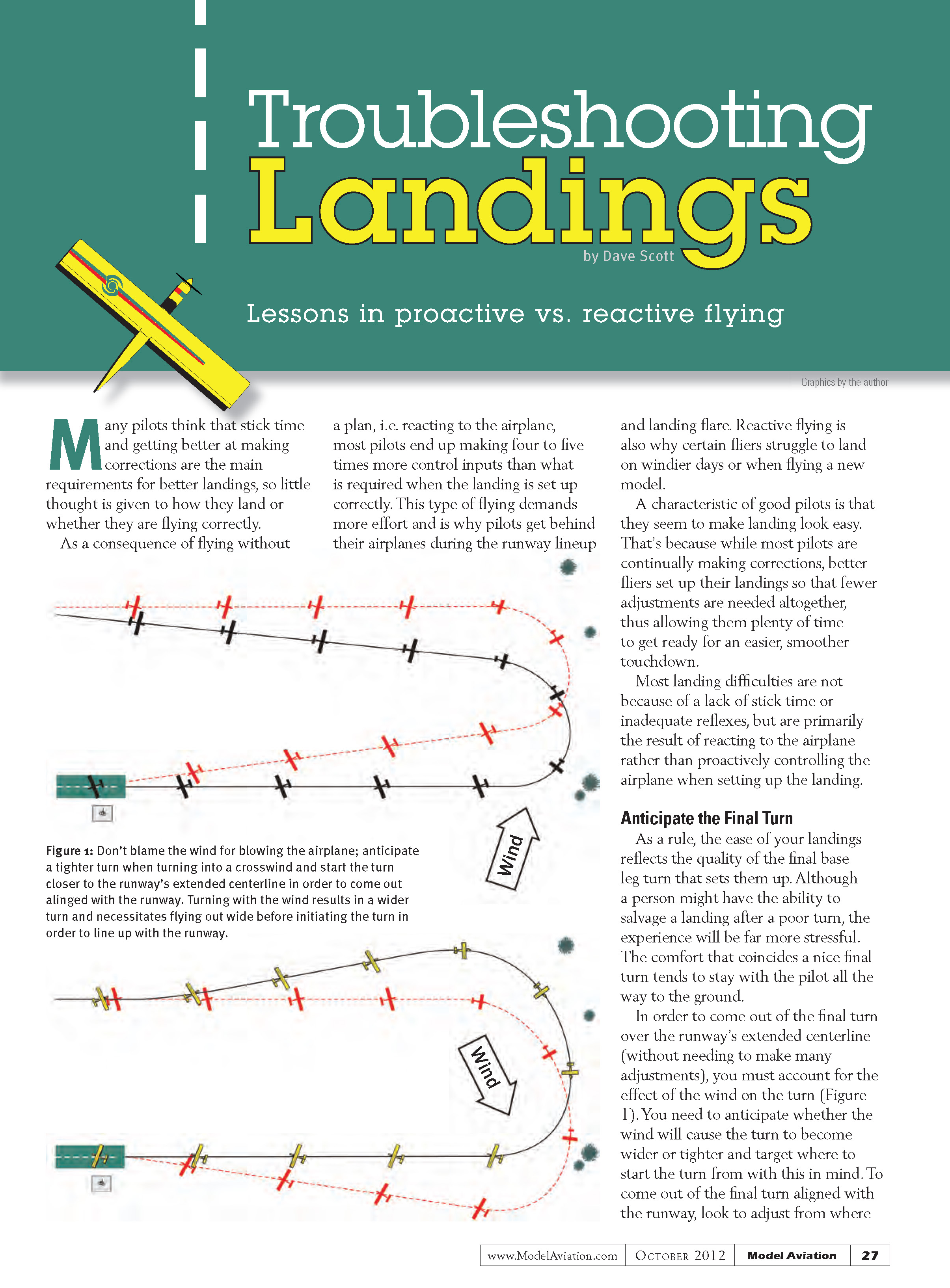
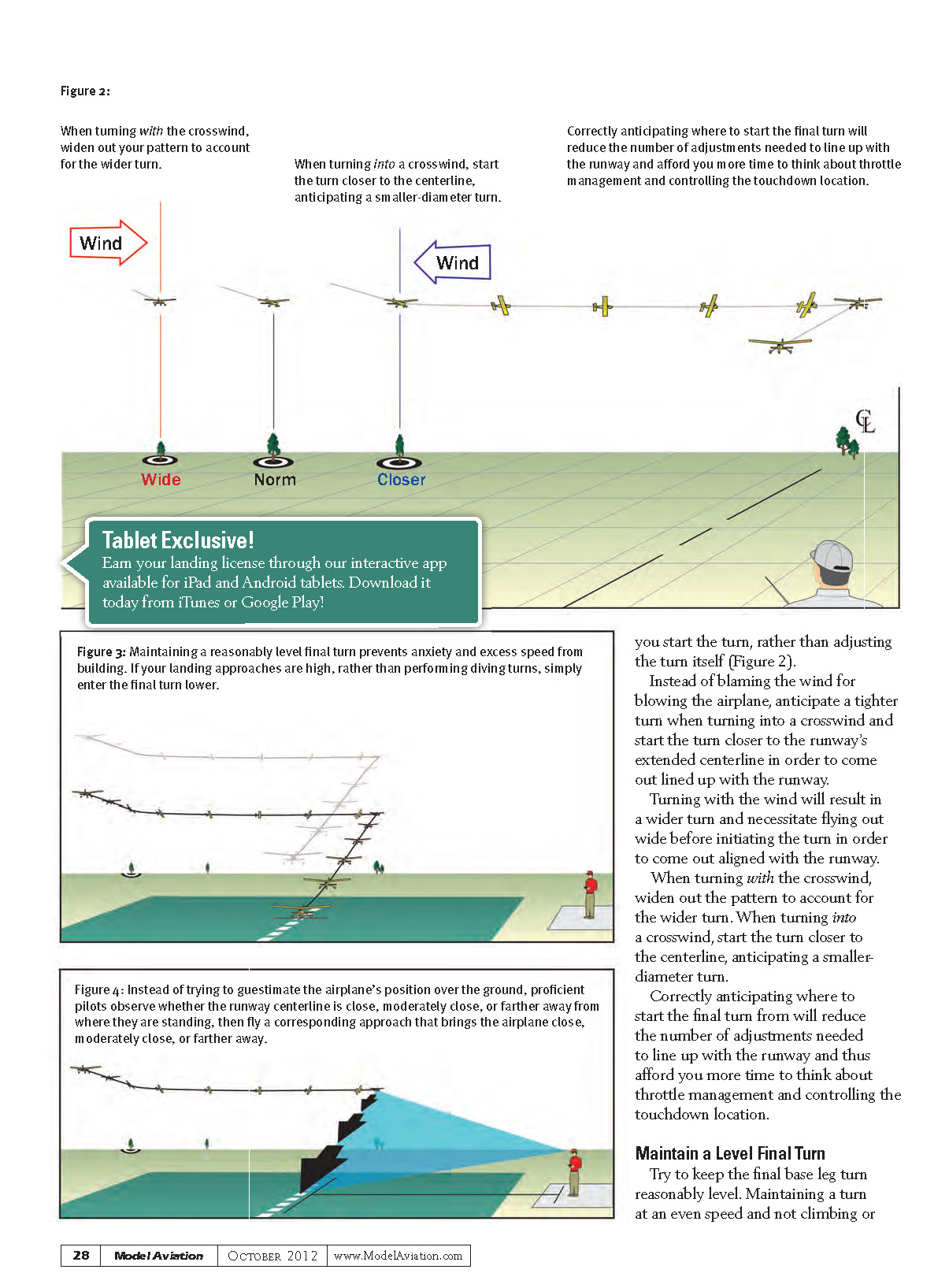
To come out of the final turn over the runway's extended centerline without many adjustments, account for the effect of the wind on the turn (Figure 1). Anticipate whether the wind will make the turn wider or tighter and choose where to start the turn accordingly. Adjust where you start the turn rather than trying to change the turn in progress (Figure 2).
- Turning into a crosswind tends to tighten the turn. Start the turn closer to the runway centerline to come out aligned.
- Turning with the wind tends to widen the turn. Fly out wider before initiating the turn so you come out aligned.
- When turning with a crosswind, widen the traffic pattern. When turning into a crosswind, start the turn closer to the centerline.
Correctly anticipating where to start the final turn will reduce the number of adjustments needed to line up with the runway and give you more time to manage throttle and control touchdown location.
Maintain a Level Final Turn
Keep the final base-leg turn reasonably level. Maintaining an even speed and avoiding climbs or dives minimizes anxiety during the turn and prevents excess speed buildup. A level turn also eliminates low-altitude oscillations (sharp altitude changes) that can distract you from maintaining a good lineup.
If keeping the final turn level results in approaches that are too high, start reducing throttle a little earlier and/or enter the final turn lower (Figure 3).
Consistent Lineups
In most flying environments, the runway is directly in front of where the pilot stands. The most effective method to consistently overfly the runway centerline is to use yourself as the primary reference throughout the approach, guiding the airplane to a point slightly in front of you (Figure 4).
Flying the airplane to a point slightly in front of you will get you to the runway every time, regardless of the model's size or fuselage orientation (crosswind crabs). This reduces bad landings that come from relying on hit-or-miss depth perception.
Instead of trying to guesstimate the airplane's position over the ground, observe whether the runway centerline appears close, moderately close, or farther away from where you are standing, then fly a corresponding approach that brings the airplane close, moderately close, or farther away from you.
Object as a Whole
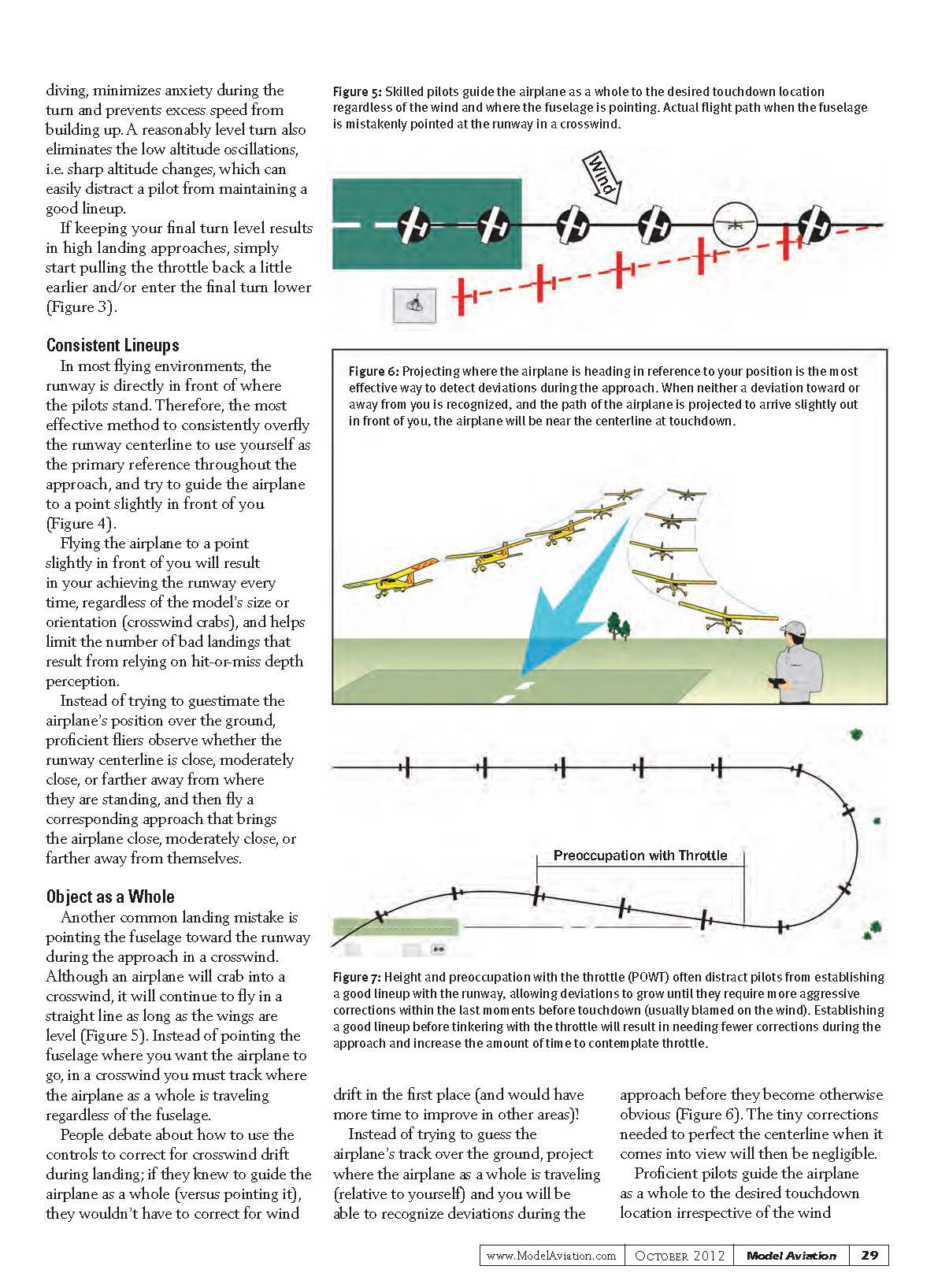
A common landing mistake is pointing the fuselage toward the runway during an approach in a crosswind. An airplane will crab into a crosswind but will continue to fly in a straight line as long as the wings are level (Figure 5). Instead of pointing the fuselage to where you want the airplane to go, track where the airplane as a whole is traveling regardless of fuselage heading.
Project where the airplane as a whole is traveling (relative to yourself) and you will recognize deviations during the approach before they become obvious (Figure 6). The tiny corrections needed to perfect the centerline when it comes into view will then be negligible.
Proficient pilots guide the airplane as a whole to the desired touchdown location irrespective of wind and fuselage heading. Projecting the airplane's path in reference to yourself is the most effective way to detect and correct deviations during the approach.
When you do not recognize a deviation toward or away from you, and the airplane's path is projected to arrive slightly in front of you, the model will be near the centerline at touchdown.
Pilots eager to land often focus so much on throttle during the landing setup that they only make half efforts to get the airplane lined up with the runway (Figure 7). This is called POWT (preoccupation with throttle) and is why many pilots miss the centerline by 50 feet or more and/or 30° off heading — errors obvious to observers.
By focusing first on timely exit from the turn and establishing a good lineup with the runway, then adjusting throttle, you will have more time to consider throttle adjustments because you will not be making many course corrections during the approach.
Height and POWT often distract pilots from establishing a good lineup, allowing deviations to grow until they require aggressive corrections in the last moments before touchdown (usually blamed on the wind). Establishing a good lineup before tinkering with the throttle reduces corrections and increases time to contemplate throttle adjustments.
Conclusion
Difficulty in a specific area seldom means you need more practice in that area; it usually means you need to do a better job on the factors that are causing the difficulty. Most landing problems result from not starting the final base-leg turn in the right spot, increasing workload, and/or not keeping the final turn reasonably level to prevent speed and anxiety buildup.
Knowing this, you are well on your way to mastering your landings regardless of wind or the model you are flying. Happy landings!
—Dave Scott [email protected]
SOURCES:
- 1st U.S. R/C Flight School
- www.rcflightschool.com
Transcribed from original scans by AI. Minor OCR errors may remain.

