
The US Model Airplane Swap Meet
by Dave Terry [email protected]
Overview
"Giant" is not a big enough word to describe this event's size.
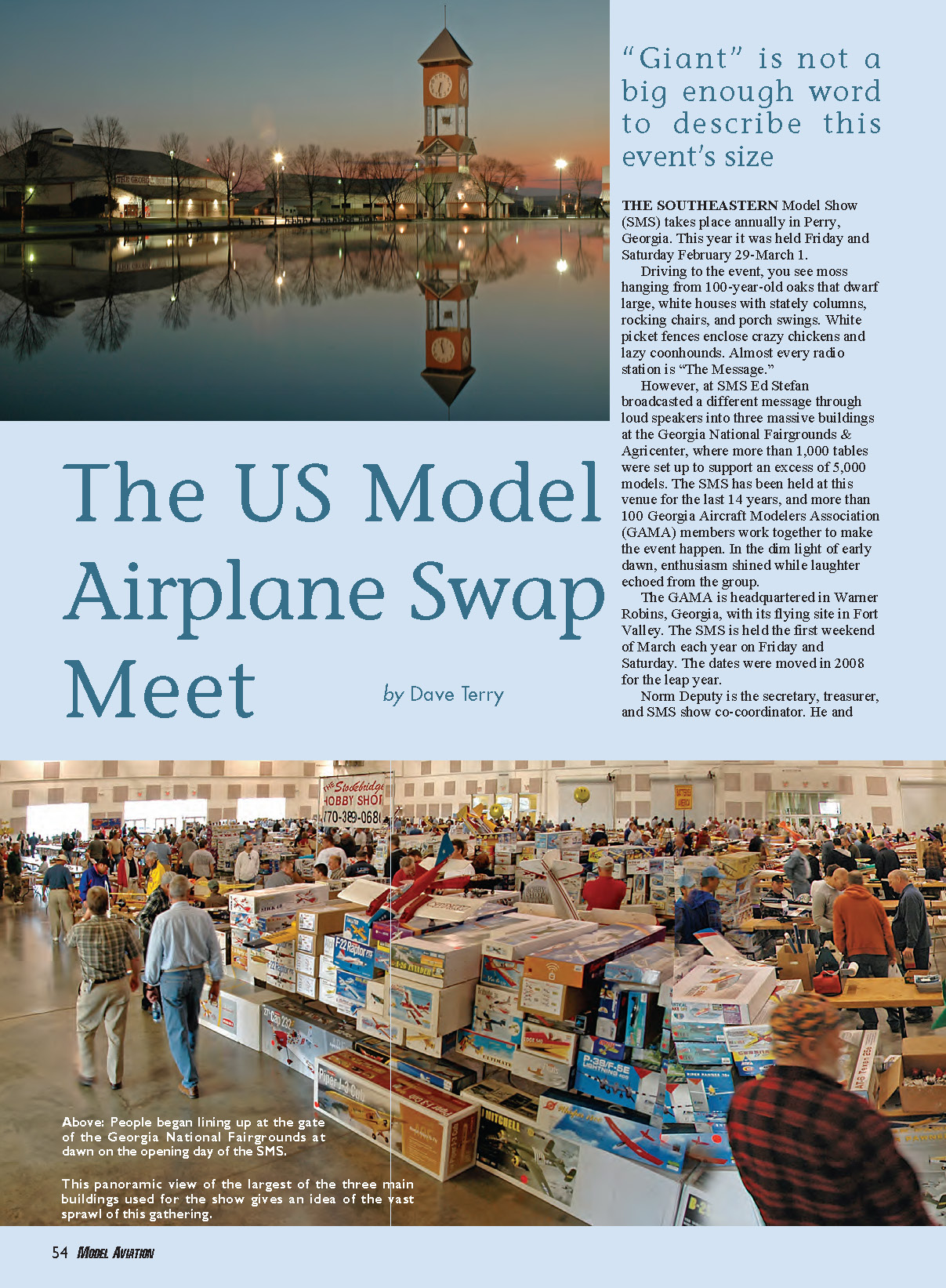
The Southeastern Model Show (SMS) takes place annually in Perry, Georgia. This year it was held Friday and Saturday, February 29–March 1. Driving to the event, you see moss hanging from 100‑year‑old oaks that dwarf large white houses with stately columns, rocking chairs, and porch swings. White picket fences enclose crazy chickens and lazy coonhounds. Almost every radio station is "The Message."
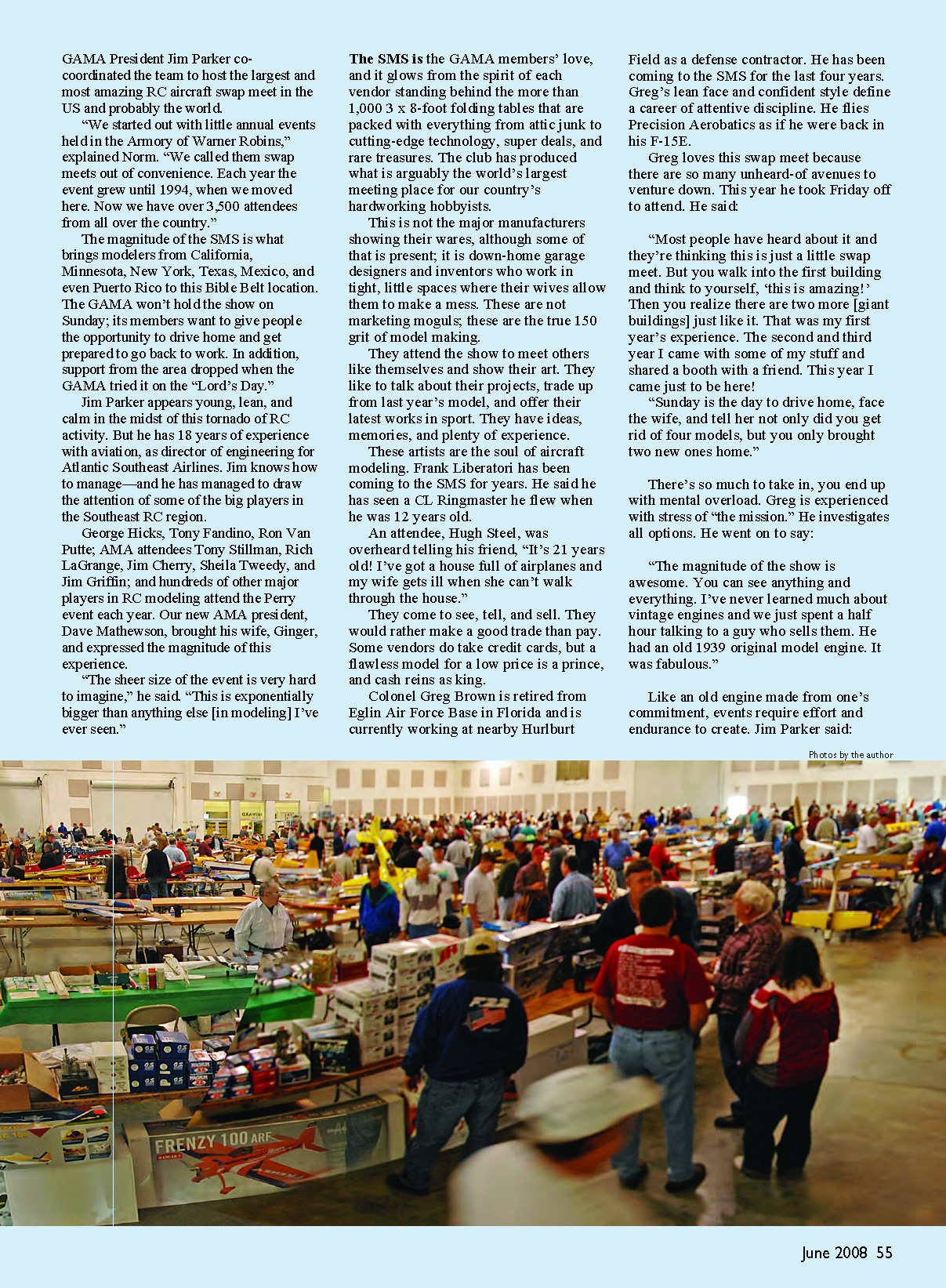
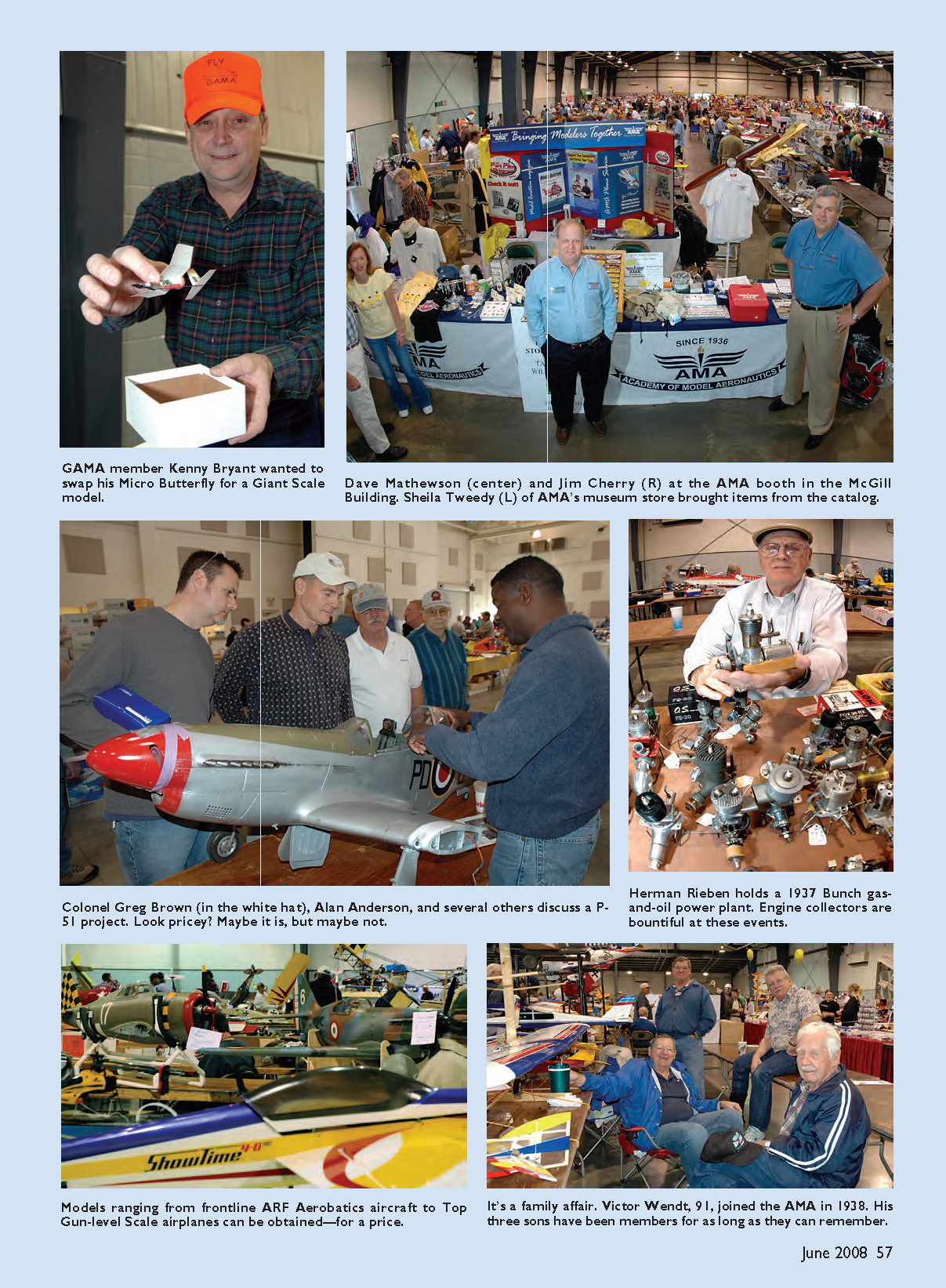
At SMS, Ed Stefan broadcast a different message through loudspeakers into three massive buildings at the Georgia National Fairgrounds & Agricenter, where more than 1,000 tables were set up to support an excess of 5,000 models. The SMS has been held at this venue for the last 14 years, and more than 100 Georgia Aircraft Modelers Association (GAMA) members work together to make the event happen. In the dim light of early dawn, enthusiasm shined while laughter echoed from the group.
GAMA and the SMS
The GAMA is headquartered in Warner Robins, Georgia, with its flying site in Fort Valley. The SMS is held the first weekend of March each year on Friday and Saturday. (The dates were moved in 2008 because of the leap year.)
Norm Deputy is the secretary, treasurer, and SMS co‑coordinator. He and GAMA President Jim Parker coordinated the team to host the largest and most amazing RC aircraft swap meet in the U.S., and probably the world.
“We started out with little annual events held in the Armory of Warner Robins,” explained Norm. “We called them swap meets out of convenience. Each year the event grew until 1994, when we moved here. Now we have over 3,500 attendees from all over the country.”
The magnitude of the SMS draws modelers from California, Minnesota, New York, Texas, Mexico, and even Puerto Rico to this Bible Belt location. GAMA won’t hold the show on Sunday; members want to give people the opportunity to drive home and get prepared to go back to work. Support from the area dropped when GAMA tried holding the show on the “Lord’s Day.”
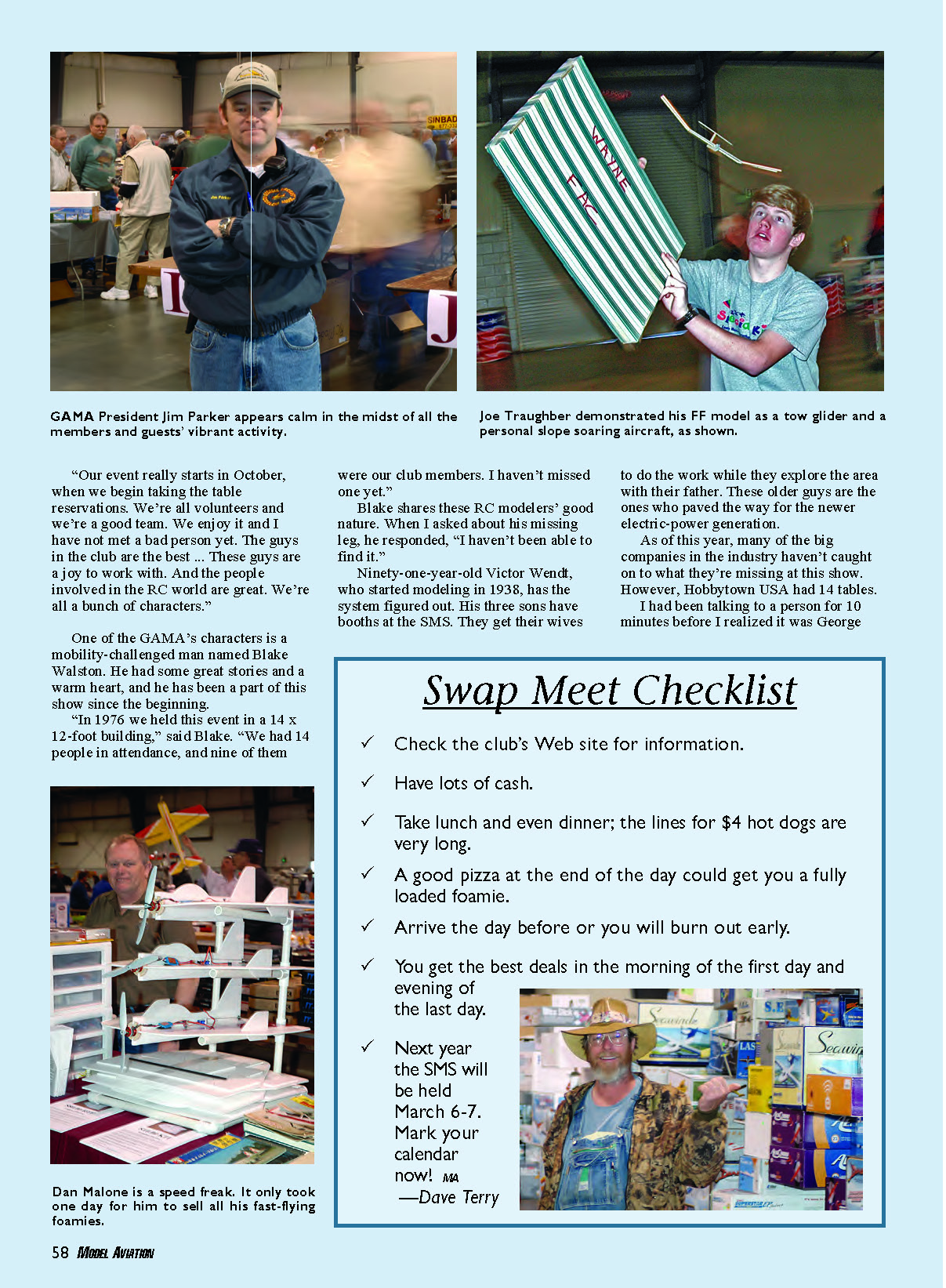
Jim Parker appears young, lean, and calm in the midst of this tornado of RC activity. He has 18 years of experience with aviation as director of engineering for Atlantic Southeast Airlines. Jim knows how to manage—and he has managed to draw the attention of some of the big players in the Southeast RC region.
“Our event really starts in October, when we begin taking the table reservations. We're all volunteers and we're a good team. We enjoy it and I have not met a bad person yet. The guys in the club are the best ... These guys are a joy to work with. And the people involved in the RC world are great. We're all a bunch of characters.”
One of GAMA's characters is Blake Walston, a mobility‑challenged man with great stories and a warm heart who has been part of this show since the beginning. “In 1976 we held this event in a 14 x 12‑foot building,” said Blake. “We had 14 people in attendance, and nine of them were our club members. I haven't missed one yet.” When asked about his missing leg, he jokingly replied, “I haven't been able to find it.”
Ninety‑one‑year‑old Victor Wendt, who started modeling in 1938, has the system figured out: his three sons have booths at the SMS and get their wives to do the work while they explore the area with their father. These older modelers paved the way for the newer electric‑power generation.
Notable attendees
- George Hicks (E‑flite)
- Tony Fandino
- Ron Van Putte
- Tony Stillman (AMA attendee)
- Rich LaGrange (AMA attendee)
- Jim Cherry (AMA attendee)
- Sheila Tweedy (AMA attendee)
- Jim Griffin (AMA attendee)
- Dave Mathewson (new AMA president, attended with his wife Ginger)
- Frank Liberatori (longtime attendee)
- Colonel Greg Brown (retired from Eglin AFB, defense contractor at Hurlburt Field)
- Blake Walston (longtime GAMA member)
- Victor Wendt (veteran modeler since 1938)
The Swap Meet Experience
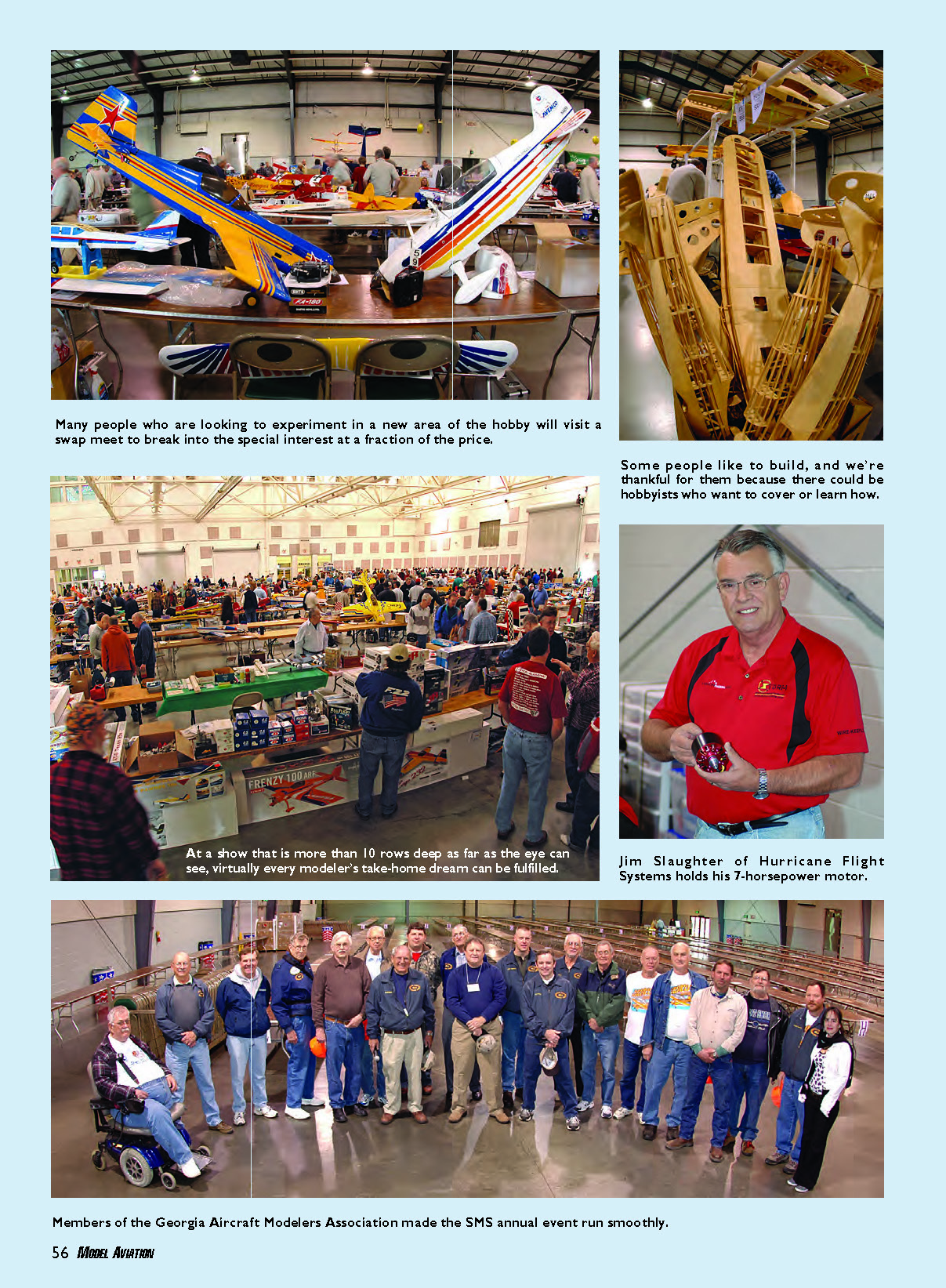
The SMS is the GAMA members’ love, and it glows from the spirit of each vendor standing behind the more than 1,000 3 x 8‑foot folding tables packed with everything from attic junk to cutting‑edge technology, super deals, and rare treasures. The club has produced what is arguably the world’s largest meeting place for our country’s hardworking hobbyists.
This is not primarily about major manufacturers showing their wares—although some are present. It’s about down‑home garage designers and inventors who work in tight spaces where their wives allow them to make a mess. These are not marketing moguls; these are the true 150‑grit of model making.
Vendors attend to meet others like themselves and show their art. They like to talk about their projects, trade up from last year’s model, and offer their latest works in sport. They have ideas, memories, and plenty of experience. These artists are the soul of aircraft modeling. Frank Liberatori has been coming to the SMS for years. He said he had seen a CL Ringmaster he flew when he was 12 years old.
Attendee Hugh Steel was overheard telling his friend, “It’s 21 years old! I’ve got a house full of airplanes and my wife gets ill when she can’t walk through the house.”
They come to see, tell, and sell. They would rather make a good trade than pay. Some vendors do take credit cards, but a flawless model for a low price is a prince, and cash reigns as king.
As of this year, many of the big companies in the industry haven't caught on to what they're missing at this show. However, HobbyTown USA had 14 tables.
George Hicks of E‑flite explained the evolution of the hobby: “These days you can fly in your yard. You can build a plane in a day, where it used to take half a year. I used to buy kits for $200 to $300. Now you can buy Ready‑to‑Fly 'foamies' for less than $100.”
The "backyard flyer" phenomenon seems to be taking over. Well‑known speed enthusiasts such as Dan Malone, used to flying models at speeds exceeding 150 mph, are designing and selling slow‑flight foamies with graphics and RC aerobatics performance for approximately $50. He sold out the first day of the SMS.
Saturday at 5:30 a.m., three people were out in the park flying combat in front of the closed buildings, awaiting the opening of the indoor flying room. They had little lights on their models. They showed up early for two reasons: to practice and to avoid the rush. By 6 a.m., cars were backed up nearly a mile to get into the venue and people were herding at the gate.
Colonel Greg Brown has been coming to the SMS for four years. Greg’s lean face and confident style reflect a career of attentive discipline; he flies precision aerobatics as if he were back in his F‑15E. He loves the swap meet because there are so many unheard‑of avenues to venture down. “Most people have heard about it and they’re thinking this is just a little swap meet. But you walk into the first building and think to yourself, ‘this is amazing!’ Then you realize there are two more just like it. The second and third years I came with some of my stuff and shared a booth with a friend. This year I came just to be here! Sunday is the day to drive home, face the wife, and tell her not only did you get rid of four models, but you only brought two new ones home.”
Greg also appreciates the opportunity to learn; he spent a half hour talking to a vendor about vintage engines, including a 1939 original model engine he found fabulous.
Indoor Flying Highlights
The highlight of the indoor flying was young Joe Traughber. He flew his aircraft inside the fourth massive building that GAMA contracted.
Joe was entertaining. Tim Lavender built him a tiny foam glider, which Joe towed up to the ceiling with his 18‑gram ParkZone Cessna 210 Centurion. He pitched it up to stall and the detailed little 8‑inch glider released and flew gently down into the crowd.
After that, Joe picked up a board and ran around the auditorium. He "surfed" his tiny glider on the sloping air his board produced, creating an updraft in the still air. The crowd cheered Joe on as he carved his little glider around the perimeter of the flight field.
Our hobby and sport are all about people such as Joe Traughber. These creative kids are the future and the fun of RC. We're all kids, even though we take RC modeling as seriously as we do our personal responsibilities.
Closing and Information
A big, joyous "Thank you, GAMA!" echoes in the minds of those who were fortunate enough to take time from their schedules and duties to have this incredible experience. Go up into the attic and start cleaning off the dust covering those old RC art pieces so you can attend the SMS next year!
To make your reservations or learn more about GAMA, visit the club website.
See y'all!
Dave Terry
Sources
GAMA — www.gamarc.com
Transcribed from original scans by AI. Minor OCR errors may remain.

