
Worth a Closer Look
Gasoline-Powered Basic Trainer
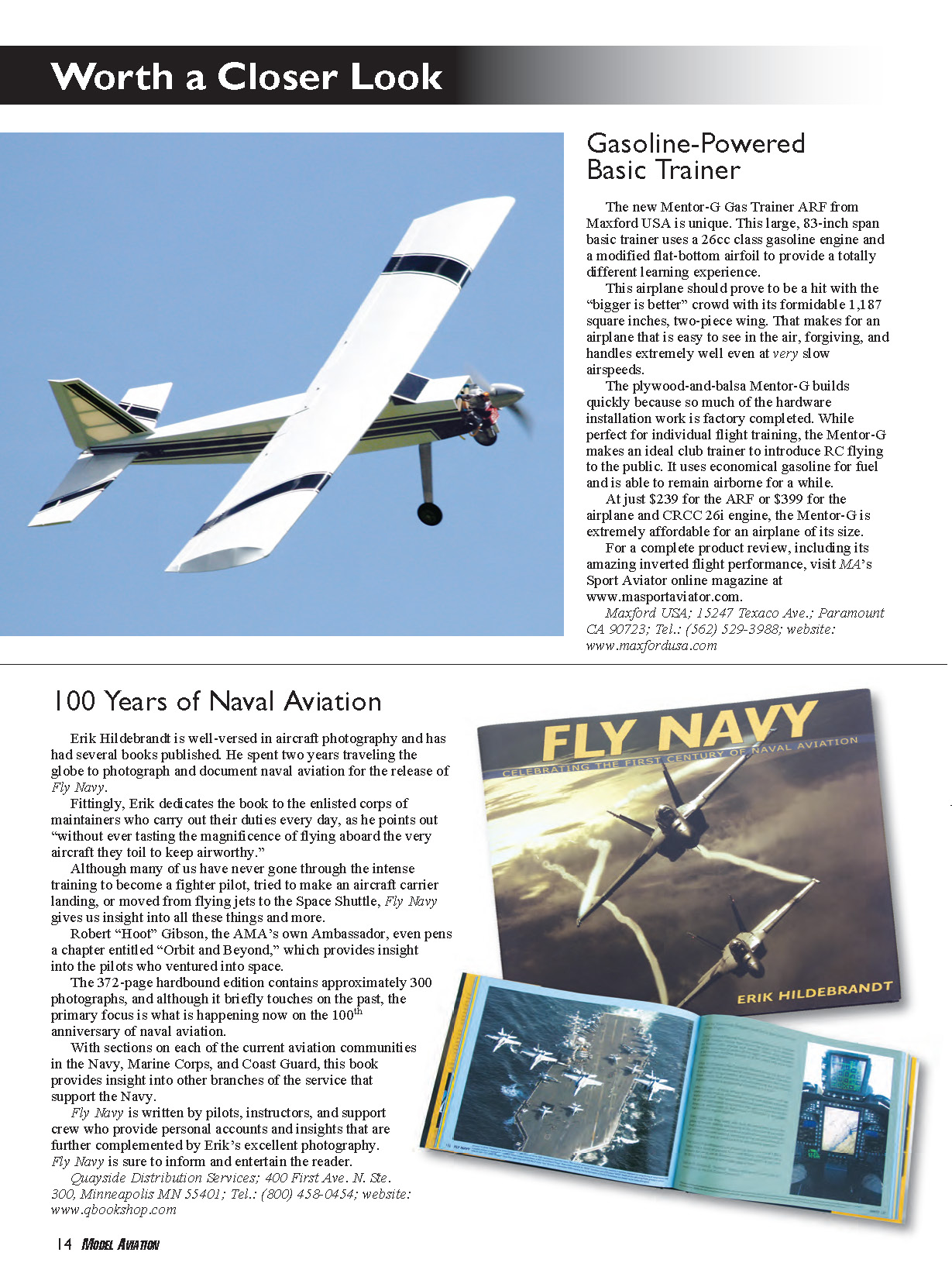
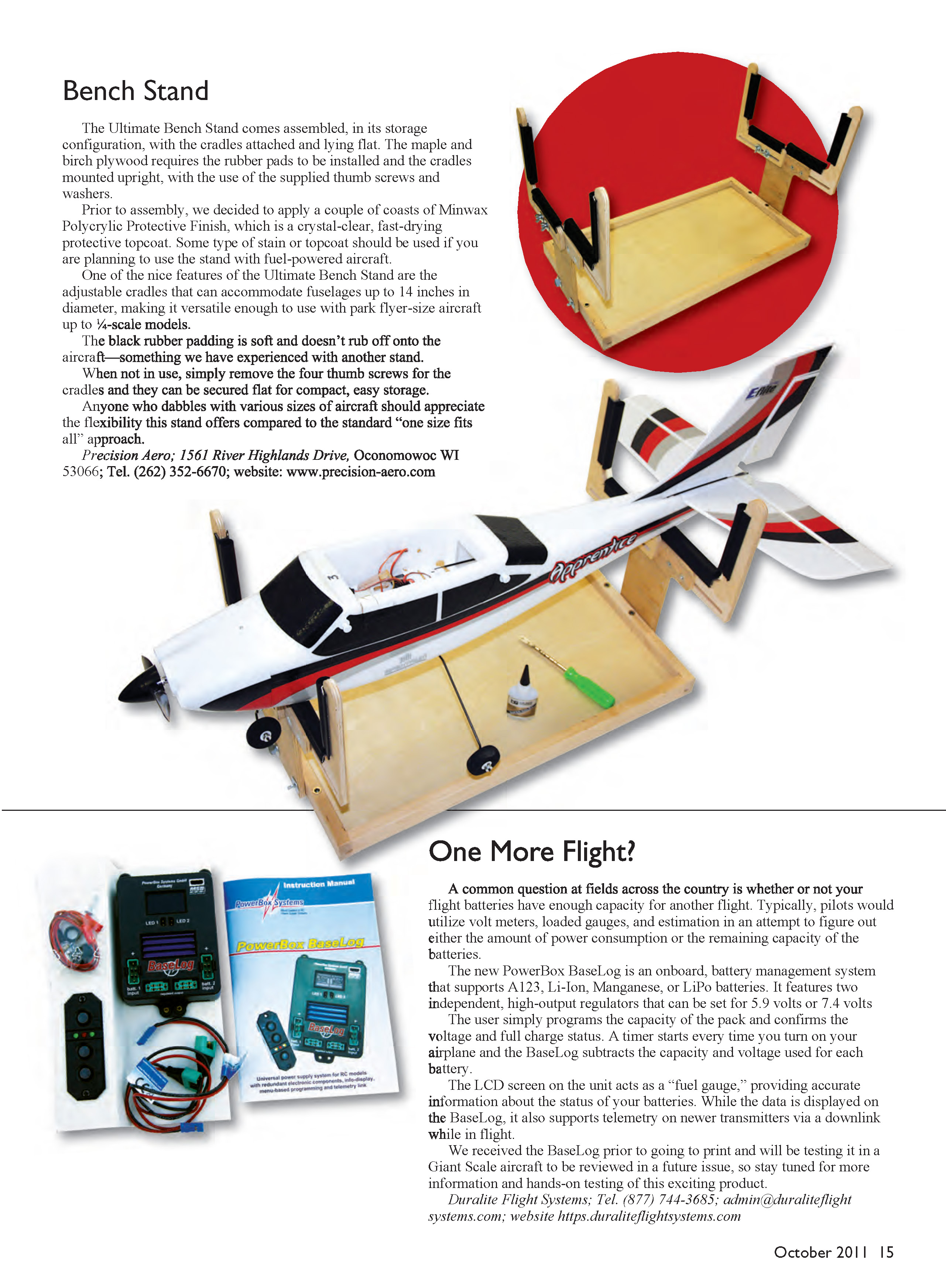
The new Mentor-G Gas Trainer ARF from Maxford USA is unique. This large, 83-inch span basic trainer uses a 26cc class gasoline engine and a modified flat-bottom airfoil to provide a totally different learning experience.
This airplane should prove to be a hit with the "bigger is better" crowd with its formidable 1,187 square inches, two-piece wing. That makes for an airplane that is easy to see in the air, forgiving, and handles extremely well even at very slow airspeeds.
The plywood-and-balsa Mentor-G builds quickly because so much of the hardware installation work is factory completed. While perfect for individual flight training, the Mentor-G makes an ideal club trainer to introduce RC flying to the public. It uses economical gasoline for fuel and is able to remain airborne for a while.
At just $239 for the ARF or $399 for the airplane and CRC 26i engine, the Mentor-G is extremely affordable for an airplane of its size.
For a complete product review, including its amazing inverted flight performance, visit MA's Sport Aviator online magazine at www.masportaviator.com.
Maxford USA; 15247 Texaco Ave.; Paramount CA 90723; Tel.: (562) 529-3988; website: www.maxfordusa.com
Bench Stand
The Ultimate Bench Stand comes assembled, in its storage configuration, with the cradles attached and lying flat. The maple and birch plywood requires the rubber pads to be installed and the cradles mounted upright, with the use of the supplied thumb screws and washers.
Prior to assembly, we decided to apply a couple of coats of Minwax Polycrylic Protective Finish, which is a crystal-clear, fast-drying protective topcoat. Some type of stain or topcoat should be used if you are planning to use the stand with fuel-powered aircraft.
One of the nice features of the Ultimate Bench Stand are the adjustable cradles that can accommodate fuselages up to 14 inches in diameter, making it versatile enough to use with park flyer-size aircraft up to 1/4-scale models.
The black rubber padding is soft and doesn’t rub off onto the aircraft—something we have experienced with another stand.
When not in use, simply remove the four thumb screws for the cradles and they can be secured flat for compact, easy storage.
Anyone who dabbles with various sizes of aircraft should appreciate the flexibility this stand offers compared to the standard “one size fits all” approach.
Precision Aero; 1561 River Highlands Drive, Oconomowoc WI 53066; Tel. (262) 352-6670; website: www.precision-aero.com
One More Flight?
A common question at fields across the country is whether or not your flight batteries have enough capacity for another flight. Typically, pilots would utilize volt meters, loaded gauges, and estimation in an attempt to figure out either the amount of power consumption or the remaining capacity of the batteries.
The new PowerBox BaseLog is an onboard, battery management system that supports A123, Li-Ion, Manganese, or LiPo batteries. It features two independent, high-output regulators that can be set for 5.9 volts or 7.4 volts.
The user simply programs the capacity of the pack and confirms the voltage and full charge status. A timer starts every time you turn on your airplane and the BaseLog subtracts the capacity and voltage used for each battery.
The LCD screen on the unit acts as a “fuel gauge,” providing accurate information about the status of your batteries. While the data is displayed on the BaseLog, it also supports telemetry on newer transmitters via a downlink while in flight.
We received the BaseLog prior to going to print and will be testing it in a Giant Scale aircraft to be reviewed in a future issue, so stay tuned for more information and hands-on testing of this exciting product.
Duralite Flight Systems; Tel. (877) 744-3685; [email protected]; website: https://duraliteflightsystems.com
Transcribed from original scans by AI. Minor OCR errors may remain.

