
District IX — Colorado, Kansas, Nebraska, North Dakota, South Dakota, Wyoming
Jim Wallen — Vice President
- Email: [email protected]
- Address: 7322 W 82nd Way, Arvada, CO 80003
- Tel.: (303) 421-9061
- Website: www.amadistrict-ix.org
Autogyro Fun-Fly
One of the more interesting facets of our hobby is autogyro aircraft. A fun‑fly was held at the AMA facility in Muncie, Indiana, that allowed autogyro enthusiasts to show off their wares.
Dean Copeland and Joe Cole of Whirly Bird Aviation in Nebraska packed up their 11 autogyros, along with seven kits (everything clearly priced), and headed to Muncie. The weather was in the low 90s and they got in a lot of flying, with winds no more than 12 to 15 mph at any time.
Take Off and Grow (TAG) — Take Flight Program
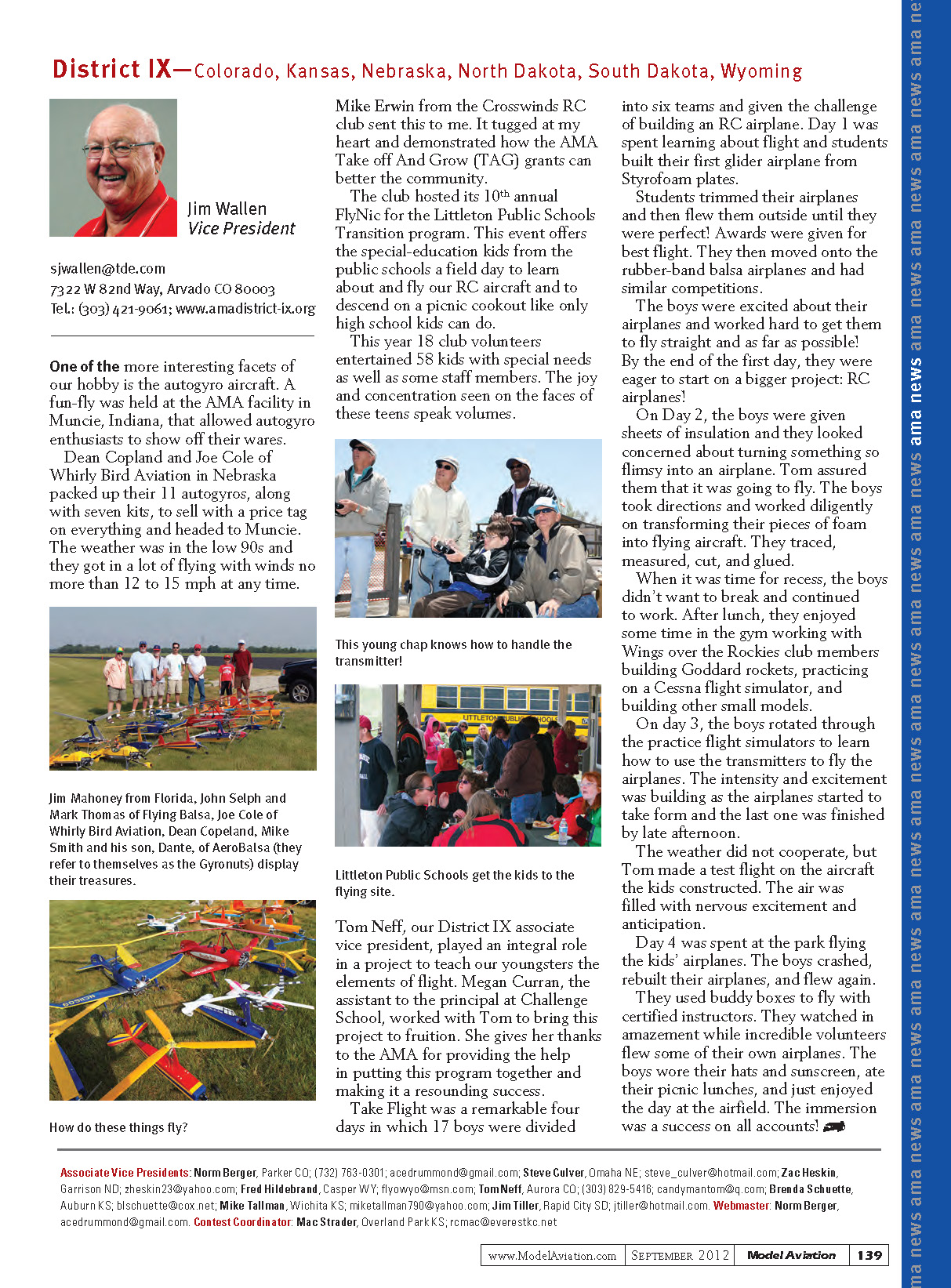
Mike Erwin from the Crosswinds RC Club sent this to me. It tugged at my heart and demonstrated how the AMA Take Off and Grow (TAG) grants can better the community.
The club hosted its 10th annual FlyNic for the Littleton Public Schools Transition program. This event offers the special‑education students from the public schools a field day to learn about and fly RC aircraft and to enjoy a picnic cookout.
- Volunteers: 18 club members
- Students: 58 kids with special needs (plus some staff members)
Tom Neff, our District IX associate vice president, played an integral role in a project to teach these youngsters the elements of flight. Megan Curran, assistant to the principal at Challenge School, worked with Tom to bring the project to fruition and expressed her thanks to the AMA for helping put the program together and making it a resounding success.
Take Flight — Four-Day Program (Day‑by‑Day)
Take Flight was a remarkable four days in which 17 boys were divided into six teams and given the challenge of building an RC airplane.
- Day 1
- Students learned about flight and built their first glider airplane from Styrofoam plates.
- They trimmed their airplanes and flew them outside until they were perfected. Awards were given for best flight.
- They then moved on to rubber‑band balsa airplanes and held similar competitions.
- The boys were excited and worked hard to get their airplanes to fly straight and as far as possible. By the end of the day they were eager to start on a bigger project: RC airplanes.
- Day 2
- The boys were given sheets of insulation foam and initially looked concerned about turning something so flimsy into an airplane. Tom assured them it would fly.
- They traced, measured, cut, and glued, working diligently on transforming their pieces of foam into flying aircraft.
- During recess many chose to keep working rather than take a break. After lunch they enjoyed time in the gym working with Wings Over the Rockies club members building Goddard rockets, practicing on a Cessna flight simulator, and building other small models.
- Day 3
- The boys rotated through practice flight simulators to learn how to use the transmitters to fly the airplanes.
- Intensity and excitement built as the airplanes started to take form; the last one was finished by late afternoon.
- Although the weather did not cooperate for extensive testing, Tom made a test flight on the aircraft the kids constructed. The air was filled with nervous excitement and anticipation.
- Day 4
- The group spent the day at the park flying the kids' airplanes. The boys crashed, rebuilt, and flew again.
- They used buddy boxes to fly with certified instructors and watched in amazement while members flew some of their own airplanes.
- The boys wore hats and sunscreen, ate their picnic lunches, and enjoyed the day at the airfield.
The immersion was a success on all counts.
Transcribed from original scans by AI. Minor OCR errors may remain.

