
Radio Control Aerobatics
Albert and A.C. Glenn [[email protected]]
Extreme Flight's 2-meter Vanquish
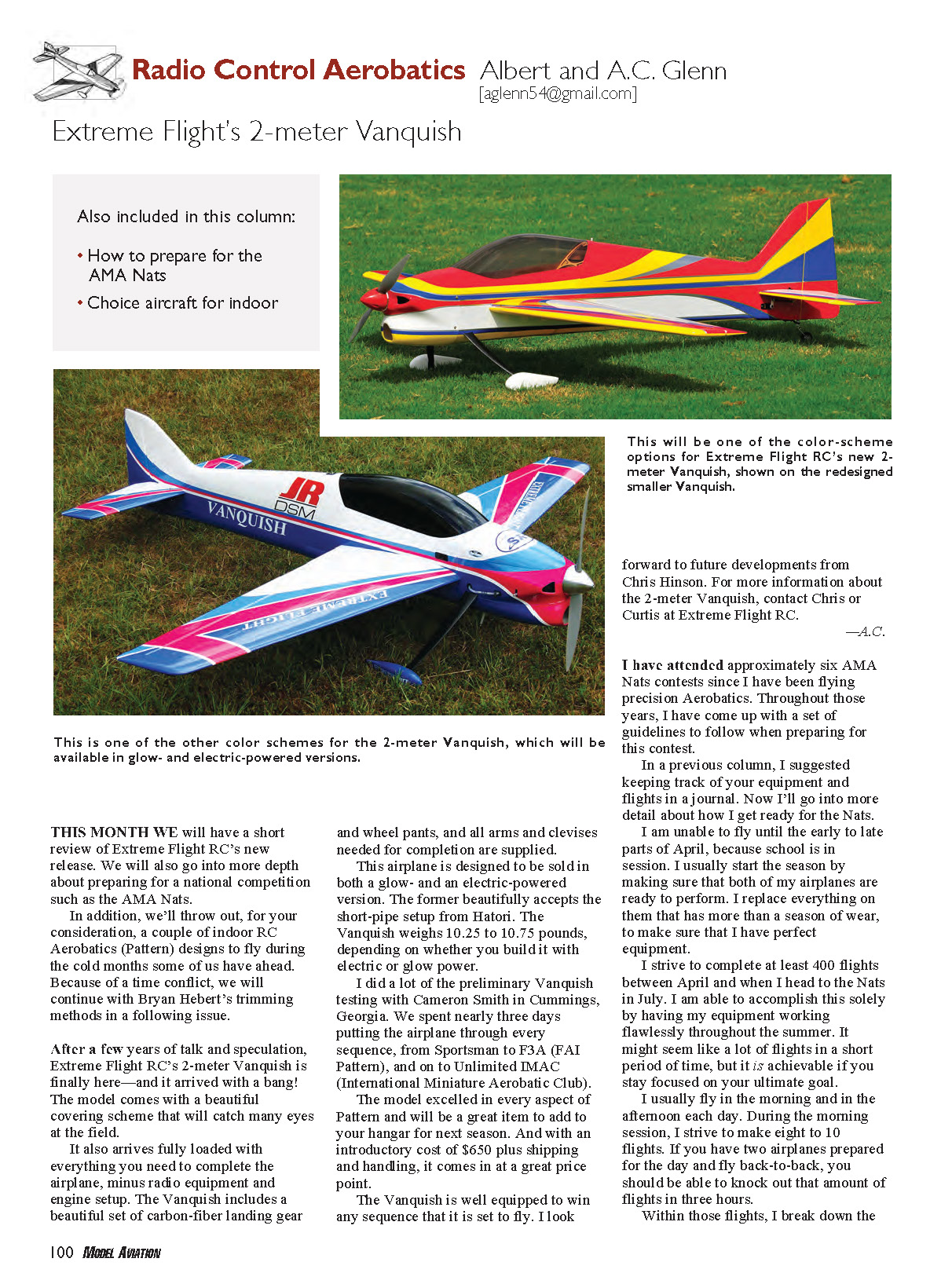
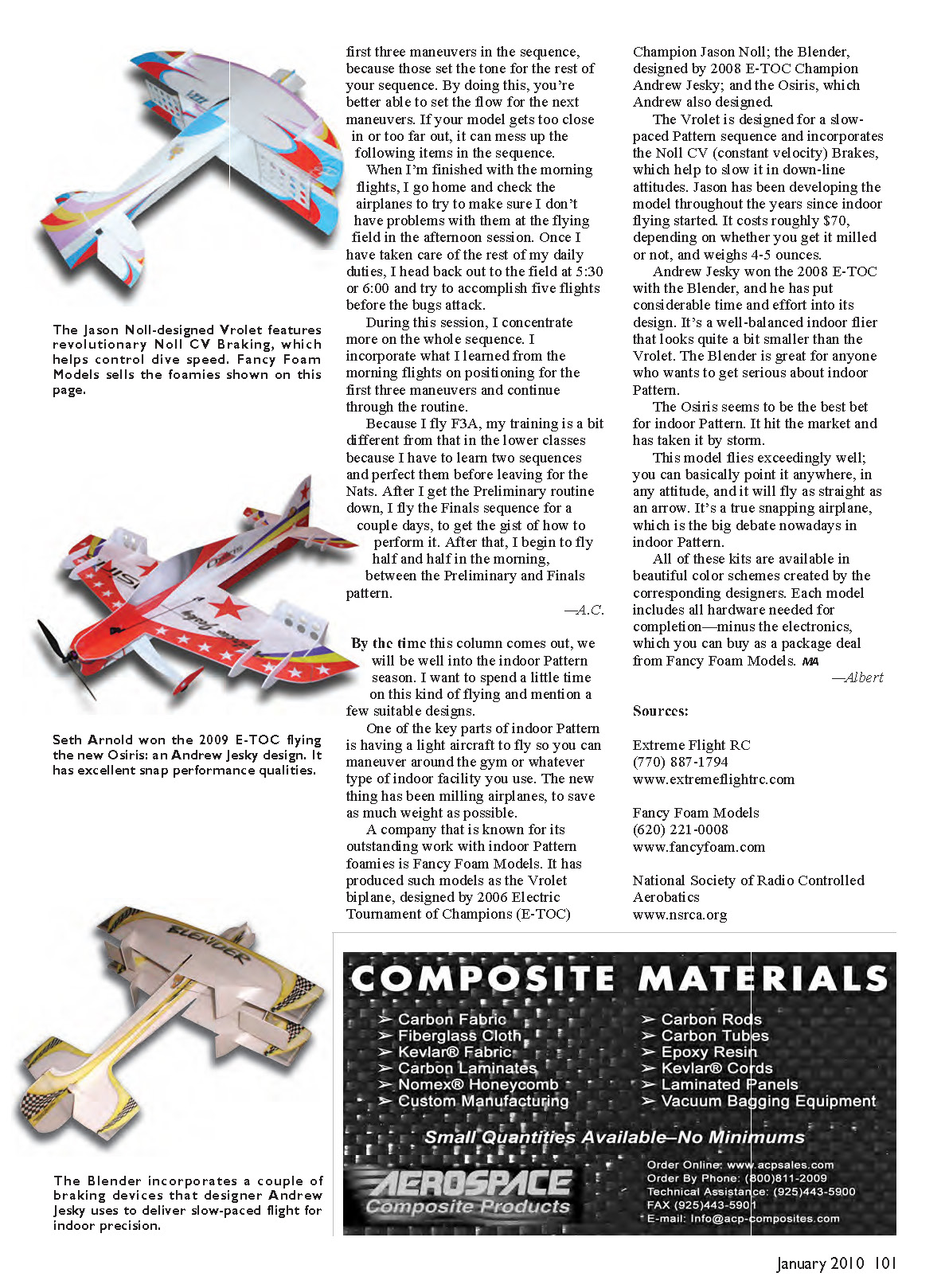
After a few years of talk and speculation, Extreme Flight RC's 2-meter Vanquish is finally here—and it arrived with a bang. The model comes with a beautiful covering scheme that will catch many eyes at the field.
It also arrives fully loaded with everything you need to complete the airplane, minus radio equipment and engine/ESC setup. The Vanquish includes a handsome set of carbon-fiber landing gear and wheel pants, and all pushrods, arms, and clevises needed for completion are supplied.
This airplane is designed to be sold in both glow- and electric-powered versions. The glow version beautifully accepts the short-pipe setup from Hatori. The Vanquish weighs 10.25 to 10.75 pounds, depending on whether you build it with electric or glow power.
I did a lot of the preliminary Vanquish testing with Cameron Smith in Cumming, Georgia. We spent nearly three days putting the airplane through every sequence, from Sportsman to F3A (FAI Pattern), and on to Unlimited IMAC (International Miniature Aerobatic Club).
The model excelled in every aspect of Pattern and will be a great item to add to your hangar for next season. And with an introductory cost of $650 plus shipping and handling, it comes in at a great price point.
The Vanquish is well equipped to win any sequence that it is set to fly. I look forward to future developments from Chris Hinson. For more information about the 2-meter Vanquish, contact Chris or Curtis at Extreme Flight RC.
—A.C.
Preparing for the AMA Nats
I have attended approximately six AMA Nats contests since I began flying precision Aerobatics. Over those years I have developed a set of guidelines to follow when preparing for this contest.
In a previous column I suggested keeping track of your equipment and flights in a journal. Now I'll go into more detail about how I get ready for the Nats.
I am unable to fly until early to mid-April because school is in session. I usually start the season by making sure that both of my airplanes are ready to perform. I replace anything that has more than a season of wear so I have perfect equipment.
I strive to complete at least 400 flights between April and when I head to the Nats in July. I accomplish this solely by keeping my equipment working flawlessly throughout the summer. It might seem like a lot of flights in a short period of time, but it is achievable if you stay focused on your ultimate goal.
I usually fly in the morning and in the afternoon each day. During the morning session, I try to make eight to ten flights. If you have two airplanes prepared and fly back-to-back, you should be able to knock out that number of flights in about three hours.
Within those flights, I break down the first three maneuvers in the sequence, because those set the tone for the rest of your sequence. By doing this, you're better able to set the flow for the following maneuvers. If your model gets too close in or too far out, it can mess up the items that follow.
When I'm finished with the morning flights, I go home and check the airplanes to try to ensure I won't have problems at the field in the afternoon session. Once I have taken care of the rest of my daily duties, I head back out to the field at 5:30 or 6:00 and try to accomplish five flights before the bugs attack.
During this evening session I concentrate more on the whole sequence. I incorporate what I learned from the morning flights on positioning for the first three maneuvers and then continue through the routine.
Because I fly F3A, my training is a bit different from the lower classes because I have to learn two sequences and perfect them before leaving for the Nats. After I get the Preliminary routine down, I fly the Finals sequence for a couple of days to get the feel for how to perform it. After that, I begin to fly half and half in the morning between the Preliminary and Finals patterns.
—A.C.
Indoor Pattern: Lightweight Designs for Winter Flying
By the time this column appears we will be well into the indoor Pattern season. I want to spend a little time on this kind of flying and mention a few suitable designs.
One of the key parts of indoor Pattern is having a light aircraft so you can maneuver around the gym or whatever indoor facility you use. The new trend has been milling airplanes to save as much weight as possible.
A company known for outstanding indoor Pattern foamies is Fancy Foam Models. It has produced such models as the Vrolet biplane, designed by 2006 Electric Tournament of Champions (E-TOC) Champion Jason Noll; the Blender, designed by 2008 E-TOC Champion Andrew Jesky; and the Osiris, which Andrew also designed.
The Vrolet is designed for a slow-paced Pattern sequence and incorporates the Noll CV (constant-velocity) brakes, which help to slow it in down-line attitudes. Jason has been developing the model throughout the years since indoor flying started. It costs roughly $70, depending on whether you get it milled or not, and weighs 4–5 ounces.
Andrew Jesky won the 2008 E-TOC with the Blender, and he has put considerable time and effort into its design. It's a well-balanced indoor flier that looks quite a bit smaller than the Vrolet. The Blender is great for anyone who wants to get serious about indoor Pattern.
The Osiris seems to be the best bet for indoor Pattern. It hit the market and has taken it by storm. This model flies exceedingly well; you can basically point it anywhere, in any attitude, and it will fly as straight as an arrow. It's a true snapping airplane, which is the big debate nowadays in indoor Pattern.
All of these kits are available in the color schemes created by the corresponding designers. Each model includes all hardware needed for completion—minus the electronics, which you can buy as a package deal from Fancy Foam Models.
—MA
—Albert
Sources
- Extreme Flight RC
(770) 887-1794 www.extremeflightrc.com
- Fancy Foam Models
(620) 221-0008 www.fancyfoam.com
- National Society of Radio Controlled Aerobatics
Transcribed from original scans by AI. Minor OCR errors may remain.

